
 $1329
$1263
$1329
$1263
We are also offering this program on June 19–July 3 and July 10-24 (with NCGE).
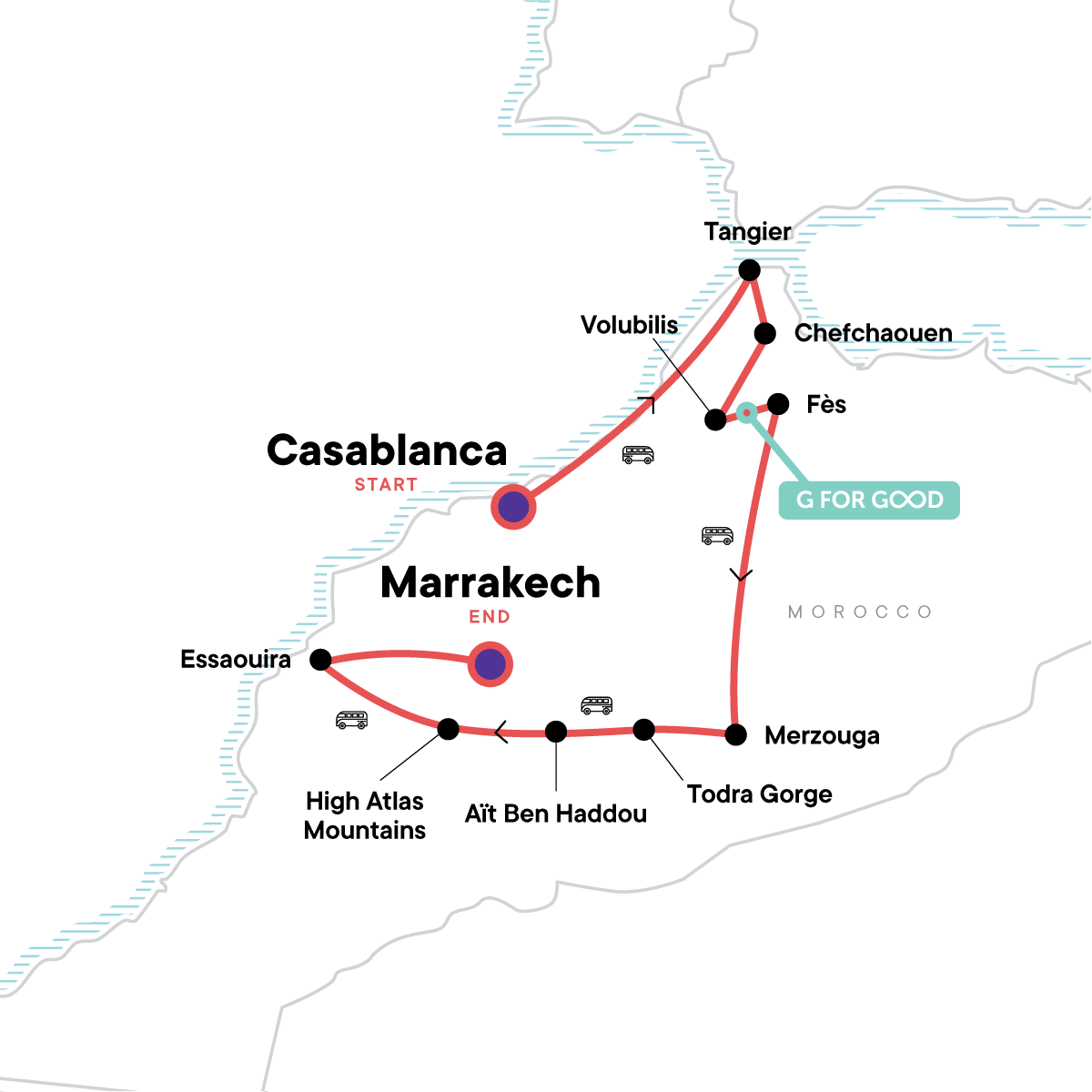
Discover Morocco’s stunning countryside and rural villages, as well as the vibrant medinas and souks of its cities, on this 15-day adventure. Start in Casablanca, then travel north to view the Strait of Gibraltar and discover Roman ruins at Volubilis. Experience the historical grandeur of Fez, ride camels in the Sahara, and trek through Todra Gorge. Journey through the High Atlas Mountains, unwind in the serene coastal town of Essaouira, and conclude your journey in bustling Marrakech. Visit Morocco with us, all while earning professional development credit with other educators.
Arrive at any time. There are no planned activities until the Welcome Meeting in the evening. The nearest airport is Casablanca Mohammed V International Airport (CMN).
Explore Casablanca: This tour does not spend any time in Casablanca. Consider arriving 1-2 days early to explore the city, adjust to the time zone, and buffer against flight delays. We can request extra hotel nights for you before the program begins.
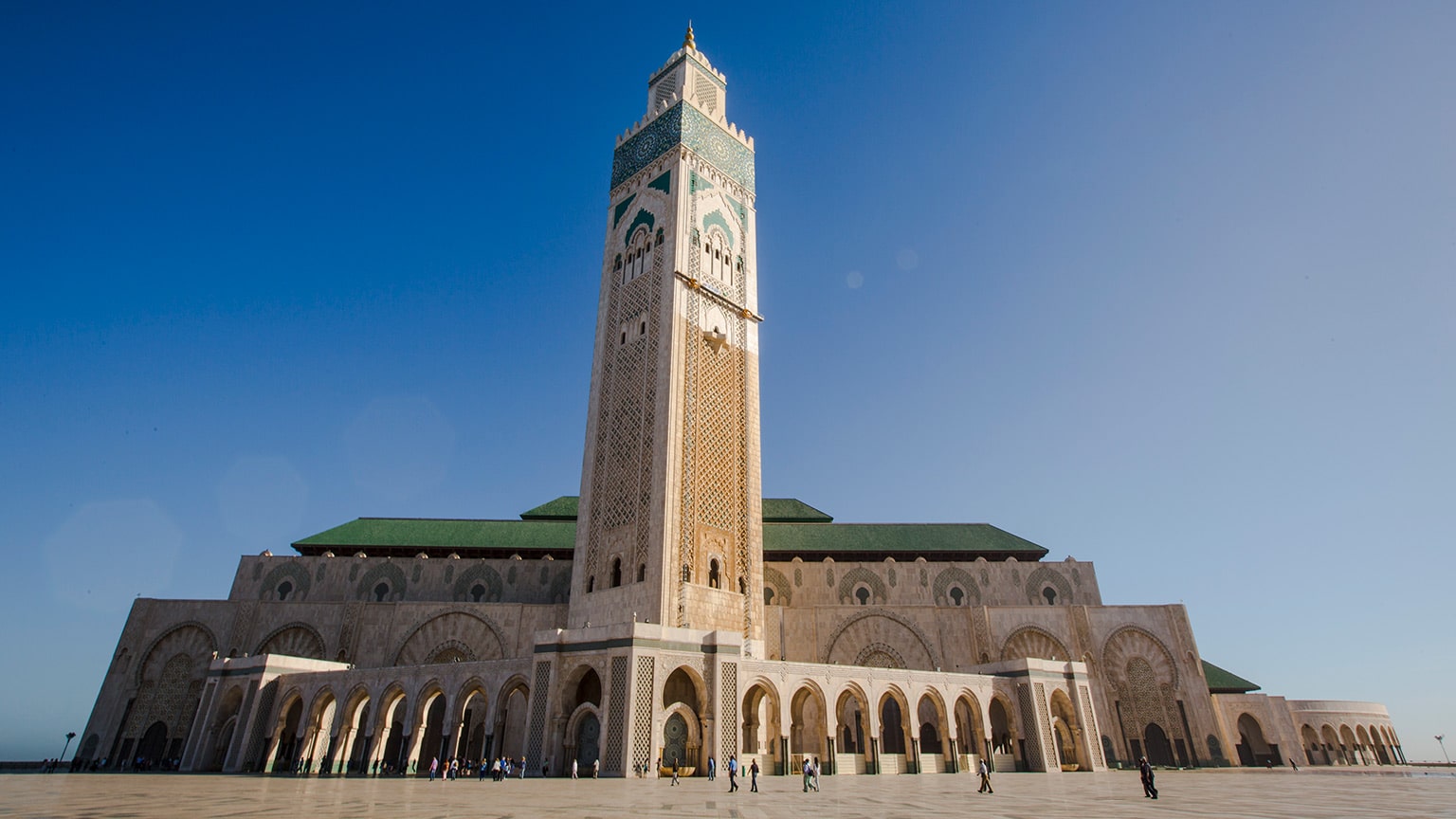
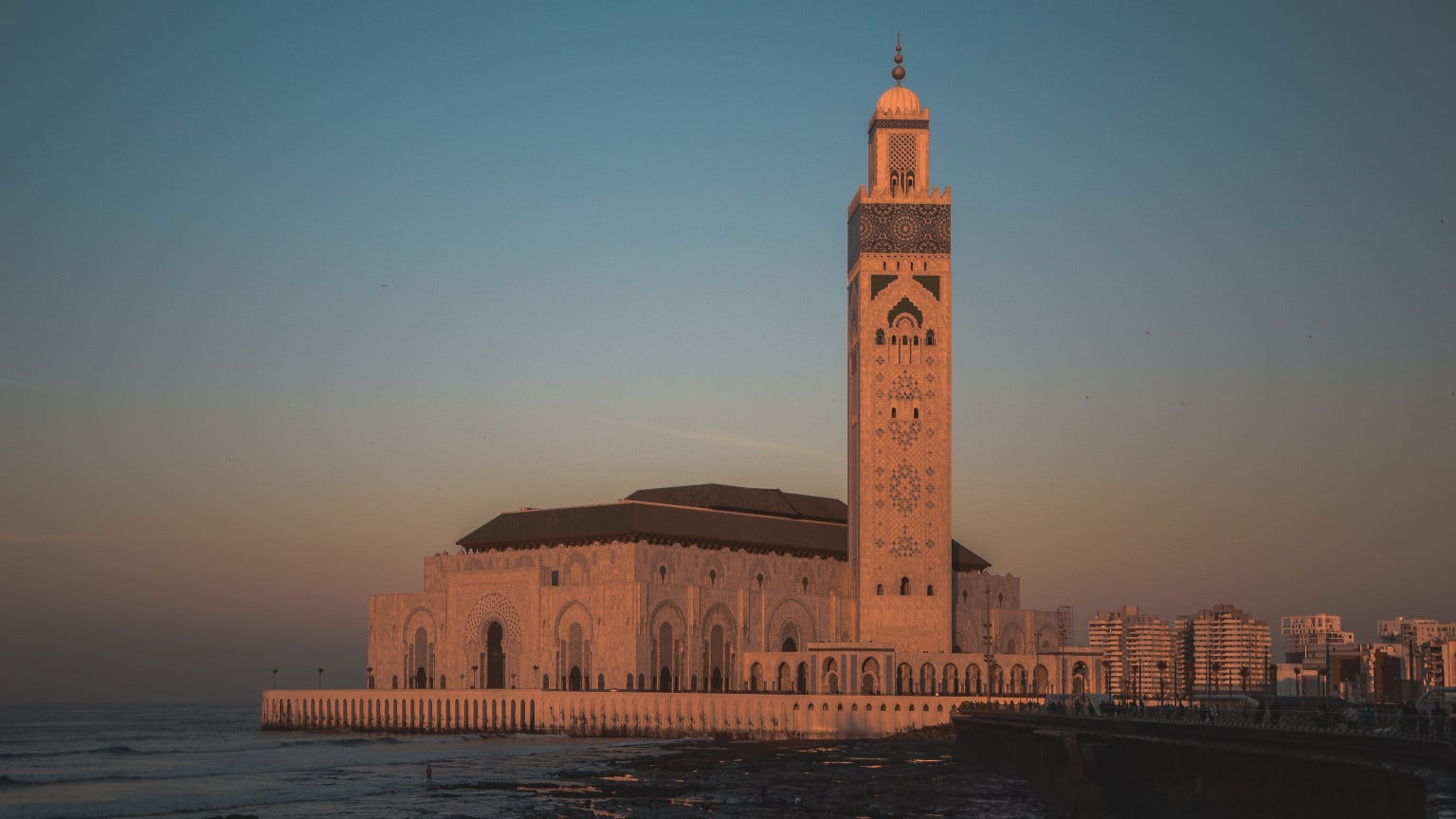
We recommend visiting Casablanca’s small medina, beachfront, and notable Art Deco architecture. A must-see is the Hassan II Mosque, open for guided tours from Saturday to Thursday at 09:00, 10:00, 11:00, and 15:00. You can pre-book guided tours on Viator.
Hotel Check-in and Welcome Meeting
Hotel check-in is normally between 2–3 p.m. Check with reception for the exact time and location of the group welcome meeting, typically between 6–7 p.m. Please make every effort to attend this meeting. If you're running late, send a message in the group WhatsApp or call the emergency number on your trip voucher so that your tour leader can let you know where and when to meet the group.
After the meeting, you might choose to get dinner at a nearby restaurant with your traveling companions and your tour leader to further get to know one another.
Depart in the morning for Tangier. Tangier is an exotic mix of influences, located at the northern tip of Morocco. With culture, cuisine, and language coming from North Africa, Spain, Portugal, and France, this bustling port city is unique and fascinating. Take a guided tour of city sites, including the medina, kasbah, Grand Socco (a bustling square at the entrance to the medina), and Petit Socco, a little square in the medina perfect for people-watching and mint tea-drinking. Marvel at the panoramic views of Gibraltar, Tarifa, and the meeting point between the Atlantic Ocean and the Mediterranean Sea. In the afternoon, continue on to Chefchaouen.
Chefchaouen is a gorgeous mountain town in northern Morocco. It is often skipped when traveling the standard route around Morocco but is truly one of the most special places to visit. Set in the Rif Mountains, this town’s white-washed buildings with blue accents make it one of the most picturesque places in the country. Known as the Blue City, the distinctive color was added by the city’s Jewish population who lived there as refugees in the 1930s. The main square is lined with cafés and shops selling handicrafts that are often not available elsewhere in the country.
Approximate travel time: 5 hrs (Casablanca to Tangier) by private vehicle; 2 hrs (Tangier to Chefchaouen) by private vehicle
*Note: The route from Tangier to Chefchaouen is curvy in places. If you are susceptible to motion sickness, consider having anti-nausea remedies handy.
Meals included: Breakfast
Explore Chefchaouen, a city celebrated for its range of blue hues, set against the dramatic backdrop of the mountains. Spend your day unwinding in a traditional Hammam spa, discovering artisanal crafts sold by local street vendors, or taking share-worthy photos among the beautifully painted alleys and walkways.
You may choose to throw on your tennis shoes and trek up through the scenic Rif Mountains on a guided hike. Head up, up, up for 3-4 hours along lush mountains, passing small waterfalls and streams, stopping for spectacular panoramic views of Chefchaouen. A traditional lunch awaits at a local gîte at the pinnacle of your hike. Once you reach the piste, jump in a Jeep and head back to the main road to meet your driver.
At sunset, opt to visit the Spanish Mosque for a stunning panoramic view of the city.
Meals included: Breakfast
We’ll leave Chefchaouen and drive to M’Haya for a traditional lunch that supports rural Moroccan women and children. Proceeds fund education, healthcare, and vocational training programs, and you’ll enjoy a home-cooked meal while meeting some of the women involved.
In the afternoon, continue through rolling hills to Volubilis, the best-preserved Roman ruins in North Africa. A certified guide will bring the UNESCO World Heritage Site to life as you explore mosaic floors, bathhouses, and towering marble pillars.
From there, travel on to Fez, one of Morocco’s most fascinating cities. Built during the French Protectorate, parts of the city still resemble a French provincial town with cafés, restaurants, and wide boulevards.
This evening is free—an ideal time to catch up on laundry or explore the medina. Browse carpet shops, sample street food, or hunt for leather goods—but don’t get lost in the maze of passageways!
Meals included: Breakfast
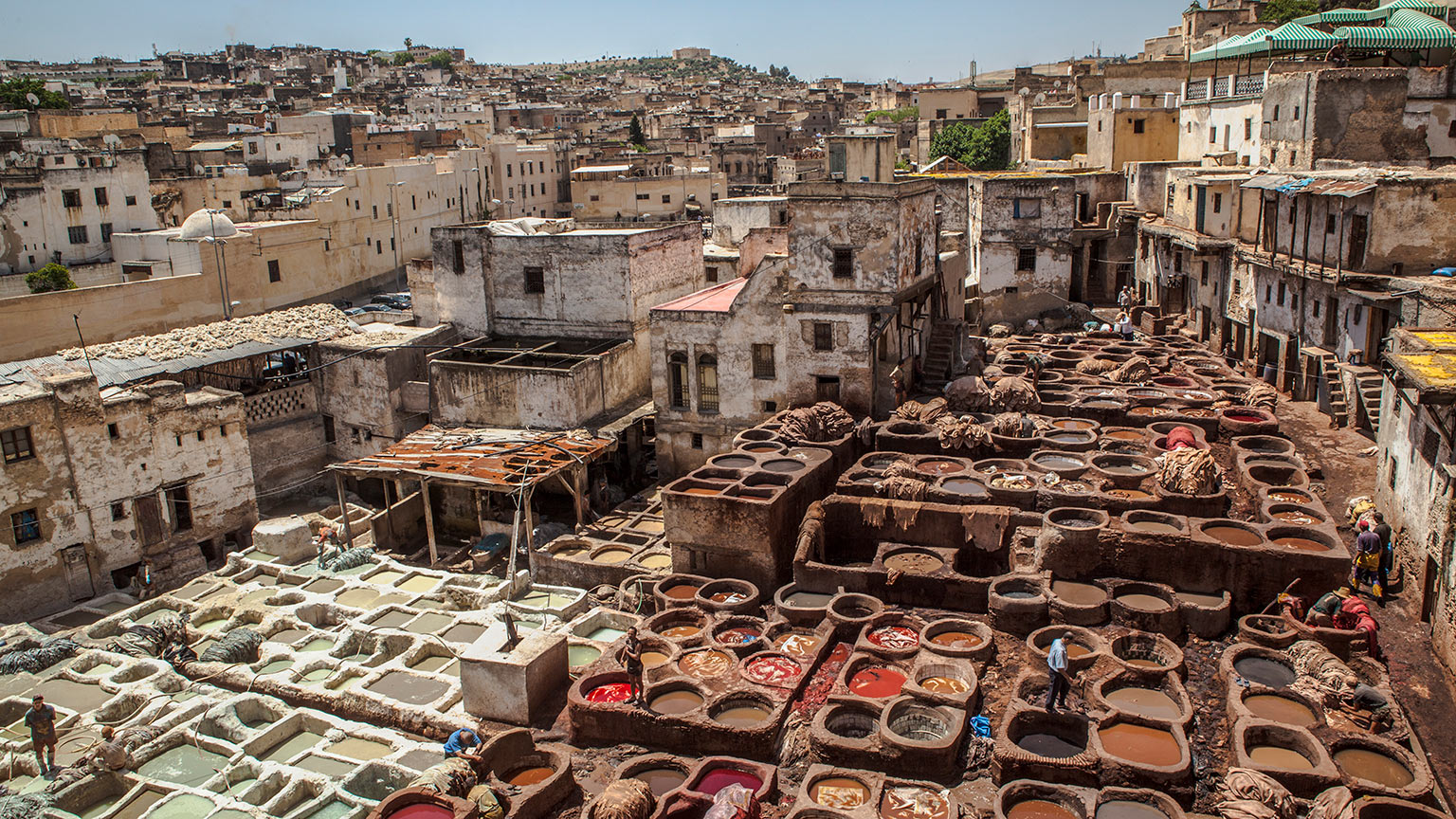
Today, you will go on a guided tour of the Fez medina, the world’s largest active medieval medina and a UNESCO World Heritage Site. Start your morning by entering through one of the iconic gates into this chaotic area, which spans 1.4 square miles with over 9,000 winding streets. Follow your local guide to explore the artisan quarters, sample local treats, visit the mausoleum, and stop by the Al Qarawiyin University. You’ll also visit Fez’s famous leather tannery and have the opportunity to learn about and purchase locally made leather goods.
Please note: Only nationally certified local Fez guides are permitted to guide within the medina; your main tour leader will not be able to accompany you in this area.
Don’t forget to pick up the laundry you dropped off yesterday before enjoying some free time in the afternoon to explore further or relax.
Meals included: Breakfast
Today we have a full travel day through the diverse landscapes that make Morocco so unique. As you pass through cedar and pine forests, keep an eye out for Barbary Macaques. Pass over the Middle Atlas Mountains through the pre-desert countryside with its deep gorges filled with a splendid oasis of green palm groves, finally arriving at the sand dunes of the Sahara Desert.
We spend the night in a desert auberge, located right on the edge of the dunes. Here we will have a local-style dinner and spend the night. Please note: some rooms may have shared bathroom facilities at the desert auberge.
Approximate travel time: 10-11 hrs, including stops
*Note: There are some sections of curvy road during today's journey. If you are susceptible to motion sickness, consider having anti-nausea remedies handy.
Meals included: Breakfast | Dinner
Spend the cool morning relaxing or exploring the golden sands of the Sahara Desert at your own pace.
For those who wish, an optional 4x4 excursion is available. Ride across the dunes of Erg Chebbi, pass a historic kohl mine, and stop in the village of Khamlia to enjoy traditional Gnawa music and a cup of mint tea with the locals.
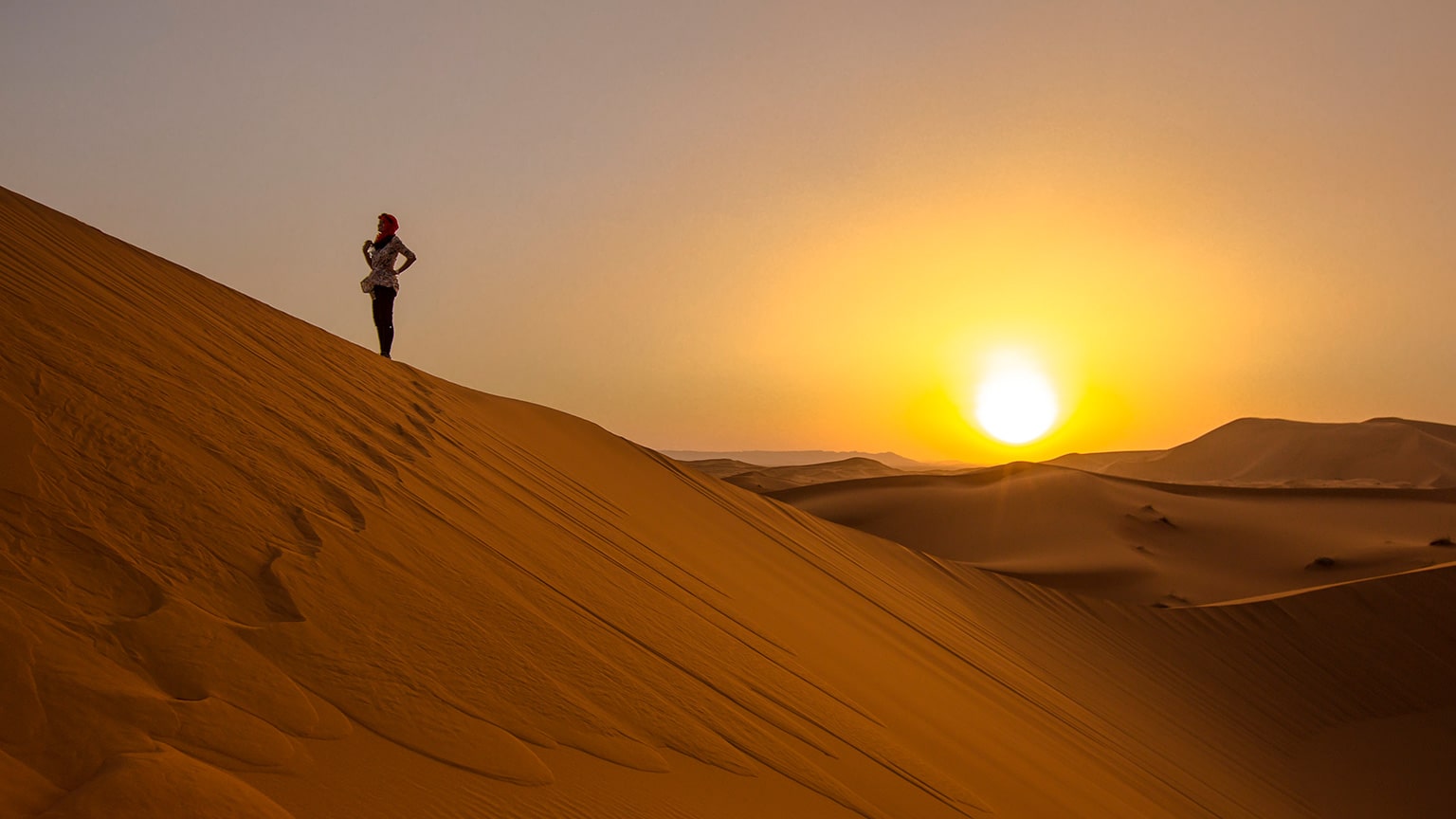
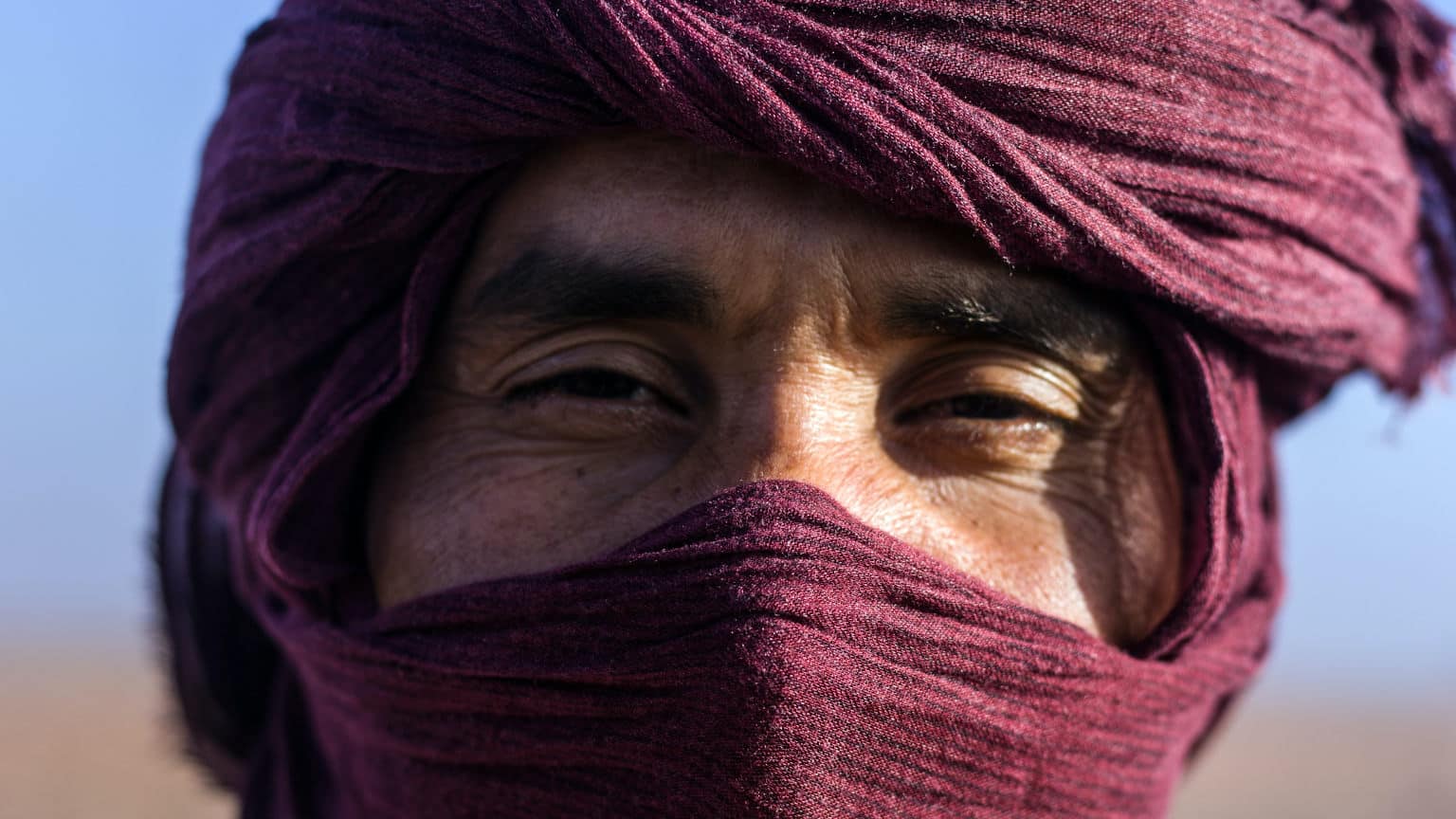
In the late afternoon, set out on a camel ride deep into the dunes to watch the sunset. Local guides will show you how to ride safely and may even teach you the desert trick of tying a turban—both practical for the sun and perfect for photos.
As evening falls, enjoy a traditional dinner before gathering around a campfire beneath the stars. Share stories, listen to the beat of local drums, and soak in the magic of the desert night.
Meals included: Breakfast | Dinner
Rise early to watch the sunrise. After breakfast, continue by private bus into the Todra Valley.
The Todra River has carved out cliff-sided canyons through the mountains. The final 300 m of the gorge are the most spectacular, as the canyon narrows to a flat stony track as little as 10 m (33 ft) wide in places with sheer and smooth rock walls up to 160 m (525 ft) high on each side. Today, the Todra River looks more like a stream as it runs its way through the gorge, with hotels and restaurants huddled against the steep walls. It is easy to walk through the gorge, as there is a well-maintained dirt road to walk along. This scenic and serene spot is great for hiking, relaxing on the edge of the river, or sampling some local Amazigh delicacies.
Approximate travel time: 3.5 hrs, including stops
Meals included: Breakfast
This morning, we continue along the Route of 1,000 Kasbahs to the thriving town of Ouarzazate for a lunch stop. This town is home to Atlas Film Studios, where many films have been shot over the years, including Lawrence of Arabia and Gladiator.
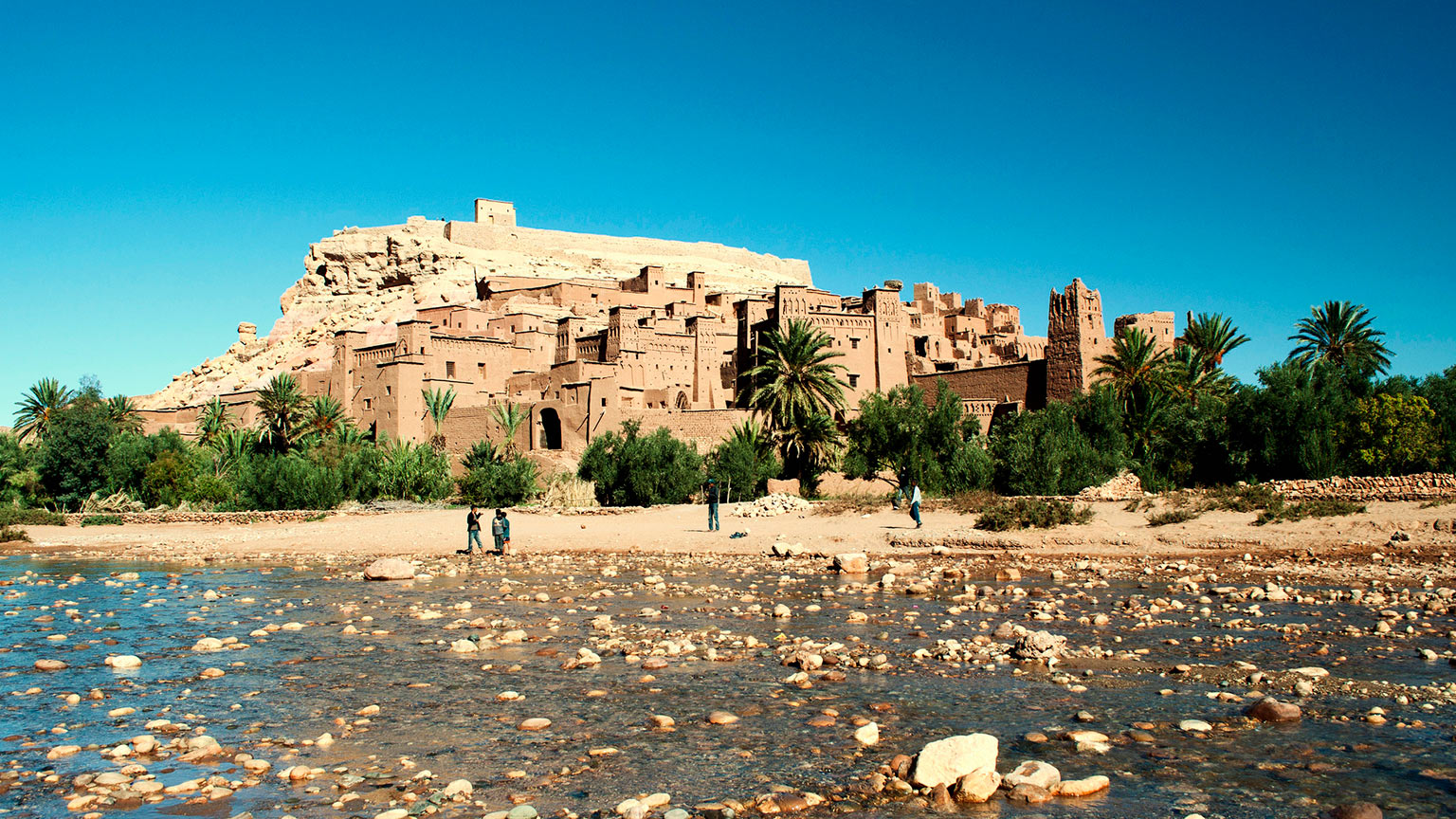
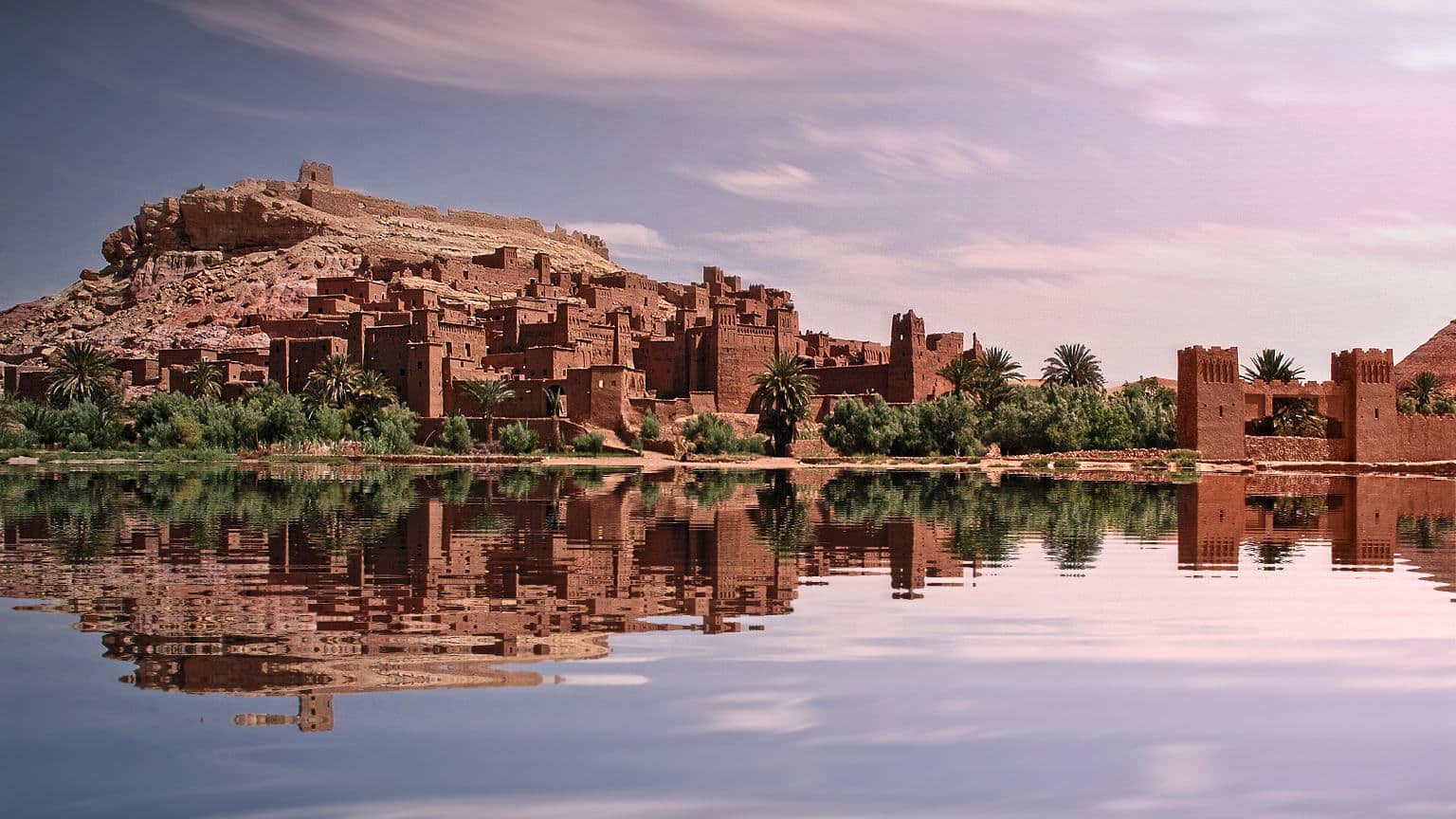
Continue on to the fascinating and beautiful village of Aït Ben Haddou, a wonderful example of a kasbah (a type of fortress). Explore the UNESCO World Heritage Site with your tour leader. Of all the remaining kasbahs in Morocco, the walls and interior of this area are the most intact. Like many of the earthen-built fortresses in Ouarzazate, Aït Ben Haddou has been used in many film and television productions like Gladiator, Babel, and Game of Thrones.
In the evening, there may be a chance for an optional cooking class. Learn the secrets of how to make the perfect tagine and then sample your skills for your dinner.
Approximate travel time: 4 hrs
Meals included: Breakfast
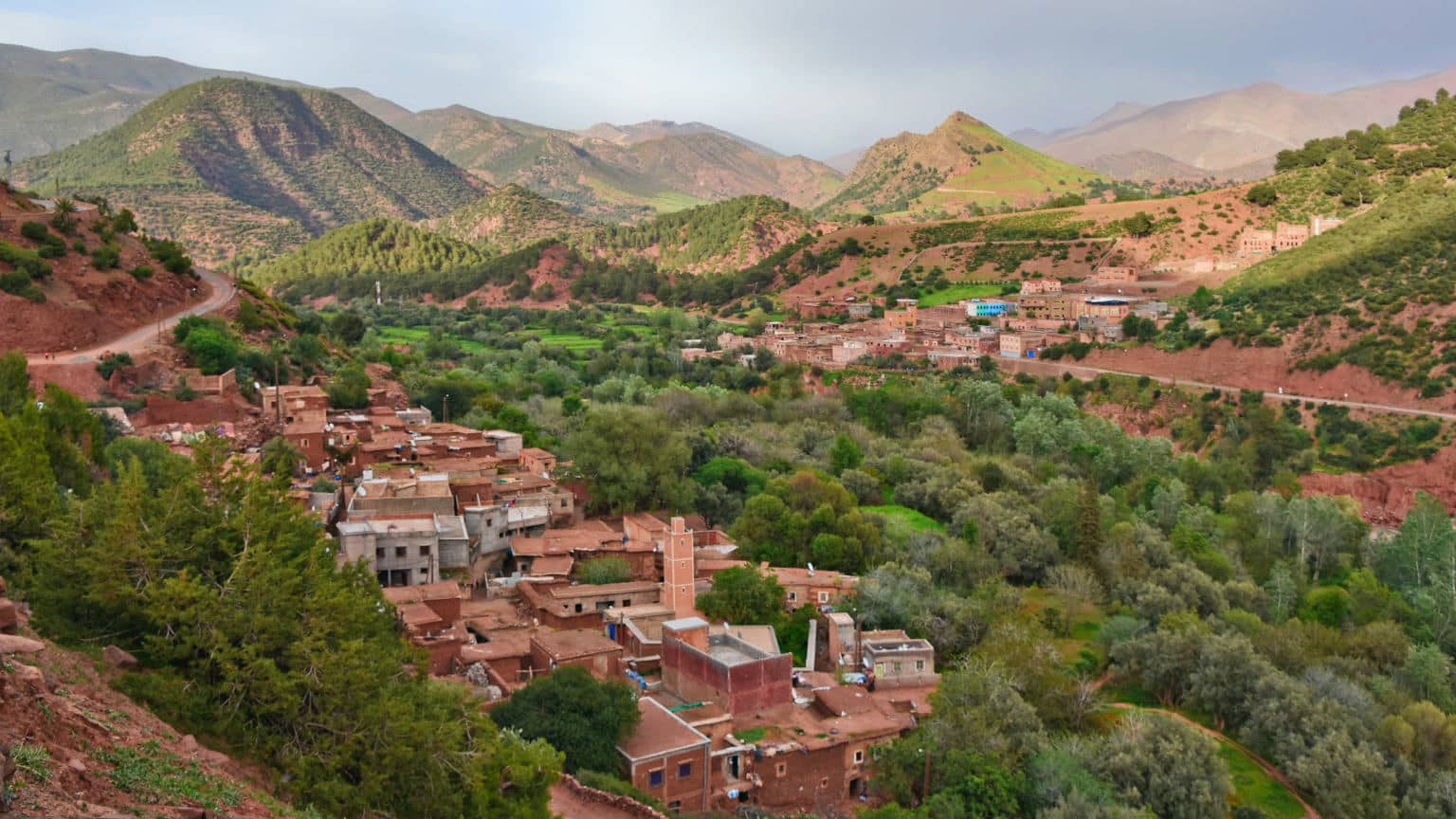
We leave the pre-desert country for the magnificent High Atlas Mountains landscape, crossing the Tizi n'Tichka pass at 2260 m, before heading into the splendid Toubkal National Park. We pass through small villages on winding mountain roads, arriving at the village of Imlil.
With our main luggage transported for us, we head out on a 1-2 hour hike from Imlil to the little village of Aroumd (Aremd), to arrive at our simple mountain gîte for the night. Breathe in the fresh mountain air while taking in amazing views of the surrounding Atlas Mountains before sitting down to a traditional, homemade dinner made with local produce.
The hike to the gîte is quite steep in parts, and is on uneven terrain, so take it at your own pace! Some participants have recommended hiking poles for those with knee issues. Alternatively, you can opt for a taxi ride to the gîte for approximately 50 dirhams.
Our accommodation is multi-share with up to six beds in each room. Bedding is provided, but you will need to bring your own towel. Bathroom facilities are shared.
**We recommend bringing only important personal items for the overnight stay in a light and easy-to-carry bag.**
Approximate travel time: 5 hrs (Ait Ben Haddou to Imlil) by private vehicle; 1 hr (Imlil to Aroumd) on foot
*Note: The road through the mountains is very curvy. If you are susceptible to motion sickness, consider having anti-nausea remedies handy.
Meals included: Breakfast | Dinner
After breakfast, take a scenic hike back down the mountain to meet the van in Imlil and head to the coastal town of Essaouira, arriving mid-afternoon. The rest of the day is free to explore as you wish.
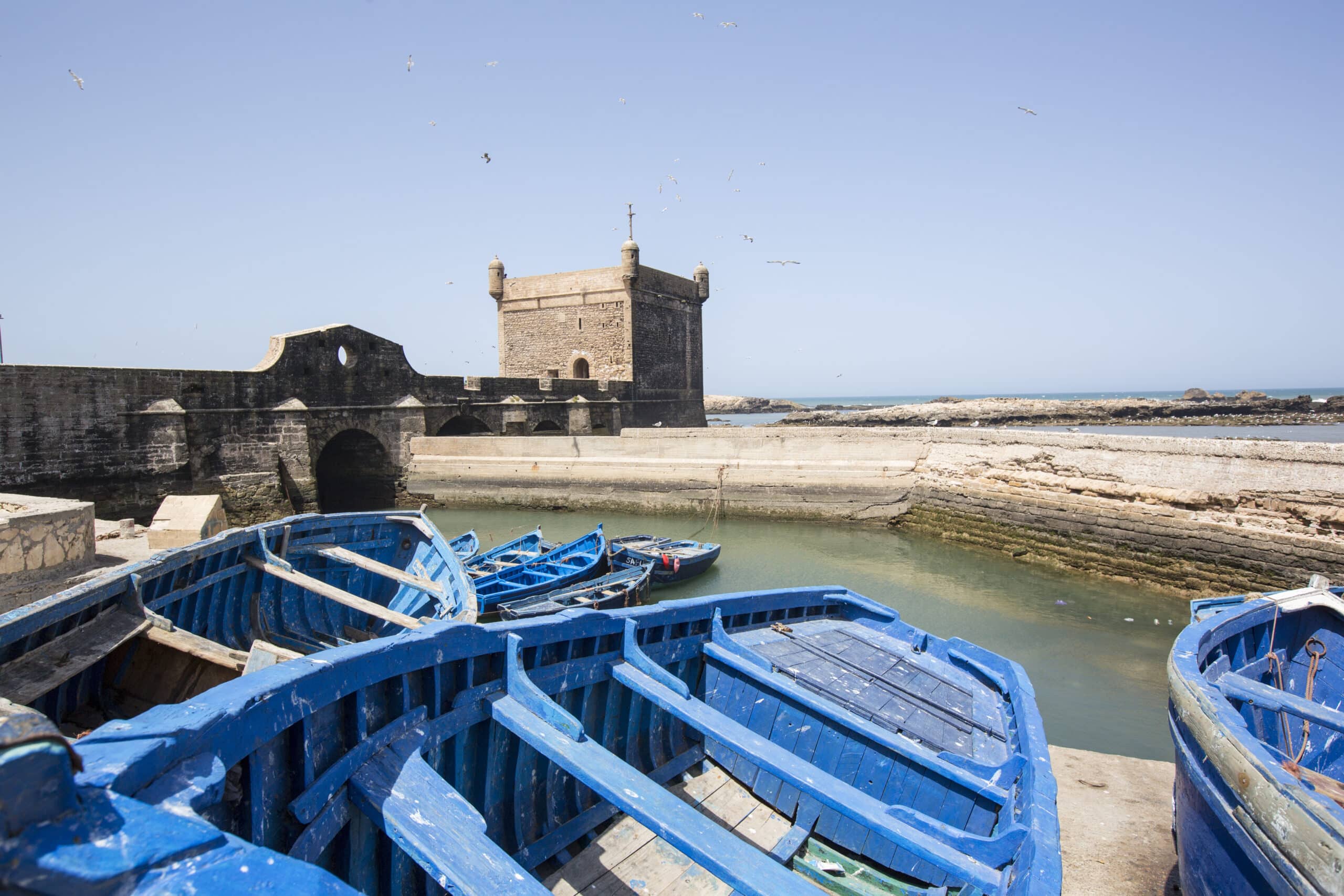
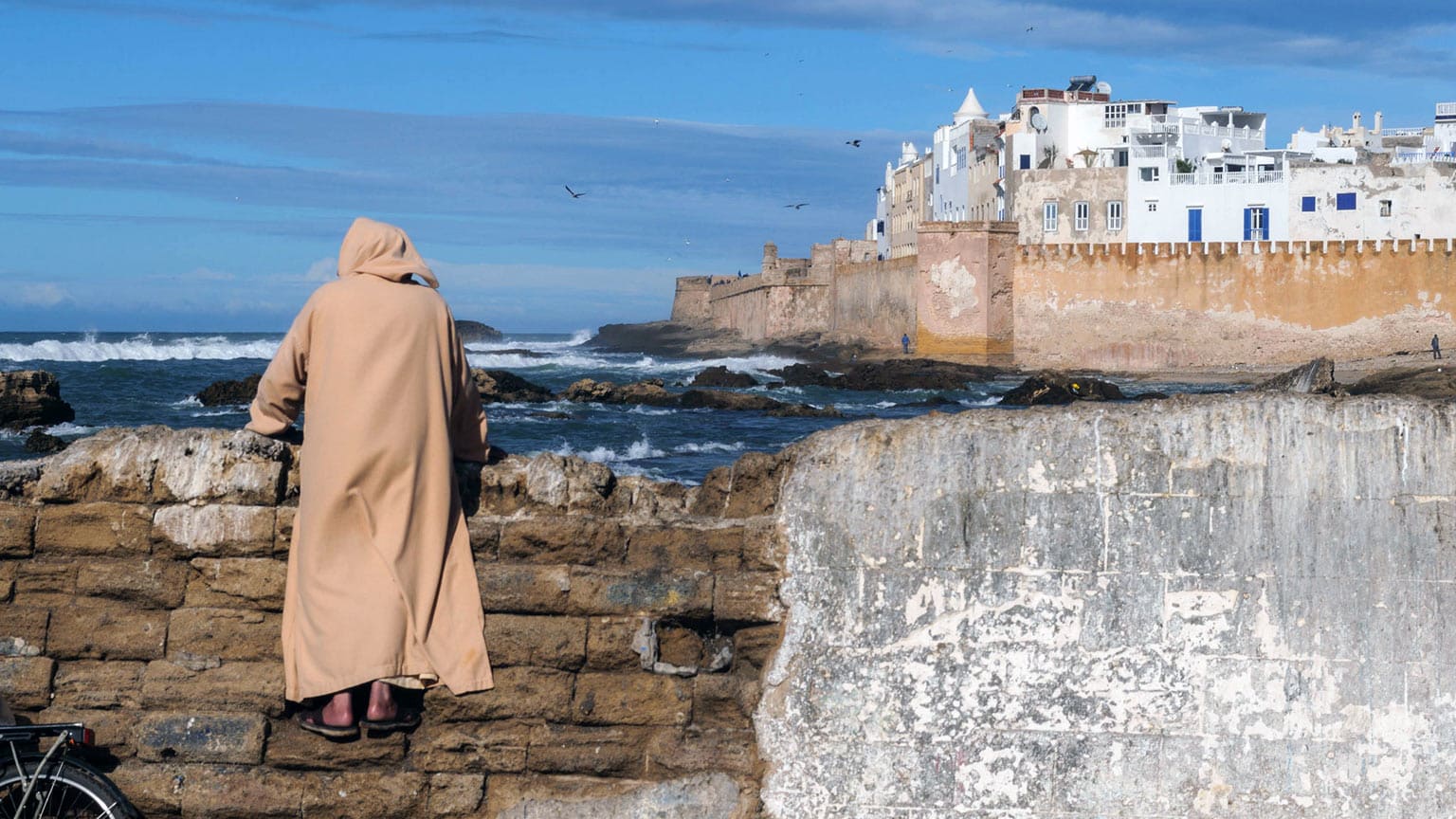
Essaouira is a funky, Portuguese-flavored, hippie coastal village. Browse the many shops for leather, jewelry, lamps, or trinkets. Watch the brightly-painted ships bring their catch into the busy harbor or take a stroll along the long, sandy beach. This is the perfect place to enjoy some local seafood and unwind.
Approximate travel time: 1 hr (Aremd to Imlil) on foot; 5 hrs (Imlil to Essaouira), including stops, by private vehicle
Meals included: Breakfast
Today is free to browse the many shops, watch the brightly painted ships bring their catch into the busy harbor, or take a stroll along the long, sandy beach. It's a perfect place to enjoy some local seafood and unwind. You might even like to enjoy some of the wide variety of activities on offer such as windsurfing and horseback riding. Your tour leader can arrange camel riding on the beach in Essaouira for you. Please ask them for more details if you are interested.
If you want to soothe aching muscles, you can pre-book the Traditional Hammam Experience ($60 USD) with us. In a Moroccan bathhouse, your session starts in a warm room to gently prepare your skin and body, transitioning into a steam-filled hot room for deep relaxation. Relish a thorough body scrub and a soothing massage, and conclude your experience with a refreshing mint tea.
Please note that men and women have separate areas in the hammam, and the treatment includes a full-body scrub and massage, including the chest, stomach, and head—expect to get your hair wet unless you specifically request otherwise.
Meals included: Breakfast
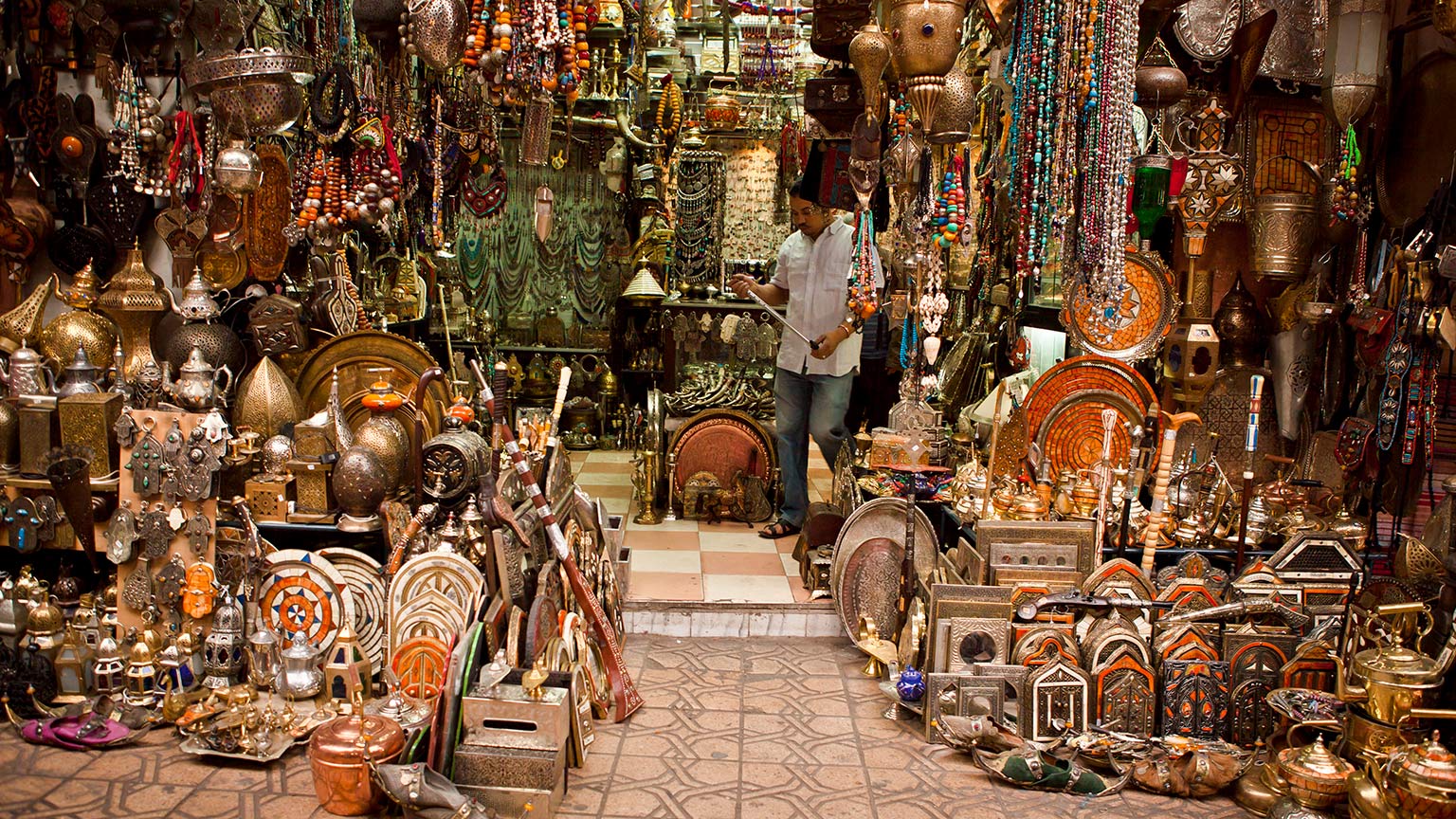
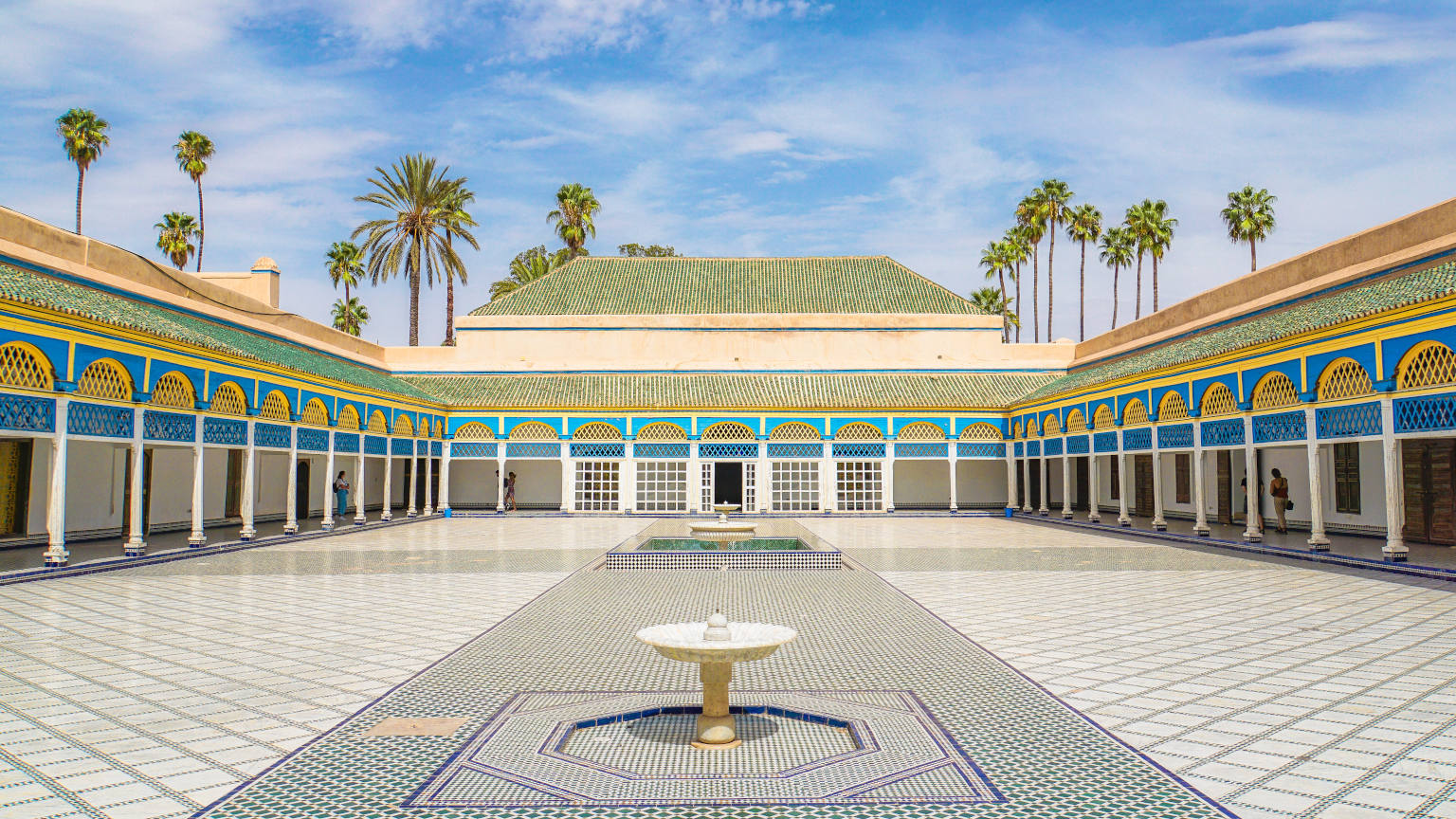
In the morning, we continue our journey to Marrakech. Once you've arrived in the Red City, join your certified city guide for a tour of the Marrakech medina. Shop to your heart’s content in the souks with their narrow, winding streets as you search out spices, traditional jalabas and slippers, or the famous Moroccan lanterns. Visit the historical Koutoubia Minaret and gardens, the Mellah, and the Saadian Tombs, a complex of sepulchers and mausoleums that house the remains of Saadian Sultan Ahmed Al Mansour Ed Dahb. The tombs were sealed off until their re-discovery in 1917. Tour the grounds of the Bahia Palace, marveling at the intricate decoration, and experience the sights and sounds of the bustling Jemaa el-Fnaa square.
Once the tour is finished, you are free to discover the secrets of this amazing, ancient city at your leisure. Once you’ve tired yourself out, relax at one of the tea houses around the square, indulging in the ubiquitous sweet mint tea and watching the hustle and bustle from your shady spot.
End the day like a local with an optional group dinner in the famous food stalls of Djemaa el Fna.
Approximate travel time: 3 hrs by private vehicle
Meals included: Breakfast
Today is a free day to explore. You may opt to get up early and catch the sunrise over Marrakech by pre-booking the Hot Air Balloon excursion ($225 USD).
Another great place to start your day is Djemaa el Fna square, in the heart of the medina. The square changes its offerings throughout the day. In the morning, you can wander past the fresh orange juice stalls, water sellers in colorful costumes with traditional leather water bags, brass cups, and street performers.
As the day progresses the snake charmers are replaced by Chleuh dancing-boys, storytellers, magicians, and peddlers of traditional medicines. As the sun sets, the square fills with dozens of food stalls, packed with locals and the entertaining chefs and waiters. Grab a spot on a bench with the other diners and try the Tanjia (slow-cooked lamb), Harira soup, grilled seafood, famous Moroccan couscous, tajine, snails, or even sheep’s head for the truly adventurous. Wash it all down with some spiced tea.
See our list below of optional activities for more recommendations about how to spend your free time.
Meals included: Breakfast
There are no planned activities today, so you may depart Marrakech at any time. The nearest airport is Marrakesh Menara Airport (RAK).
If your departure flight is out of Casablanca, affordable transfer options include a 2.5-hour train that runs frequently throughout the day, or direct flights from Marrakech to Casablanca. If you wish to extend your stay in Marrakech, consider booking post-tour accommodation with us.
Please note that check-out time from the hotel is usually mid-morning, but luggage storage services are available at the reception desk.
Meals included: Breakfast
The hotels listed below reflect the properties expected to be used for this program. Final accommodations are subject to change based on group size, availability, or seasonality. The confirmed start and end hotels are listed on your trip voucher:
Before you decide to travel with GEEO, it is important that you read all of the program information on this page. Our programs are quite adventurous, and we find that travelers who review the full trip details are happier with their experiences.
Camel riding is slower-paced and not strenuous, but requires the ability to mount and dismount. Participation in the camel ride is optional. If you prefer not to ride, you are welcome to relax at the hotel or explore the nearby sand dunes. Please note that the sunset viewing point, located in the middle of the dunes, is not accessible by 4WD/vehicle. Walking is possible, but can be hot and physically demanding.
On very hot days, air conditioning on transport may not be able to keep up. In some hotels, A/C may be weak, not functioning well, or not available at all. To stay comfortable, plan to dress in light, breathable clothing, drink plenty of water, and consider bringing small items like a travel fan or cooling towel.
Arabic is the official language of Morocco, spoken in the distinctive Moroccan dialect. Approximately 40% of the population (mainly in rural areas) speak Berber in one of its three different dialects (Tarafit, Tashelhiyt, and Tamazight). French is Morocco’s unofficial second language and is taught universally, serving as the country’s primary language in economics and commerce, as well as being widely used in education and government. Many Moroccans in the north of the country speak Spanish, and English is widely spoken in tourist areas.
Tipping is a significant part of the culture and economy in Morocco, and past travelers have noted they spent more than they anticipated. To avoid any stress, it is best to bring extra cash, as you will need it for tips, as well as for meals and shopping, where credit cards are not always accepted. See the “Estimated Trip Costs” section for suggested budgeting guidelines.
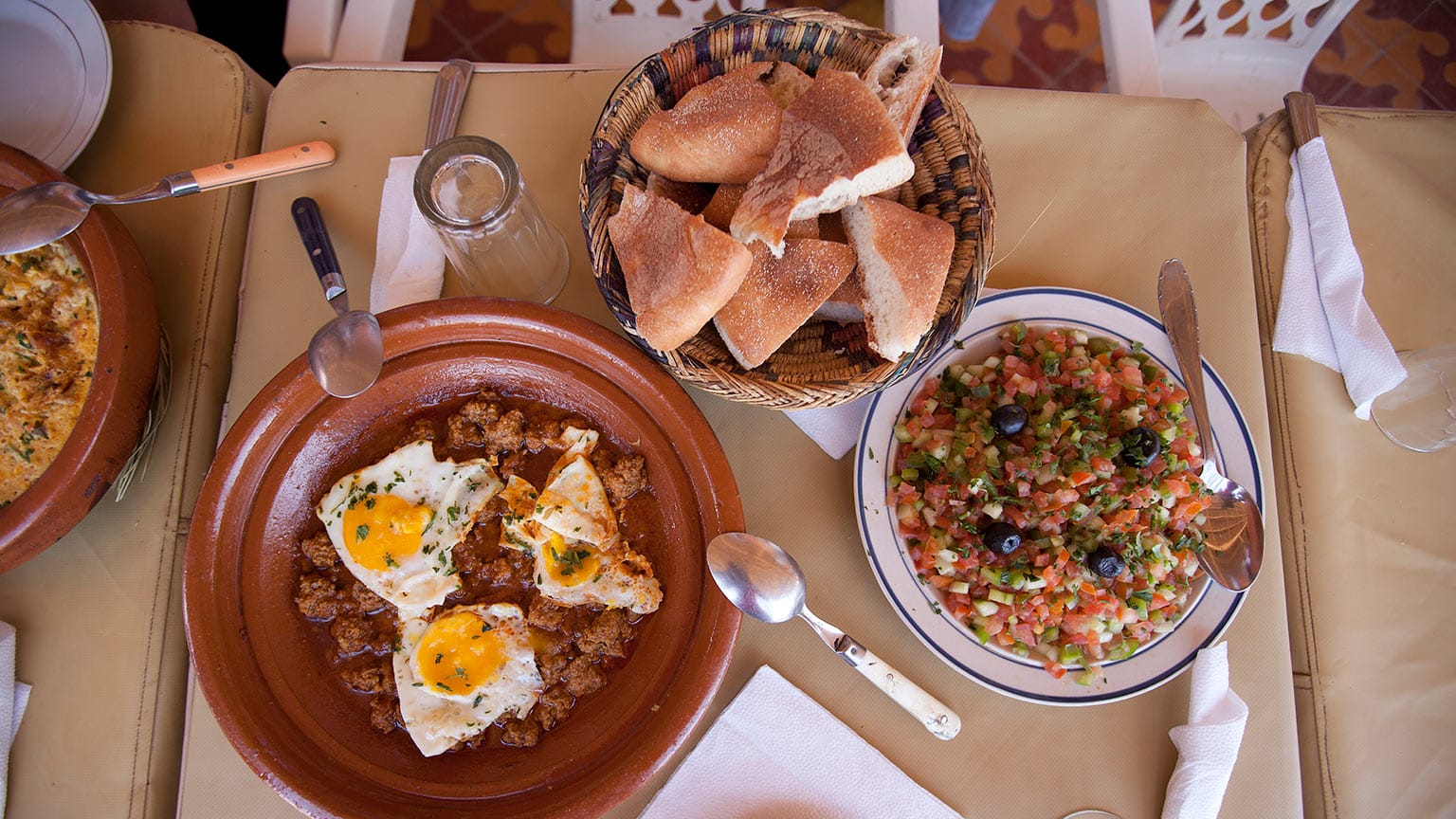
Our groups typically eat together to share dishes and enjoy the experience, though this is optional. In some areas, dining choices are limited. Budget around $10–15 USD per meal and carry sufficient local currency. For an overview of Moroccan cuisine including tagine, couscous, pastilla, harira, and fresh seafood, see this Lonely Planet guide to Moroccan food.
In Morocco, access to public restrooms often requires a small fee, usually 1 or 2 Dirhams. We recommend keeping some small change handy. You’ll have opportunities to visit banks or ATMs early in the trip and regularly thereafter to ensure you can break larger bills into smaller denominations. While public bathrooms are normally quite clean, they may not always have toilet paper, so it's best to carry some with you.
This program ends in Marrakech. Most international flights depart out of Casablanca. Make sure that you arrange your flights correctly. Keep in mind there are flights from Marrakech to Casablanca as well as a train that runs a few times a day and takes 3.5 hours.
All GEEO programs are led by a G Adventures Chief Experience Officer (CEO), whose role is to take the hassle out of travel and help you get the most from your trip. They’ll share information about the places you visit, suggest activities and restaurants, and introduce you to our local friends. While not traditional guides, CEOs have broad knowledge of the region’s history, culture, and daily life. On some excursions, local guides are used for deeper insight.
| Private/Single Room | $399 (1 left) |
| Pre-trip Hotel (per night) | Hotel Campanile Casablanca - Single: $50, Twin/Double: $60 |
| Post-trip Hotel (per night) | Hotel Oudaya Marrakech - Single: $50, Twin/Double: $60 |
| Arrival Airport Transfer (per person) | Casablanca (CMN) Solo=$50, 2ppl=$25, 3ppl+=$20 Marrakech (RAK) Solo=$260, 2ppl=$130, 3ppl=$85, 4ppl+=$65 |
| Departure Airport Transfer (per person) | Marrakech (RAK) Solo=$40, 2ppl=$20, 3ppl+=$15 Casablanca (CMN) Solo=$260, 2ppl=$130, 3ppl=$85, 4ppl+=$65 |
Rif Valley Mountains hike: $75 per person
Day 3 (July 22)
Merzouga Land Cruiser Desert Excursion: $75 per person
Day 7 (July 26)
Traditional Hammam Experience in Essaouira: $54 per person
Day 12 (July 31)
Hot Air Balloon Marrakech: $225 per person
Day 14 (August 2)
Hassan II Mosque (Sat to Thur): 120 MAD
Completed in 1993, the Hassan II Mosque is one of the largest and most impressive mosques in the world and can accommodate up to 105,000 worshippers at a time. Its minaret is the tallest in the world, standing at 210 meters tall.
Villa de Arts (Tue to Sat): free
The Villa des Arts is a contemporary art museum that was inaugurated in 2014 and features a collection of modern and contemporary Moroccan art, as well as temporary exhibitions by international artists. The museum is housed in a beautiful historic building that was originally built in the 1930s as a cultural and social center.
Jewish Museum (Mon to Fri):: 30 MAD
The Museum of Moroccan Judaism is dedicated to showcasing the rich history and culture of Moroccan Jews. It houses a collection of artifacts, documents, photographs, and videos that provide a glimpse into the life and traditions of the Jewish community in Morocco. The museum also hosts cultural events and educational programs throughout the year.
Explore the Medina: Free
Wander through Chefchaouen\'s famous blue-washed medina, where narrow alleyways are lined with artisan shops selling handwoven textiles, leather goods, and local crafts. The medina\'s striking blue buildings and mountain backdrop make it one of Morocco\'s most photogenic destinations.
Callejon El Asri: Free
Visit Callejon El Asri, one of the most photographed streets in the world. This narrow blue-washed alleyway is famous for its colorful flowerpots lining the steps and walls. House Beautiful magazine ranked it the fourth most beautiful street worldwide in 2023. Arrive early morning to avoid crowds and get photos without waiting.
Ras El Ma Waterfall & Fresh Orange Juice: 10 MAD
Walk to Ras El Ma, a small waterfall just outside the medina where a natural spring supplies water to the city. Enjoy fresh-squeezed orange juice (kept cold in the spring water) at one of the riverside cafes while watching locals and taking in the mountain views.
Henna Tattoo: 50-200 MAD
Get a traditional henna tattoo from local artists in the medina. These temporary designs, applied to hands or feet, use natural henna paste and last approximately 1-2 weeks. Intricate geometric and floral patterns are common Moroccan styles. Prices vary by design complexity. *Important*: Make sure the henna paste is natural (green when applied, dries to reddish-brown) and avoid \"black henna,\" which contains harmful chemicals.
Kasbah Museum: 60-80 MAD
Visit the Kasbah Museum in the heart of the medina to explore ethnographic exhibits including traditional musical instruments, pottery, embroidered textiles, and weaponry. Climb the tower for panoramic views of Chefchaouen and the surrounding Rif Mountains, then relax in the peaceful Andalusian garden. Entrance: 60-80 MAD.
Ville Nouvelle Exploration:
Hit the newer part of Fès to see life in action. Find a sidewalk café to sip mint tea and watch everyday life go by.
Shop Fès Medina:
Spend some time in the medina checking out carpet shops, sampling local delicacies at the food stalls or shopping for leather goods. Prepare to bargain, just don't get lost wandering the passage ways!
Belghazi Museum: 20 MAD
Housed in an exquisite 17th-century building, the gallery showcases different art styles passed through generations in Morocco, such as ceramics, embroidery, instruments, and costumes. Climb up to the rooftop for a panoramic view of the city.
Dinner in Converted Fès Riad (2-3 hrs): 400-500 MAD
Sit down to a fantastic meal in a renovated riad, a Moroccan palace that has been transformed into a restaurant. Tantalize your taste buds and senses with delicious, local cuisine accompanied by music and belly dancing.
Madrasa Bou Inania: 10 MAD
Madrasa Bou Inania is a beautifully preserved Islamic school and a prime example of Moroccan architecture, located in the heart of the medina. It was built in the 14th century and features intricate geometric tilework, ornate stucco decoration, and carved cedarwood elements. The madrasa is still in use today and visitors can explore the courtyard, prayer hall, and student cells.
Medersa el Attarine: 10 MAD
The Medersa el Attarine is another historic Islamic school located in the medina. It was built in the 14th century and is known for its stunning architecture and intricate decoration. The medersa features a central courtyard surrounded by student cells, with stunning zellij (mosaic tilework) and carved stucco. It is considered one of the finest examples of Merinid architecture in Morocco.
Dar Batha Museum (Wed to Mon): 10 MAD
The Dar Batha Museum is housed in a 19th-century palace that was converted into a museum in 1915. The museum\'s collection focuses on traditional Moroccan arts and crafts, including ceramics, textiles, jewelry, and woodworking. The exhibits showcase the rich artistic heritage of Morocco, with many items dating back centuries.
Belghazi Museum: 20 MAD
The Belghazi Museum isa privately owned museum featuring a collection of traditional Moroccan arts and crafts, including ceramics, textiles, and woodwork. The museum is housed in a beautifully restored 18th-century palace, known as a riad, with a central courtyard and intricate tilework and carvings throughout. In addition to its collection, the museum also offers guided tours and workshops to help visitors learn more about the traditional crafts of Morocco.
Shopping:
With dozens of shops lining the narrow winding streets, there's a lot to choose from. Pop into brightly coloured shops selling leather shoes and purses, slippers, scarves, Moroccan lanterns and mosaics...you name it. Visit an artists' co-op and shop for handmade silver jewelry.
Fresh Fish Grills at the Port: Varies
Select fresh-caught fish or seafood directly from vendors at the fishing port, then have it grilled at one of the nearby open-air grilling stations. Your selection is prepared and served with bread and salad. Watch the colorful blue fishing boats and bustling harbor activity while you eat. Prices vary: grilled sardines cost around 20–40 MAD, while a feast of mixed seafood (shrimp, squid, sea bream) runs 100–200 MAD per person. Grilling fee is typically 10–20 MAD per item. Always agree on prices before ordering to avoid overcharging at tourist-focused stalls.
Beach Activities: Varies
Horseback Riding (250–800 MAD).
Camel Riding (250–500 MAD).
Quad Biking (400–800 MAD).
Water Activities: Varies
All surfing activities are weather and season-dependent.
Windsurfing ~60 EUR
Kite Surfing ~1,100-1,650 MAD
Surfing ~695-990 MAD
Walk the Ramparts (Skala de la Ville and Skala du Port): Free - 10 MAD
Walk along the 18th-century sea ramparts that surround the medina for panoramic views of the Atlantic Ocean and the historic blue fishing boats below. The fortifications feature old Portuguese cannons and provide excellent photo opportunities, especially at sunset. These ramparts served as filming locations for Game of Thrones (Astapor scenes, Season 3), John Wick: Chapter 3 - Parabellum (fight scenes in the fish market and on the ramparts), The Wheel of Time Season 2 (Falme scenes), Othello (Orson Welles, 1951), Kingdom of Heaven, and Alexander. Entrance to Skala de la Ville: 10 MAD. The Bastion Nord section is free to visit.
Musée de Marrakech: 50 MAD
Wander around the salons of the ornate Mnebhi Palace displaying various collections of Moroccan art forms.
El Badi Palace: 70 MAD
Visit the ruins of what was once the most ornate palace of the 16th-century. Its sunken gardens and pools give a glimpse into its former glory.
Jardins Majorelle: 200 MAD
Visit this enchanting garden in the heart of the city designed by French painter Jacques Majorelle (1886-1962). Follow the pathways through trees, exotic plants, streams, and pools while watching the numerous birds who call this peaceful paradise home. (Please note that the entrance fee to Musée Yves Saint Laurent is an additional 30 MAD.)
Djemaa el Fna Market Square Visit:
Wander past fresh orange juice stalls and water sellers in colourful costumes reminiscent of an era past. See storytellers, magicians, and peddlers of traditional medicines as the day progresses. When the sun sets, the square fills with dozens of food stalls, and is packed with locals, entertaining chefs, and waiters. Grab a spot on a bench with other diners and try the “tanjia” (slow cooked lamb), harira soup, grilled seafood, famous Moroccan couscous, tajine, snails, or even sheep’s head (for the truly adventurous). Wash it all down with some spiced tea.
Dar Si Said: 30 MAD
Standing as a monument to master Moroccan artisans, this complex houses the Museum of Moroccan arts. Here, you will find displays of ancient weaponry, carpets, Amazigh (also known as Berber) jewellery, granary doors and more. Make sure to see the highlight of a visit to this museum, the painted, domed wedding-reception chamber.
Book any G Adventures program through GEEO, or transfer your existing booking over to us and receive:
Non-educators welcome! Your booking supports our 501(c)(3) mission.
Contact us: travel@geeo.org | 1-877-600-0105
GEEO is a 501(c)(3) nonprofit, and our mission is to help teachers travel by offering private educator-focused group trips—but we also partner with G Adventures to offer trips worldwide for anyone, not just educators.
When you book through GEEO, you receive:
Your booking supports our mission!
To get started, contact us:
travel@geeo.org | 1-877-600-0105