Inca Trail permits are sold out for this program. We may still be able to confirm new participants on the Lares Trek or Non-Hiking itineraries.
We are also offering this program on March 28–April 5, 2026.
Hotels: Standard Class
07/08/2026 - 07/16/2026
Max Participants: 16
9 Days / 8 Nights
Overview
This trip offers a fascinating combination of the region’s archaeological and cultural treasures. Travel through Lima, Cusco, the Sacred Valley, and Machu Picchu, visiting key historical sites, exploring bustling markets, and engaging with local communities. When you register, you’ll choose one of three routes for the middle of the program (Days 4–7): hike the legendary Inca Trail, trek through the remote Andean villages of the Lares Valley, or explore Cusco and the Sacred Valley on a non-hiking itinerary. No matter which path you take, you’ll gain deeper insight into Peru’s past and present, all while earning professional development credit with other educators.
Choose Your Adventure
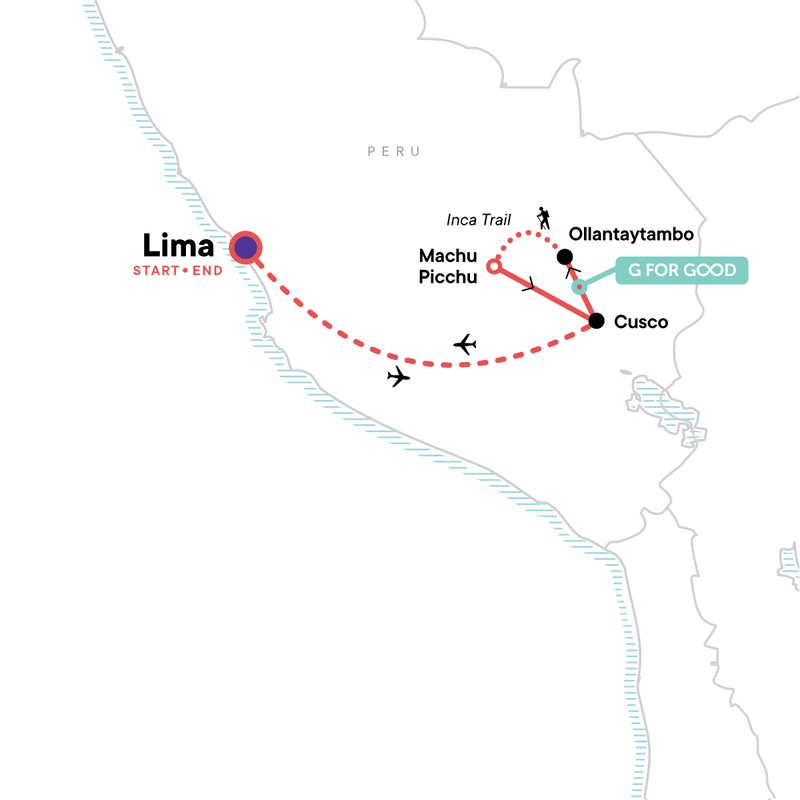
All travelers begin together in Lima and Cusco, exploring key historical and cultural sites. On Day 4, the group splits into their chosen itineraries:
(1) Inca Trail: A great choice for those looking for a challenge, this itinerary starts with time in Lima and Cusco to acclimate to the altitude. On Day 4, you’ll begin the iconic four-day Inca Trail hike, reaching altitudes of 13,769 ft. Porters carry most of your gear, so you’ll only need to hike with a small daypack, and you’ll enjoy freshly prepared meals each day.
(2) Lares Trek: This trek is a less crowded alternative to the Inca Trail and more focused on remote Andean communities. Like the Inca Trail, you’ll spend time in Lima and Cusco before starting the three-day Lares Trek on Day 4, reaching heights of 15,748 ft. Though considered a moderately difficult hike, the altitude makes this trek challenging. Porters will carry your gear, and chefs will prepare delicious meals along the way.
(3) Non-Hiking: This option offers rich cultural experiences without any trekking. You’ll spend time exploring Lima, Cusco, and the Sacred Valley, including a visit to the Maras Salt Mines and Moray. Day 4 is dedicated to visiting Ollantaytambo, but you won’t be hiking. Instead, you’ll enjoy scenic drives and guided tours before returning to Cusco in the evenings. Accommodations are in hotels throughout the trip.
On Day 6, the Lares Trek and Non-Hiking groups meet in Ollantaytambo and take the scenic train to Aguas Calientes. Inca Trail hikers complete their trek early on Day 7, and the entire group reunites at Machu Picchu for a guided tour and free time to explore. The program continues with shared travel back to Cusco, a final night in Lima, and departure on Day 9.Find more details in the itinerary section, below.
What's Included:
Ccaccaccollo Community and Women's Weaving Co-op visit
Parwa Community Restaurant – Sacred Valley
Sacred Valley guided tour
Pottery making demonstration
Hike the Inca Trail or Lares Trek hike with local guide, cook, and porters; or, for non-hikers, Maras Salt Mines, Moray archaeological site, Piuray Lagoon, and Cusco colonial walking tour
Machu Picchu guided tour
G Adventures representatives in Lima and Cusco; specialist trek leaders on hikes
Arrive at any time. There are no planned activities until the Welcome Meeting in the evening. The nearest airport is Lima's Jorge Chávez International Airport (LIM).
Consider arriving 1-2 days early to explore the city, adjust to the time zone, and buffer against flight delays. We can request extra hotel nights for you before the program begins.
Hotel Check-in and Welcome Meeting
Hotel check-in is normally between 2–3 p.m. Check with reception for the exact time and location of the group welcome meeting, typically between 6–7 p.m. Please make every effort to attend this meeting. If you're running late, send a message in the group WhatsApp or call the emergency number on your trip voucher so that your tour leader can let you know where and when to meet the group.
After the meeting, you might choose to get dinner at a nearby restaurant with your traveling companions and your tour leader to further get to know one another.
Lima Cooking Class: If you book this optional activity, we highly recommend booking a pre-trip hotel night. Participants will be picked up from the group hotel at ~10:00 a.m. and taken to a local market and restaurant to prepare a traditional Peruvian meal. They will return to the group hotel around 1:00 p.m.
Joining Instructions
Taxi: (~$27 USD | ~45min) Use the official taxi stand immediately after customs and immigration as you head toward the exits. Pay the set rate at the stand to avoid the more chaotic situation outside the airport with competing drivers.
Pre-Booked Arrival Transfer: If you purchased a transfer with us, a G Adventures representative will meet you at the airport arrivals area with a sign displaying your name. If you're not met or cannot make contact, call the emergency number on your trip voucher or take a taxi/shuttle to the hotel (save your receipt).
*Money exchange facilities are available in the Arrivals area 24 hours.
*The start hotel offers free luggage storage for excess bags during your tour.
This morning, transfer to the airport for the flight to Cusco, where you will spend the rest of the day relaxing and exploring this fascinating city, and – most importantly – getting used to the altitude. Please take it easy on your first day as strenuous activity can exacerbate symptoms of altitude sickness. You will be returning to Cusco for a full free day later on in the trip, which will give you more time to explore.
Please note: If you pre-book the Cusco Cooking Class you will be picked up from your hotel at approximately 12:30 and taken to a local market and restaurant to prepare and enjoy a traditional Peruvian meal. Return back to your hotel around 4 p.m.
Approximate travel time: 1-1.5 hrs by flight Meals included: Breakfast
Enjoy a full-day guided tour of the Sacred Valley.
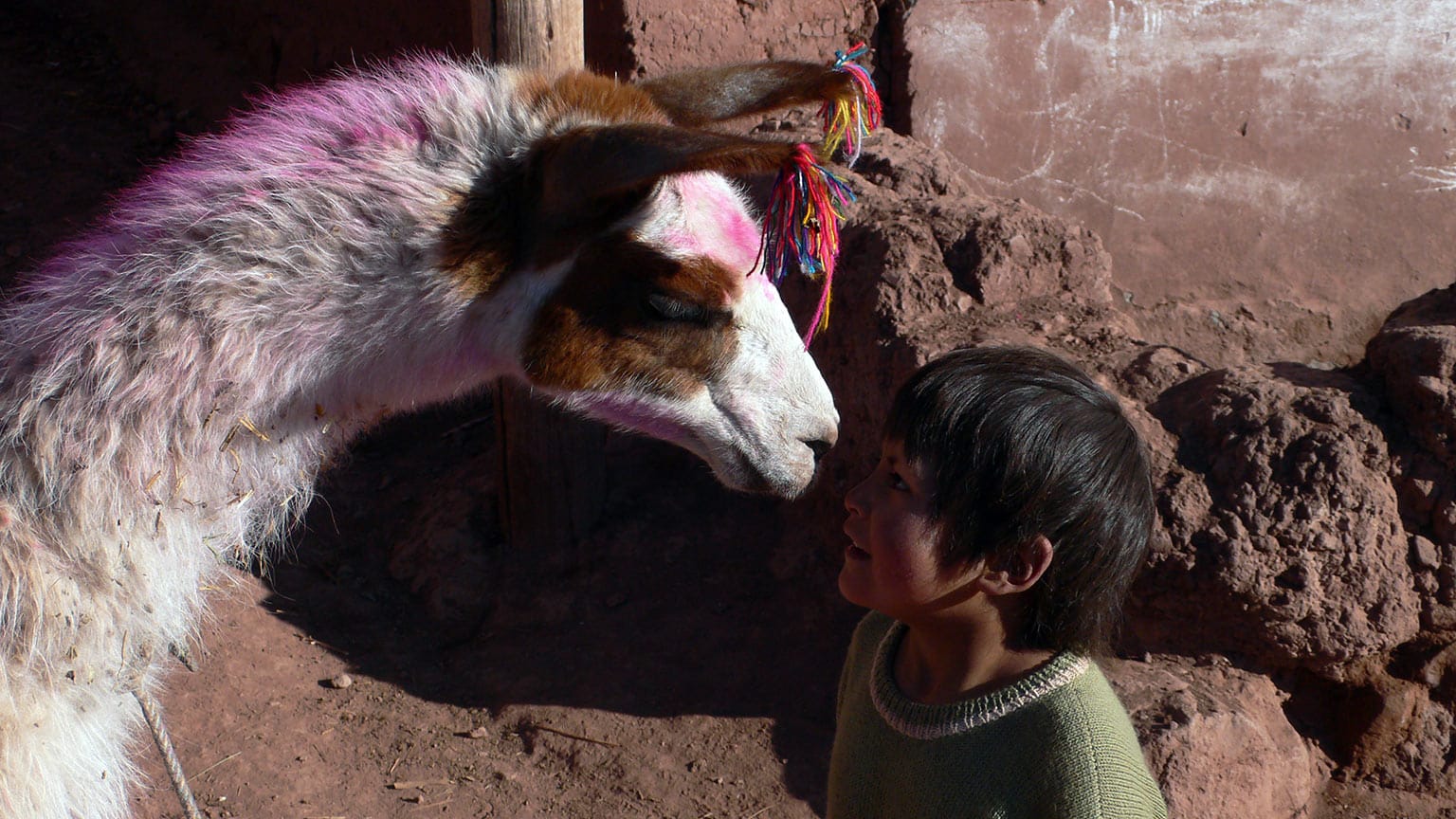
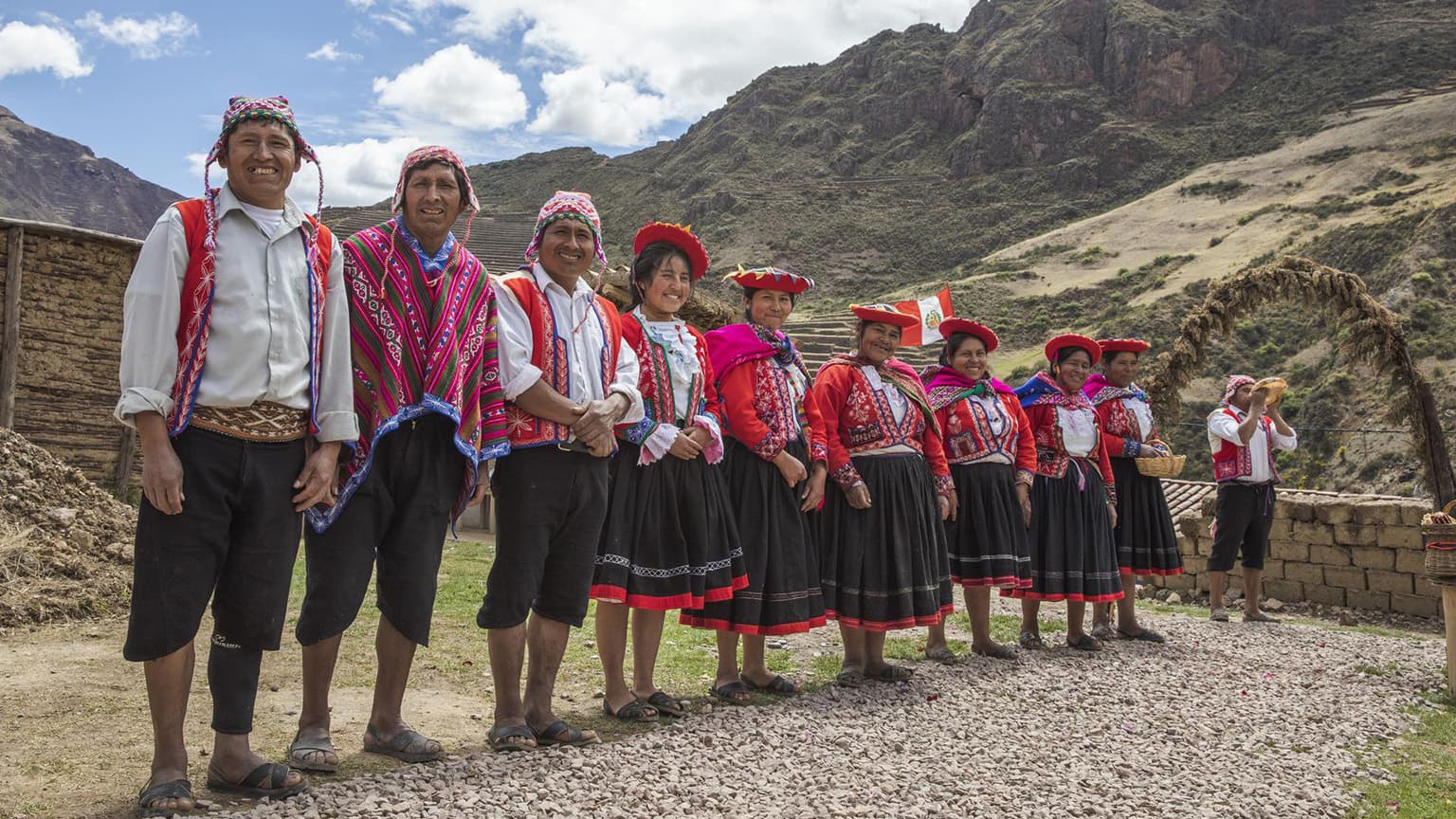
Visit the Ccaccaccollo community center, where local women sell traditional textiles to travelers. See local weaving and dyeing techniques used to create garments and souvenirs, and learn how the Planeterra weaving co-operative has impacted the community and those who visit it.
Next, visit the rural village of Cuyo Chico, where a group of families joined together to create a small business based on their traditional adobe ceramic crafts. Using clay from their surroundings, they mold bowls, plates, and all manner of decorations. Learn about the ceramics process as well as the traditional adobe brick-making that is used for constructing houses throughout the valley, all while taking in a spectacular view of the Pisac Ruins.
Have lunch at the G Adventures-supported Parwa Community Restaurant. Learn how the resident-run restaurant was kickstarted by G Adventures and the Multilateral Investment Fund to become a successful farm-to-table program that boosts the local economy and several spin-off microenterprises.
After lunch, opt to head out on a hike to the Ollantaytambo storehouses and look out over the ruins. Or, wander around the cobblestone streets and visit a local Chicheria (corn beer bar).
Approximate travel time: Full day by private vehicle with many stops Meals included: Breakfast | Lunch
This morning, the group will split into three: Inca Trail trekkers, Lares trekkers, and Non-Hikers.
Inca Trail Itinerary
The 3.5-day Inca Trail to Machu Picchu is physically challenging but worthwhile, and the excursion is within the ability of most reasonably fit. It is a 40-km (25-mi) hike, with three high passes to be crossed, one of which reaches an elevation of 4,200 m (13,776 ft). The trail is often steep, and it may rain even during the dry season. The temperatures at night may fall below zero, so it is important to come prepared.
Depart Ollantaytambo for "Km 82," where you will begin walking in the footsteps of the Incas. Our local crew of porters, cook, and guide will look after you for the duration of the hike. Porters carry the majority of the gear for the hike, so those passengers doing the hike only carry a small daypack with water, rain gear, snacks, a camera, etc. As you walk the trail that linked this ancient empire, admire breathtaking views at every step as you move from high plateau areas to dense cloud forest. Depending on the season, you may see a great variety of flora, including miniature and large orchids and fiery rhododendron bushes.
Today the trekking is fairly easy and serves as good training for the next few days. Pass meandering streams, stunning Andean scenery, and ancient Incan ruins.
Start point Km 82 to Wayllambama
Approximate distance: 11 km (6.8 mi)
Approximate hiking time: 5–6 hrs
Lares Trek Itinerary
Those who wish to hike but register after Inca Trail permits sell out can hike the Lares Trek instead. Equally as difficult as the Inca Trail, the Lares allows you to hike on a more off-the-beaten-track route that winds through remote Andean villages. The hike is 2.5 days long. You will have similar camping and porter services as the Inca Trail hikers.
On day one of the trek, have an early morning start and will take a van (3 hrs) to the town of Lares, where the hike will start with a leisurely pace through the valley of Cuncani. Hike 4 km (2.5 mi) to Chancachaca, where you will stop for lunch. Altitude here is around 3,480 m (11,417 ft). After lunch, continue to Cuncani, where you will camp for the night at 3872 m (12,703 ft). The camp is a International Development Bank, International Monetary Fund, and Planeterra supported project.
Lares town to Cuncani
Approximate distance: 9 km (5.59 mi)
Approximate hiking time: 4.5 hrs
Non-Hikers Itinerary
Anyone electing not to hike will have 2 extra days to explore Cusco instead of hiking. When the trekkers leave this morning, travelers staying in Cusco will be accompanied by the Cusco tour leader on an extended Sacred Valley tour.
Drive a little more than an hour to get to the Moray archaeological site. Tour these unique Inca ruins, consisting of circular terraces and a sophisticated irrigation system located at 3,500 m (11,483 ft). Learn about the history and study of this fascinating site – speculation has it that it was an Inca agriculture experiment station.
After Moray, visit the impressive Maras Salt Mines. See thousands of individual ancient salt pools spilling over a hillside. Learn about the different varieties of salt and try the renowned pink salt, famous worldwide.
Then, set out on a scenic drive above the Sacred Valley of the Incas, stop along the way to lookout over small farms carved into the hills and small villages dotted along the landscape. Enjoy a picnic lunch at picturesque Piuray Lagoon, opt to relax, explore the lagoon by kayak, or stand-up paddleboard.
Afterwards, travel another 1.5 hrs to Cusco for another 2 nights in this wonderful city.
The price for the trekking and non-trekking option is the same. Non-trekkers only receive breakfasts and one lunch, whereas trekkers will receive all meals while trekking.
Start early to trek over progressively more spectacular and steeper terrain on our way to Warmiwañusca (or Dead Woman’s Pass), the highest point of the trek at 4,198 m (13,769 ft). Be prepared to face strong Andean weather (blazing sun or cold winds) around the pass. Take the hike slow and drink lots of water along the way – amazing views are waiting as a reward. Finally, enjoy ample time to rest and relax after reaching the camp. Most campers arrive around early afternoon.
Wayllabamba to Paqaymayo
Approximate distance: 12 km (7.5 mi)
Approximate hiking time: 6–7 hrs
Lares Trek Itinerary
Today, hike from the foothills of Sicllaccasa Mountain 12.2 km (7.6 mi) to its high pass at 4,750 m (15,583 ft), providing scenic views of lagoons and the snow-capped Chicon Mountain. After reaching the highest point, celebrate by making an offering of coca leaves to the Andean gods. Following a short descent, hike another 2.2 km (1.3 mi) to Queuñapata for lunch and to take in the amazing view. Close out the day by hiking downhill another 2.6 km (1.6 mi) to our second campsite near a stream. You will spend the night at an elevation of around 4,114 m (13,497 ft).
Cuncani to Kuyoc
Approximate distance: 17 km (10.5 mi)
Approximate hiking time: 9 hrs
Non-Hikers Itinerary
After breakfast, walk over to the Cusco Cathedral, where a guide will meet your group and lead you on a walking tour focused on Cusco's colonial history. During the tour, you will see colonial and Inca architecture visible throughout the city and visit the Sapantiana colonial aqueduct. Lunch near the main plaza is included. The tour will end back at your hotel, and you will have some free time in Cusco that evening.
Some suggestions for your free time:
Cusco Tourist Ticket (Boleto Turístico del Cusco) 130 PEN per person This ticket allows admission to 16 sites in and around the City of Cusco, including several museums, Inca ruins, and archaeological parks. Some museums and archaeological sites in Cusco only accept this ticket—there is no option to pay individually at the door.
It is valid for 10 days and includes highlights such as:
* Sacsayhuaman Archaeological Park – A must-see Inca complex just outside the city.
* Q’enqo, Puka Pukara, and Tambomachay
* Museo Histórico Regional (Regional History Museum)
* Museo de Arte Contemporáneo (Contemporary Art Museum)
* Museo de Arte Popular (Folk Art Museum)
* Tipón and Pikillacta in the South Valley
* Several archaeological sites in the Sacred Valley, including Ollantaytambo, Pisac, and Chinchero
Your tour leader or the hotel can help arrange a taxi to reach these locations.
Other Museums (do not require the Cusco Tourist Ticket)
* Inka Museum – 10 PEN per person. This museum is run by the National University and does not accept the Cusco Tourist Ticket. It features an impressive collection of Inca artifacts, including mummies, ceramics, jewelry, and skulls.
* Museo Machu Picchu – Casa Concha
* Museo de Plantas Sagradas, Mágicas y Medicinales
Evening Cultural Performances: There is a small theater located close to the hotel that offers traditional dance performances on select evenings. Ask the front desk for current schedules and assistance with tickets.
Whitewater Rafting – Urubamba: 165 PEN per person Rise for an early morning pick up and drive to Chuquicahuana for a safety briefing. Enjoy a full day of rafting on the Upper Vilcanota River (about 2.5 hrs on the water). Be thrilled by fast rapids that are a constant Class III and IV for around 11 km (9 mi), and do not forget to take in the gorgeous scenery. Rehash all the excitement afterward over a riverside picnic lunch.
Today, cross two more passes and more ruins along the way. The first pass is at 3,998 m (13,113 ft) where, on a clear day, you can catch a glimpse of the snow-capped Cordillera Vilcabamba. You’ll hike through a cloud forest on the gentle climb to the second pass of the day, where you walk through original Incan constructions. The highest point of this pass is 3,700 m (12,136 ft). On a clear day, enjoy the views of the Urubamba Valley. At 3650 m (11,972 ft), you’ll reach the ruins of Phuyupatamarca, the "Town Above the Clouds." Camp here or 1.5 hours further along, near the Wiñay Wayna ("Forever Young") ruins.
Paqaymayo to Wiñaywayna
Approximate distance: 16 km (10 mi)
Approximate hiking time: 9 hrs
Lares Trek Itinerary
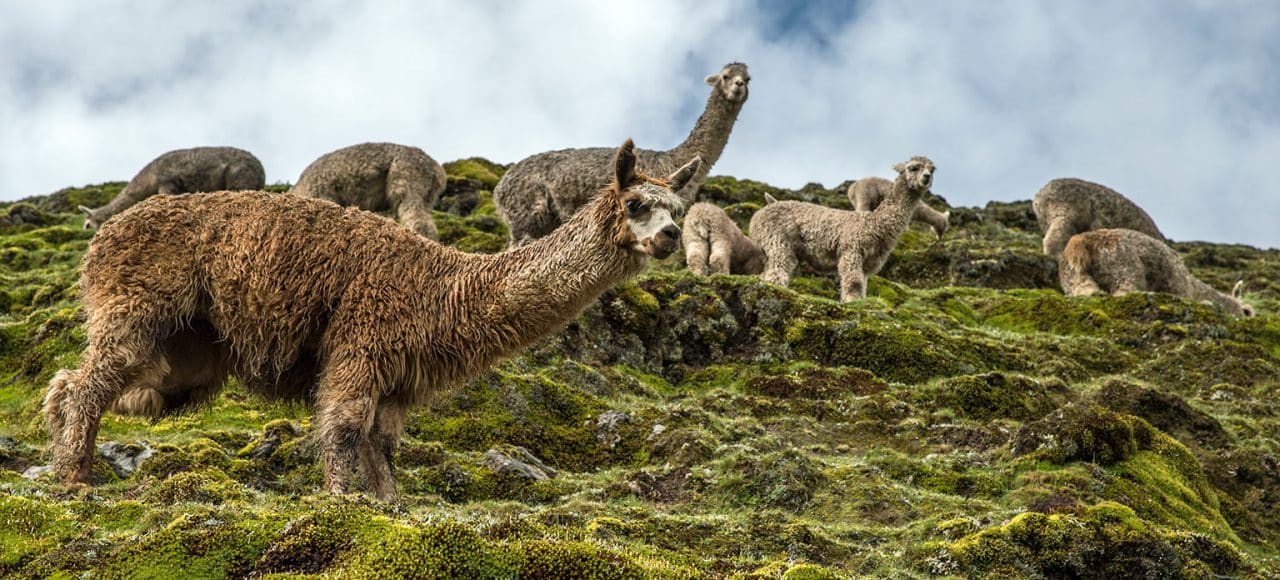
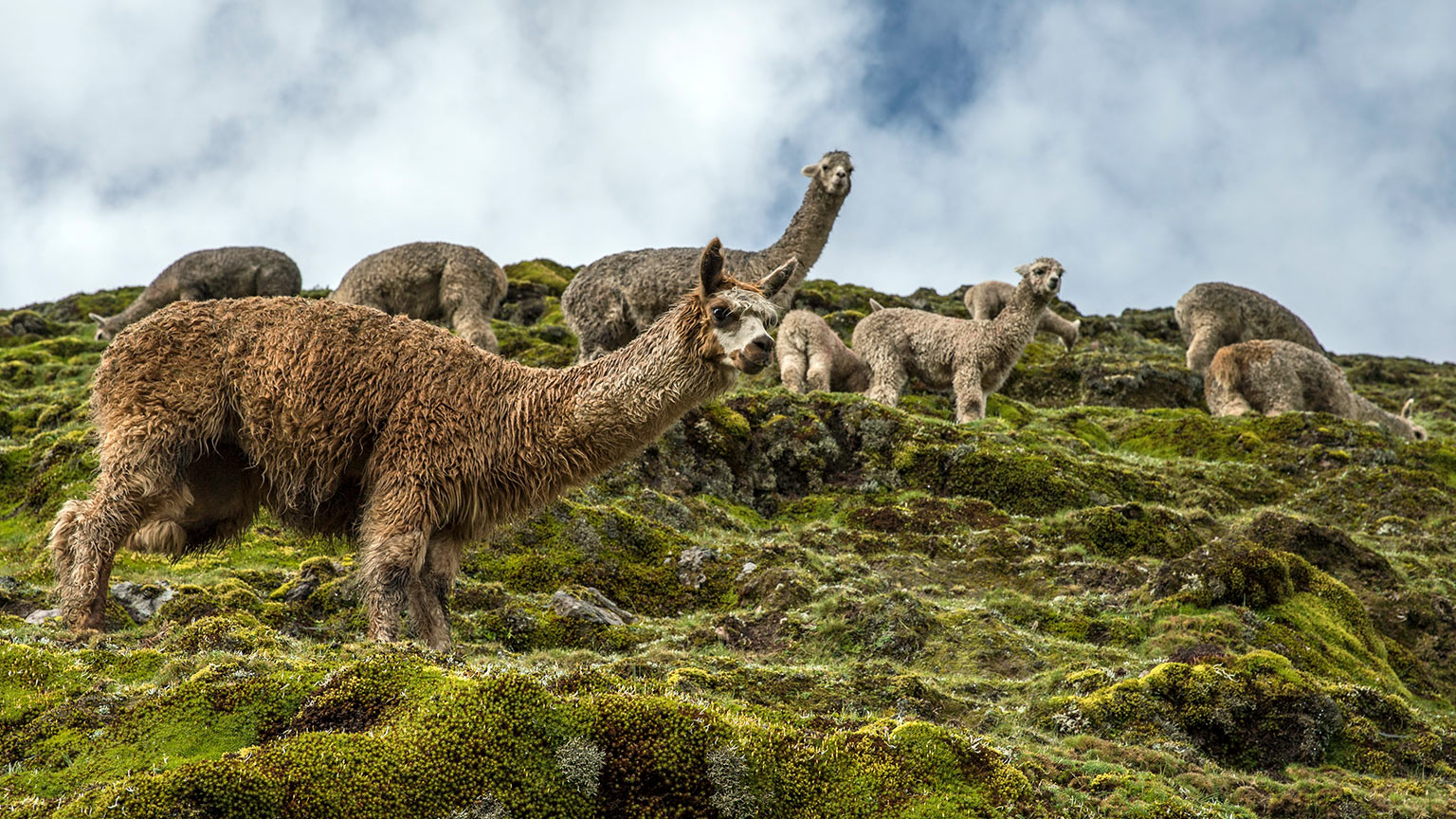
This morning, follow the trail, passing by typical Andean flora and fauna, llamas, and alpacas. Descend through the valley of Pumahuanca, meet friendly local Quechua people, and explore some Inca storehouses along the way. This trek will take 3-4 hrs to reach the town of Pumahuanca, where you will enjoy lunch before hopping in a van to Ollantaytambo. Continue by train to Aguas Calientes.
Kuyoc to Punta Carretera
Approximate distance: 10.5 km (6.5 mi)
Approximate hiking time: 3.5 hrs
Non-Hikers Itinerary
Today, travel by private vehicle 2 hours to Ollantaytambo, where you will meet up with the Lares trekkers and catch the scenic train to Aguas Calientes, where you will spend the night.
The final day of the hike starts pre-dawn to reach the Sun Gate as early as possible.
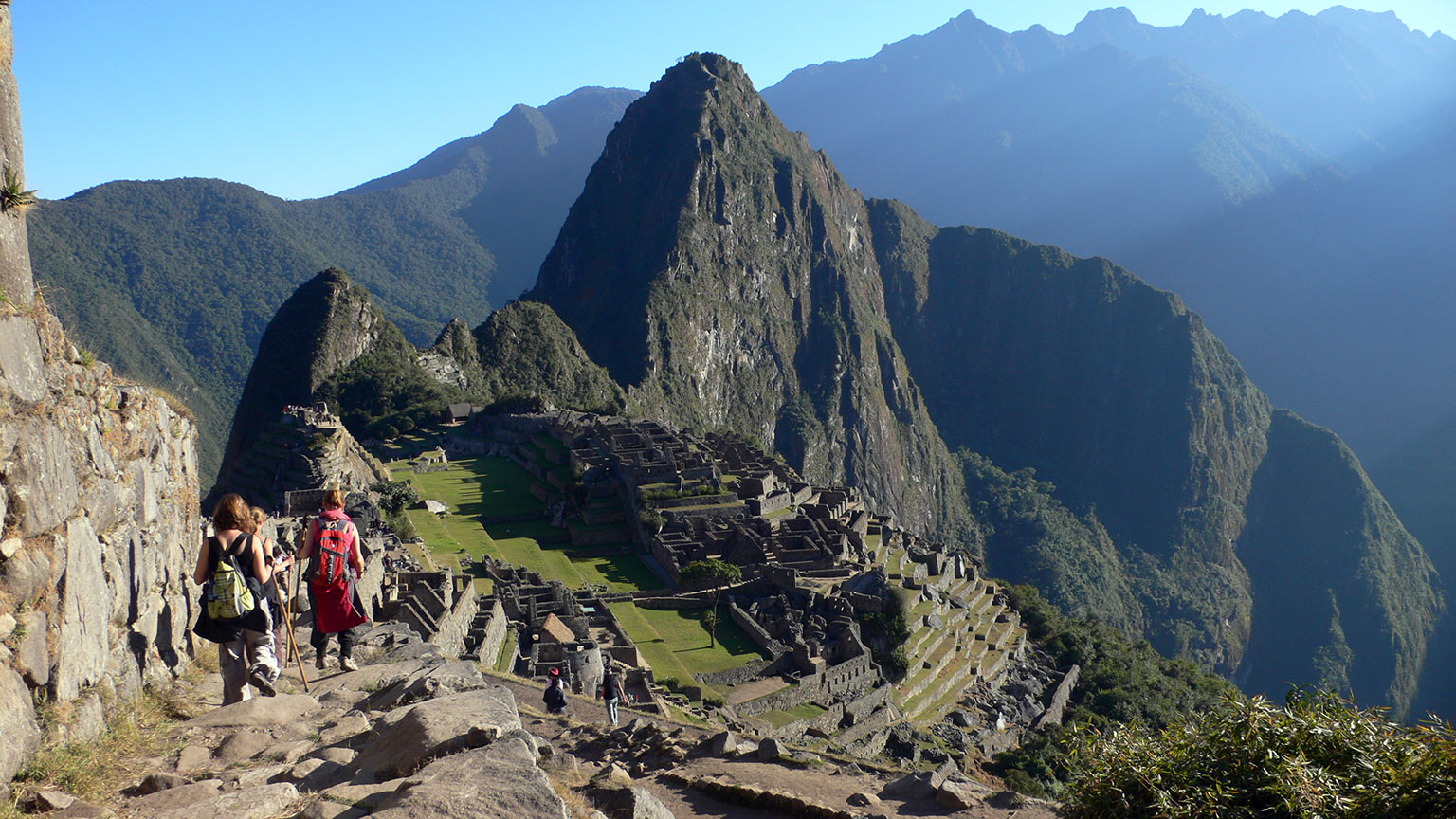
Wake around 3:30 and walk to the checkpoint. Join the queue to wait for the gate to open. Catch your first views of the breathtaking ruins of Machu Picchu (and cross your fingers for a clear day). Hike down to Machu Picchu (about 45 mins) and join the rest of the group for a 1.5-hr guided tour of the site and some free time to explore
Wiñaywayna to Intipunku (Sun Gate)
Approximate distance: 4 km (2.5 mi)
Approximate hiking time: 1.5 hrs
Lares Trek and Non-Hikers Itinerary
Wake up early to experience dawn at Machu Picchu, where you will join the Inca Trail trekkers on a guided tour of the ruins. You will also have some free time to explore the ruins on your own.
Entire Group
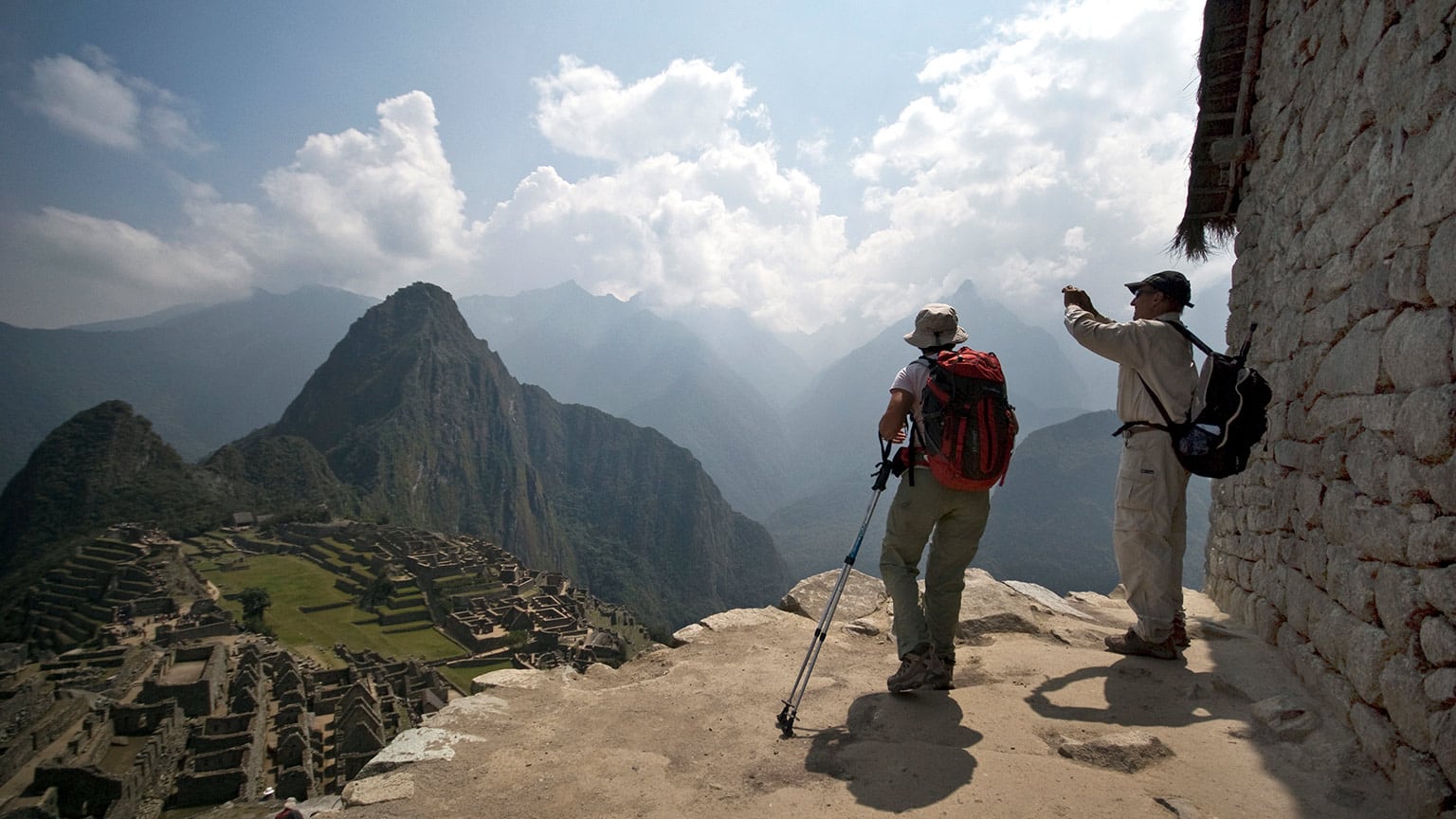
Machu Picchu is both the most magnificent and the least understood of the Inca ruins. It is not mentioned in any of the chronicles of the Spanish conquistadors, and archaeologists today can do no more than speculate on its function. The local Quechua farmers in the area knew of Machu Picchu for centuries, but it was not until an 11-year-old boy led the American historian Hiram Bingham (who was in search of Vilcabamba) to the site on July 24, 1911, that the rest of the world became aware of its existence. At that time, the site was covered in thick vegetation, and Bingham and his team returned in 1912 and 1915 to clear the growth. Over the years, much work has been done on excavating and studying the site. Despite these efforts, many unanswered questions remain.
Follow the local guide to Machu Picchu to learn about its history at a leisurely pace. Gain local insight into the Inti Mach’ay cave, Inti Watana, the Temple of the Sun, the Temple of the Water, the Temple of the Condor, and the Room of the Three Windows. Take time to sit and feel the energy of this 15th-century site, now both a UNESCO World Heritage Site and voted one of the new Seven Wonders of the World (in a worldwide Internet poll).
Use any leftover energy from your Machu Picchu hike to visit the Inca Bridge site nearby, thought by some to be a secret back entrance to Machu Picchu. Trek up to the bridge that's cleaving to a 579 m (1,900 ft) cliff and soak in amazing views of cloud forest along the way.
Please note about Huayna Picchu: Although this hike may be promoted by others, we cannot verify that this hike meets G Adventures minimum safety standards. We do not include the Huayna Picchu hike in any of our itineraries, and our tour leaders and support staff are prohibited from providing advice or assistance with booking this activity.
After exploring Machu Picchu the group will travel back to Cusco.
Approximate travel time: 1.5 hrs by train; 2 hrs by private vehicle Meals included: Breakfast
There are no planned activities today, so you may depart Lima at any time. If you wish to extend your stay in Lima, consider booking post-tour accommodation with us.
Please note that check-out time from the hotel is usually mid-morning, but luggage storage services are available at the reception desk.
Meals included: Breakfast
Want more adventure? Book two or more GEEO programs in the same school year and receive 10% off the lesser value program(s), up to 3 programs per year.
Interested in extending your time abroad? We can help you find a trip from our tour partner G Adventures' larger catalog. Their tours are open to the general public and not designed specifically for educators, but by booking through GEEO we can offer you a discounted educator price, and you will be helping our non-profit.
The hotels listed below reflect the properties expected to be used for this program. Final accommodations are subject to change based on group size, availability, or seasonality. The confirmed start and end hotels are listed on your trip voucher:
Day 1 Lima (Jul 8): Ibis Budget Miraflores
Day 2 Cusco (Jul 9): Hotel Prisma
Day 3 Ollantaytambo (Jul 10): Hotel Inka Paradise
Day 3 Ollantaytambo (Jul 10): Hotel Inka Paradise
Day 4 Cusco (Jul 11): Campsite Wayllabamba
Day 4 Lares (Jul 11): Cuncani Camp Site
Day 5 Machu Picchu (Jul 12): Pacaymayo Campsite
Day 5 Lares (Jul 12): Suttoq Pacchaq Camp Site
Day 6 Machu Picchu (Jul 13): Hotel Wiracocha Inn
Day 6 Machu Picchu (Jul 13): Wiñaywanyna Campsite
Day 7 Cusco (Jul 14): Hotel Prisma
Day 8 Lima (Jul 15): Ibis Budget Miraflores
*Itinerary Disclaimer: While it is our intention to adhere to the routes described on our website, there is a certain amount of flexibility built into the itinerary and on occasion it may be necessary, or desirable, to make alterations. The itinerary is brief, as we never know exactly where our journey will take us. Due to our style of travel and the regions we visit, travel can be unpredictable. The information on our website is a general guide to the tour and region, and any mention of specific destinations or wildlife is by no means a guarantee that they will be visited or encountered. Additionally, any travel times listed are approximations only and subject to vary due to local circumstances.
Details
Important
Before you decide to travel with GEEO, it is important that you read all of the program information on this page. Our programs are quite adventurous, and we find that travelers who review the full trip details are happier with their experiences.
Terms and Conditions: Review GEEO's full Terms and Conditions before signing up for a GEEO program, especially information related to deposits, our cancellation policy, mandatory travel insurance, etc.
The fitness level required varies by route. Everyone will need to handle the high altitude of the Andes, and at its base, the trip includes light walking and hiking. If you choose the Inca Trail or Lares Trek, the hiking can be demanding—even for the fit—so train beforehand for long days navigating rough steps.<
GEEO participants of all ages and fitness levels have completed the treks, including a woman who was four months pregnant, a man with double hip replacements, and a 58-year-old woman who found it more challenging than childbirth.
PERMITS & BOOKING REQUIREMENTS
Inca Trail permits are limited in quantity and sell out months in advance. If you want to hike the Inca Trail, book as early as possible for the next year.
Passport requirements: Inca Trail permit data must exactly match your passport data (including middle names, hyphens, and spacing). Any name corrections after permit submission incur a $125 fee. Late submissions may result in the inability to secure permits.
Inca Trail permits are included in your program fee. You will be charged a non-refundable $125 Inca Trail fee only if you select the Inca Trail itinerary and then cancel your trip (see Terms & Conditions), switch to the Lares Trek or train option after permits are issued, change your departure dates, or require name corrections on permits.
If Inca Trail permits are sold out, participants who still wish to hike can take the amazing Lares Trek instead. No permits are required for the Lares Trek.
For the Non-Hiking/train option, please let us know at the time of booking so we can arrange the non-hiking itinerary.
For complete terms, see our Inca Trail Terms & Conditions.
Our program fees are based on double-occupancy accommodation (see "Single Travelers" below if you do not have a travel companion and would be interested in a private room). Our accommodations are chosen to provide a safe, conveniently located place to sleep. While you may be pleasantly surprised, please don't expect luxury, as we prioritize keeping our programs affordable. Sometimes the accommodation is not air-conditioned.
Hot Water: Hot water shortages and power outages can be fairly common in Peru, even in upgraded hotels and private homes. We appreciate your patience and understanding that these occurrences are outside of our control.
PACKING FOR THE TREKS
Weight Limits: In our continued effort to support the rights of the porters on the Inca Trail, we would like to ensure that they never exceed the weight limit for their packs as set out by the Peruvian authorities. Porters are allowed to carry no more than 6 kg of personal belongings per hiker (for all other Peru treks the limit is 7 kg). This includes your sleeping bag, toiletries, clothing, etc., carried in a duffel bag provided by G Adventures.
Any additional weight must be carried by you in your day pack. Packing Tips: Bring travel-sized toiletries, sport sandals that work with socks (lighter than hiking shoes), and limit electronics to essentials you're willing to carry. Additional baggage can be left in Cusco, but bring valuables (money, passport, credit cards, camera) on the trek.
Overnight Bag: You'll leave your main suitcase in Cusco for some nights, so bring a smaller backpack with essentials and change of clothes. This applies to all travelers, whether you are hiking or not.
HEALTH & SAFETY
Yellow Fever: As of May 2025, the CDC recommends yellow fever vaccination for travelers visiting Machu Picchu and its surrounding areas. Vaccination is not required for entry into Peru, but if you choose to receive the vaccine, be aware that it takes 10 days to become effective.
Altitude: Our adventure takes you to high altitudes, medically defined as over 2,440 m (8,000 ft). While most people experience minimal effects, altitude sickness can affect anyone, and in rare cases, severe reactions may require returning to lower altitudes. Consult your doctor about preparation and ensure medications are safe at elevations over 11,000 feet.
Lima Taxis: Be cautious when taking taxis in Lima. Avoid hailing taxis from the street, as some may be unofficial and unsafe. Always have your hotel or a reliable location call a taxi for you. Be aware of your route and ensure the driver avoids side roads in the Callao neighborhood.
GROUP LEADER
This program is run differently from our typical programs. Instead of one tour leader throughout, there are different support staff in the different locations. The first G Adventures staff member will lead your introduction meeting in Lima and take you to the airport the next morning. The second support staff member will handle all activities in Cusco and the Sacred Valley. There will be separate specialist guides for the trekkers. At all times on the ground, there will be someone supporting you.
PROGRAM DETAILS
Single Travelers
Traveling solo? You’re in good company—about half of our participants do the same.
Shared room by default. The program fee covers one person in a twin room. We’ll pair you with a roommate of the same gender if you don’t have a travel companion.
Want a private room? Most trips offer a “My Own Room” (single-supplement) upgrade. Check the price in the Extra Services section, then email travel@geeo.org to reserve it. You pay the single-supplement only if you request it.
My Own Room Exception: Receive private accommodation every night except nights 4-6 (if you hike the Inca Trail) or nights 4 and 5 (if you do the Lares trek).
Emergency Contacts
If you need urgent help during your trip, call the local G Adventures office first. If no one answers, leave a detailed message with your name and contact information so they can return your call as soon as possible.
EMERGENCY CONTACT NUMBERS:
G Adventures Office Lima, Peru
During office hours (Weekdays, 9:00 a.m.-6:00 p.m. Local Time): +51 1 241 1650 or 01 241 1650 (from mobile within Peru) or 241 1650 (from payphone within Peru)
After hours Emergency number: +51 99 758 2712 (WhatsApp available)
If for any reason you are unable to reach the G Adventures local office, please call the numbers listed below to connect with their Sales team, who will happily assist you.
Toll-free, North America only: 1 888 800 4100
Calls from UK: 0344 272 0000
Calls from Germany: 0800 365 1000
Calls from Australia: 1 300 796 618
Calls from New Zealand: 0800 333 307
Outside North America, Australia, New Zealand, Germany and the UK: +1 416 260 0999
Packing List
See our blog post of staff-recommended gear to help you pack for your upcoming travels. You must be able to carry your own luggage—up stairs, on and off of transport, and during 15 to 20 minute walks. Bring one small or medium backpack or rolling bag (22-30lb) and one daypack for daily items. Space is limited on transportation, so oversized bags cannot travel.
Weight Restrictions: There may be a weight restriction for the internal flight on this program. Additional bags or excess weight charges may apply. These charges are the responsibility of the passengers.
As you prepare your packing list, we recommend checking average weather conditions for your destination.
SUGGESTEDINCA TRAIL/LARES TREKOPTIONALDOCUMENTS
Windproof/waterproof rain jacket (very important)
Personal clothing for cool to mild weather – we recommend packing 7 or 8 days of outfits so you only have to do laundry once
Fleece or down top – it gets down into the 30s F at night in the Andes!
Winter hat
Light hiking boots or sturdy walking shoes
Daypack
Sunblock
Sunglasses
Sun hat
Water bottle
Watch or alarm clock (or use your phone)
Toiletries
Camera (or use your phone)
First-aid kit, including lip salve, aspirin, bandaids, anti-histamine, Dramamine, Imodium or similar tablets for mild cases of diarrhea, electrolyte powder, insect repellent, extra prescription drugs you may be taking
Inner sheet (for sleeping bag)
Wool hat, mitts, or gloves (preferably waterproof)
Rain poncho
Strong plastic bags to help keep gear dry
Winter sleeping bag – this can also be rented locally from G Adventures for 45 Peruvian Soles (about $15 USD), inner sheet included
Mattress – a foam mattress is included as part of the hike; you can upgrade this and rent a self-inflating type mattress locally from G Adventures for 45 Peruvian Soles (about $15 USD)
Anti-inflammatory tablets (e.g., Ibuprofen)
Thermal underwear
Packable jacket for low temperatures – I recommend down or synthetic down
Walking poles – can also be rented locally from G Adventures for 30 soles for a pair (about $10 USD)
Go-Girl (A product that helps women use squat toilets)
Gatorade Powder packets
Hand sanitizer/Baby wipes
Flashlight – headlamp preferred
Travel pillow
Money belt
Phone/tablet for internet – most hotels have WiFi
Chargers for electronic, as well as converters/adapters, if needed
AirTags or Tile trackers
Packing cubes
Earplugs
Snacks – packing a few granola bars is a good idea; you can buy snacks when you get there too, so don't go crazy here
Ziplock bags
Reading/writing material
Hand sanitizer/baby wipes
Passport (with photocopies)
Any entry visas or vaccination certificates required
Travel insurance ID card
Flight itinerary/boarding pass(es)
USD/EUR cash
Credit/debit card
G Adventures vouchers
GEEO Classroom action plans for your group – this is sent a few days before departure
*Laundry: Laundry facilities are offered by some of our hotels for a charge, or you can ask your tour leader where the nearest laundromat is located. There will be times when you may want to do your own laundry, so we suggest you bring non-polluting/biodegradable soap.
Passports and Visas
Travelers are responsible for securing all required travel documents and meeting the entry requirements for every country on their itinerary, including applicable transit/layover countries.
PASSPORT
All travelers must have a passport valid for at least 6 months beyond your trip dates with enough blank pages for stamps. Need to apply or renew? Start here.
ENTRY/VISA REQUIREMENTS
Visa rules change frequently—always verify the latest requirements on the U.S. State Department Country Information Pages. Non-U.S. passport holders should verify requirements with your country's official government resources. Use the tool below to see entry requirements for your specific itinerary.
Entry information below is provided by Sherpa, a third-party service and trusted G Adventures partner. You must search each of your destination countries separately; “Add connection” solely searches transit visa requirements. Additional fees apply if you choose to purchase any services through Sherpa.
Money Exchange
Currency: The local currency in Peru is the Sol (PEN). For current exchange rates, visit www.xe.com.
Credit/Debit Cards: Credit cards (especially Visa and Mastercard) are accepted at many hotels, shops, and restaurants, but not everywhere. Some vendors may also charge an international transaction fee, so check with your bank before you travel.
Cash: For small purchases, tipping, or places that don’t take cards, we recommend using ATMs to withdraw local currency while traveling. If you bring U.S. dollars to exchange, the bills must be new, unmarked, and in excellent condition—damaged or older notes are often rejected.
Emergency Funds: Bring at least $200 USD (or the equivalent in local currency) in cash for emergencies in case of ATM or card issues. Always carry more rather than less to avoid feeling short of funds while traveling.
See the Estimated Trip Costs section at the bottom of this page for budgeting guidance.
For more advice, see our post, Smart Travel Finances: Your Guide to Money, ATMs, Fees, and Safety Abroad
Tipping
Tipping is optional but appreciated and goes a long way for the people who look after you on the trip. If you are happy with the service, use these ballpark amounts and adjust as you see fit:
- Service providers/Waiters: 10% of the bill.
- Local guides and drivers: $5-10 USD per person per day.
- Trekking support team: $40 USD(Inca Trail) or $35 (Lares Trek), per person. Please bring small bills, as porters may prefer to be tipped individually.
- G Adventures tour leader (CEO): $2-3 USD per person per day. (We suggest pooling contributions in an envelope and presenting it as a group)Tipping Kitty: On some trips, your CEO may suggest a “tipping kitty” where everyone contributes at the start of the tour, and the CEO uses that pooled amount to tip service providers for the group as a whole (not including your CEO). If your CEO doesn’t mention it and you’d like to use a kitty, we recommend asking about it early in the trip. Your CEO will advise the suggested amount and preferred currency for the kitty.
Vaccinations
GEEO cannot provide any medical advice, so it is very important to consult your doctor or a travel clinic about which vaccinations you will need for your trip. We recommend contacting Passport Health, which has travel clinics located throughout the United States. You can also check the CDC's recommended vaccinations for your destination. Please take this seriously!
Yellow Fever Note: Some countries on GEEO programs may require proof of Yellow Fever vaccination if you are arriving from or transiting through countries with risk of Yellow Fever transmission. This includes long layovers (typically over 12 hours) in affected countries. The vaccine must be administered at least 10 days before entry to be considered valid. Always check with your health provider and the official entry requirements of each country to determine if you need a Yellow Fever vaccination certificate.
Flights
Wait for official trip confirmation via email from GEEO before booking your flights. Prices tend to be lowest 90–120 days out, but that window varies by route and year. Neither GEEO nor G Adventures bears responsibility for any flights purchased before the trip is confirmed.
This program begins and ends in Lima. Please double-check our itinerary for the date by which you must arrive in Lima. You may want to arrive in La Lima or more days early in case you have flight disruptions. You can arrive at any time you choose, but try to make it in time for our 6:00 p.m. Welcome Meeting on Day 1. You can depart from Lima any time on the final day of the program.
Plugs and Converters
Peru uses Type A, Type B, and Type C outlets, and the voltage is typically 220V. To use your electronics safely, you’ll need to consider:
1. Adapter (plug shape)
Adapts your U.S. plug to fit another type of socket. See our recommended all-in-one travel adapter in our Gear Recommendations post.
2. Converter / transformer (voltage)
Steps the outlet voltage down to 120V for U.S. appliances that can’t handle higher voltage.
Check what you need: Look on your device's plug or power brick. “Input: 100-240V” works worldwide—you only need a plug adapter. Any range narrower (e.g., "110-120V" or “Input: 120V”) means you need an adapter and a voltage converter to avoid damage. Converters are inexpensive and available online or in travel stores.
Weather
At this time of year, Lima is typically a bit rainy with a mild temperature. The Andes, where you will spend most of your trip, tend to be cold and dry, but it does sometimes rain in the area. You should pack different layers of clothes so you can adjust throughout the day. Make sure you have plenty of warm clothing, as it gets really cold on the Inca Trail at night. Because we are at a high altitude, the sun can be quite strong so sunblock and a hat are essential.
Historical Monthly Weather Averages
Lima
Loading...
Unable to load weather data.
Cusco
Loading...
Unable to load weather data.
Ollantaytambo
Loading...
Unable to load weather data.
Machu Picchu
Loading...
Unable to load weather data.
Average High
Average Low
Rainfall
Advice From Past Participants
"Most banks were very strict about the condition of the money we wanted to exchange. They wanted money without lines, cracks, tears, even bends in the middle. I would stress that each bill will be inspected and that they will reject money with tears, lines, and/or marks."
"It might ice-rain-snow on the Lares Trek. Don't worry about packing snacks, use your 3 kilos for extra socks and gloves!"
"Be prepared to buy loads of bottled water. The other option is to bring a water bottle with a filter. CamelBak makes an excellent one for under $100."
"The Larco Museum in Lima is a great way to start off your trip if you arrive early. It will provide context for what you learn about the rest of the trip."
"The Inca Trail hike will be cold at night. Fill a water bottle with hot water to keep in your sleeping bag."
"Walking sticks are almost mandatory – I never hiked before, so I was not prepared. I bought the infamous wooden stick in town but really wish I rented the metal ones at the beginning!"
"Do the stairmaster regularly at your local gym if you are going to do the hike."
"I think that the Lares trekking was very, very strenuous"
"For the Inca Trail - weigh all trekking belongings before leaving home! Additionally bring:
-super lightweight clothes with long pants and long sleeves (lots of bugs, dust/dirt)
-lightweight slip-ons with socks to wear at night - slides or Crocs (not flip flops!)
-calf length hiking socks (again lots of bugs, dust/dirt)
-bag scale
-lots of hiking snacks
-lightweight Nalgene water bottle or water bladder bag (no heavy duty water bottle)
-dry towel (I forgot mine!)
-moleskin for blister prevention"
Inca Trail and Lares Trek FAQs and Guides
Use the guides below to prepare for your trek. Click each section to expand detailed information about trail conditions, what to expect, how to pack, and insider tips from past participants.
Expand for Inca Trail Details and FAQs
What is the food like on the trail? Toilets? Tents?
The food is carried by our porters and cooked by our chefs. Most participants think it’s the best food they eat on their entire Peru trip.
Toilets are disbursed throughout the Trail at eating stops and all campsites. Most are squat toilets and sometimes aren’t in the best shape. There are no showers until the third camp.
Tents are provided by G Adventures and handled completely by our porter team – carried, set up, and taken down. The tents give plenty of room for two people.
What do I have to carry on my back on the trail?
Only your water bottle, sunscreen, camera, and a few clothing layers to adjust to temperature changes throughout the day. Porters carry everything else within the 6 kg weight limit per person.
How cold does it get on the trail?
It gets cold at night. The sleeping bags G Adventures rents are very warm and cleaned after every trip. Bring long john tops and bottoms, warm socks, and a warm fleece jacket for camp.
What do I need to bring and what will be provided on the trail?
Bring items from the packing list above. Headlamps are really useful. You can bring your own ground pad and sleeping bag, but make sure it’s a winter or fall bag, not summer. Most participants rent from G Adventures – people who bring their own sleeping bags often regret it because personal bags are typically too light for the cold nights.
What kind of footwear should I use on the trail?
Hiking boots are ideal, but trail running shoes work well too.
How is drinking water handled on the trail?
Our porters boil water at all meals and fill your water bottles with clean, sanitized water.
How do permits work on the trail?
Hiking requires a permit, included in your trip cost. G Adventures handles permits but they often sell out. We can only reserve them with your name, passport number, and deposit. If permits are sold out, you can take the Lares Trek alternative, which is a day shorter, has fewer Inca ruins, and doesn’t hike directly into Machu Picchu. However, people love the Lares Trek because it’s less touristy, you meet locals, and the scenery is equally spectacular.
Should I bring hiking poles on the trail?
If you have them, bring them, but they must have rubber covers – no metal tips allowed by Peruvian Government. Many participants buy walking poles at Walmart for around $18 or purchase simple wooden walking sticks at the trail entrance for very little cost.
Is it hard to adjust to the high altitude?
Most people experience some altitude sickness, but it rarely ruins the trip. Flying from Lima to Cusco (3,310 m/10,800 ft) is a big jump. Consider buying coca leaves or drinking coca tea in Cusco to help adjust and ease symptoms. Ask your doctor about coca use first. Take it easy your first day in Cusco – your body will acclimatize within 3-4 days.
What are the toilets like?
Hotels have Western sit-down toilets. Away from hotels, you’ll use squat toilets (holes in the ground). Many toilets don’t have septic systems for toilet paper – if there’s a trashcan next to the toilet, put used paper there. Always carry toilet paper with you.
Expand for Lares Trek Details & FAQs
The Lares Trek is a moderate hike that will be challenging for the average day-hiker. Although only 20 miles over 3 days, the majority is uphill. The combination of altitude, incline, and trail conditions makes this trek feel substantially longer.
Trail conditions
Vary from small dirt footpaths and dirt roads to rock-covered trails and streambeds. Waterproof hiking boots are recommended – mid-height boots for stability. Downhill portions are covered with loose stones that make it easy to roll an ankle.
Weather & Clothing
Weather changes frequently, so be prepared with layers. It might ice-rain-snow on the Lares Trek – use your weight allowance for extra socks and gloves rather than snacks.
Packing Strategy
You get roughly 20 liters of space on the donkey (think small backpack). Everything else you must carry on your back. Don’t take more than a daypack with essentials: extra shirt, extra socks, headlamp, rain gear, water and snacks. You’ll regret any additional weight.
The gear G Adventures provides is excellent – no reason to bring your own sleeping bag. Rent two walking poles to help your knees.
Training Recommendation
Train for this hike by hiking small mountains locally or walking beforehand. If you’re not ready to walk 10 miles straight at sea level with a 10-15 pound backpack, this hike might be more than you can handle.
Extra Services & Costs
EXTRA SERVICES TO PRE-BOOK
Send us an email if you would like to pre-book any of the extra services listed below for your program. Space and availability are limited, and pricing is not guaranteed until booked.
*Extra services are non-refundable within 30 days of your program's start date.
*Airport transfers require Day 1 arrival/final day departure or pre/post hotel nights booked through GEEO.
*Costs will be added to your final balance.
**My Own Room exceptions apply.
Lima (LIM) Solo=$50, 2ppl=$25, 3ppl=$20, 4ppl+=$15
ACTIVITIES TO PRE-BOOK
Lima Cooking Class (4hrs):
$79 per person
Day 1 (July 8)
Get a taste of Peruvian cuisine, visit local markets, sample exotic fruit, select fresh ingredients, and try your hand at preparing unique Peruvian dishes influenced by China, Italy, West Africa, and Japan. Begins ~10:00am.
Lima Day Tour: Highlights and Insiders Tour (full day):
$95 per person
Pre-trip, Day 1, Day 9, or Post-trip
Delve into Lima's culture and culinary highlights with a day tour visiting Plaza San Martin, Plaza De Armas, the Basilica and Convent of San Francisco and Barranco. Taste some local bites and take in the sights of Peru's beautiful capital. See more details here.
Lima Day Tour: City Highlights (half day):
$38 per person
Pre-trip, Day 1, Day 9, or Post-trip
This half-day walking tour of Lima's historical center will immerse you in the culture of the city. See the incredible views from the top of a bell tower, admire stunning colonial architecture, and prepare to be fascinated by this city's history. See more details here.
Cusco Cooking Class:
$46 per person
Day 2 (July 9)
Channel your inner chef and get a taste of Peruvian cuisine. Learn all about the essential ingredients, and try your hand at preparing unique Peruvian dishes with a local expert
Cusco Day Tour: Humantay Lagoon Hike (full day):
$50 per person
Day 5 (July 12)
*Only Available for Non-Hiking Itinerary*
This full-day excursion takes you trekking along one of the most spectacular stretches of the Salkantay Trail to the turquoise glacial lagoon of Humantay. A physically demanding and active escape from the city, this day hike is a perfect way to soak in the views of the Andes and to breathe the mountain air for those who are not doing one of the multi-day hikes. See more details here.
**Hike participants will forfeit the included Cusco Colonial History tour that takes place the morning of Day 5.
1-Day Inca Trail Hike:
$299 per person
Day 6 (July 13)
*Only Available for Non-Hiking Itinerary*
Cross cloud forests while enjoying spectacular views on this '1-day Inca Trail' trek. Follow the local guide as the trail rises steeply up into the mountains and winds past the archaeological sites of Wiñay Wayna and Inti Pata. Enjoy a packed lunch along the way, and reach the Sun Gate in the late afternoon. Enjoy free time to explore a bit of Machu Picchu before the guided tour the following day. After, take one of the blue buses from Machu Picchu back to Aguas Calientes.
**Requires an Inca Trail permit, which is on request and subject to availability.
Optional Activities
The following optional activities are booked and paid for locally. Prices shown are the most recent figures from participants and G Adventures. Use them as budgeting estimates only—actual costs may vary. If you arrive early or extend your stay, check out our curated list of Viator tours for additional activity ideas.
Cusco City Tour:45 PEN
Tour runs from 2:00PM. All of it is done by car, with walks around the visited ruins. Clothing depends on the weather, sunblock and a hat are recommended.
Inka Museum:10 PEN
Get ready to explore the artifacts from the Inca Empire, including mummies, jewelry, skulls, and ceramics at this museum of archaeology.
Machu Picchu Museum Visit:7 USD
Get an in-depth look at Inca history and learn more about Hiram Bingham, the American archaeologist and explorer that discovered Machu Picchu. The museum holds the largest collection of Inca artifacts excavated from Machu Picchu. Your guide will point out items of interest so you walk away feeling like an explorer yourself.
Machu Picchu Thermal Baths:6 USD
After Machu Picchu, the biggest tourist attraction in the town of Aguas Calientes are its thermal baths. Temperatures vary from 38ºC. (100.4 ° F) to 44ºC. (111.2 ° F). The waters come from a natural spring of volcanic origin that is yellowish in colour due to the presence of sulfur.
Mandor Waterfalls Optional Visit:20 PEN
This botanical garden boasts a beautiful waterfall, varied wildlife and lush scenery. Walk along one of the trails and admire the many orchids.
Machu Picchu Butterfly Garden:20 PEN
This sanctuary is located inside the National Park of Machu Picchu. There are more than 100 different endemic species here and you'll have the opportunity to see them on this visit to the House of Butterflies.
Lima City Tour:40 USD
Discover Lima’s cultural and culinary highlights on this half-day guided tour. Visit the Santo Domingo Monastery, walk around Plaza de Armas, marvel at the Bodega y Quadra Museum, and get to know some of Lima's lovely neighbourhoods. Stop to enjoy some authentic Peruvian tapas and be introduced to Pisco Sours during a demonstration and tasting.
Museum of the Inquisition:50 PEN
Visit the Peruvian Inquisition headquarters showcasing somewhat grotesque wax figures in scenes of imprisonment and torture.
Barranco Neighbourhood Visit:
Dubbed Lima's coolest neighbourhood, once full of summer homes for Lima's elite now an area full with art boutiques, trendy bars, converted mansions, and cool vibes.
Estimated Trip Costs
Free-time activities aren’t included in the program fee. Use the prices below as ballpark figures to decide which options fit your budget.
GEEO Program Fee: See our price in the top right corner.
Optional Activities: $50-300 USD
International Airfare from the United States: Roughly $600-1,100 USD
If you require assistance searching for international flights, we would be happy to help you.
Airport Transfers: $40-70 USD
Insurance: $30-200 USD
Please note: It is mandatory for all of our travelers to have Emergency Medical insurance that covers both emergency evacuation and repatriation to the sum of $200,000 USD. We also strongly recommend purchasing cancellation insurance as an add-on.
Tipping: We recommend $40 USD for your G Adventures representatives and guides. Budget another $50 USD to tip guides and drivers for other activities.
Meals not listed in the itinerary: Non-hikers: $245-320 USD | Lares Trek: $190-250 USD | Inca Trail: $170-225 USD
Laundry, Drinks, Mobile Data, etc.: Make sure you budget for these types of expenses
Souvenirs: Variable—at your personal discretion
Vaccines: Variable—please consult with your primary care provider
Non-Educator Donation: $100 USD (suggested donation)
This is only for non-educator guests traveling with an educator on a GEEO trip. Educators and retired educators should not make this donation.
Photos
Book Any G Adventures Trip Through GEEO
Book any G Adventures program through GEEO, or transfer your existing booking over to us and receive:
5% educator discount or deepest available savings
Expert support 7 days a week (9 AM–9 PM ET)
Nonprofit insurance from $30 (vs. $150-200 elsewhere)
Comprehensive pre-trip guidance
Educator resources and professional development opportunities
Non-educators welcome! Your booking supports our 501(c)(3) mission.
GEEO is a 501(c)(3) nonprofit, and our mission is to help teachers travel by offering private educator-focused group trips—but we also partner with G Adventures to offer trips worldwide for anyone, not just educators.