Details
Important
Before you decide to travel with GEEO, it is important that you read all of the program information on this page. Our programs are quite adventurous, and we find that travelers who review the full trip details are happier with their experiences.
Trip Notes & Expectations
ACCOMMODATION
Our program fees are based on double-occupancy accommodation (see "Single Travelers" below if you do not have a travel companion and would be interested in a private room). Our accommodations are chosen to provide a safe, conveniently located place to sleep. While you may be pleasantly surprised, please don't expect luxury, as we prioritize keeping our programs affordable. Please note that Hotel Chamonix is affiliated with the nearby Hotel Crete Blanche and, in some cases, the group could be divided between the two hotels. Important: Single room accommodations in European hotels are often smaller, and may not be to the same service level as double-occupancy rooms.
FITNESS LEVEL & BEING PREPARED
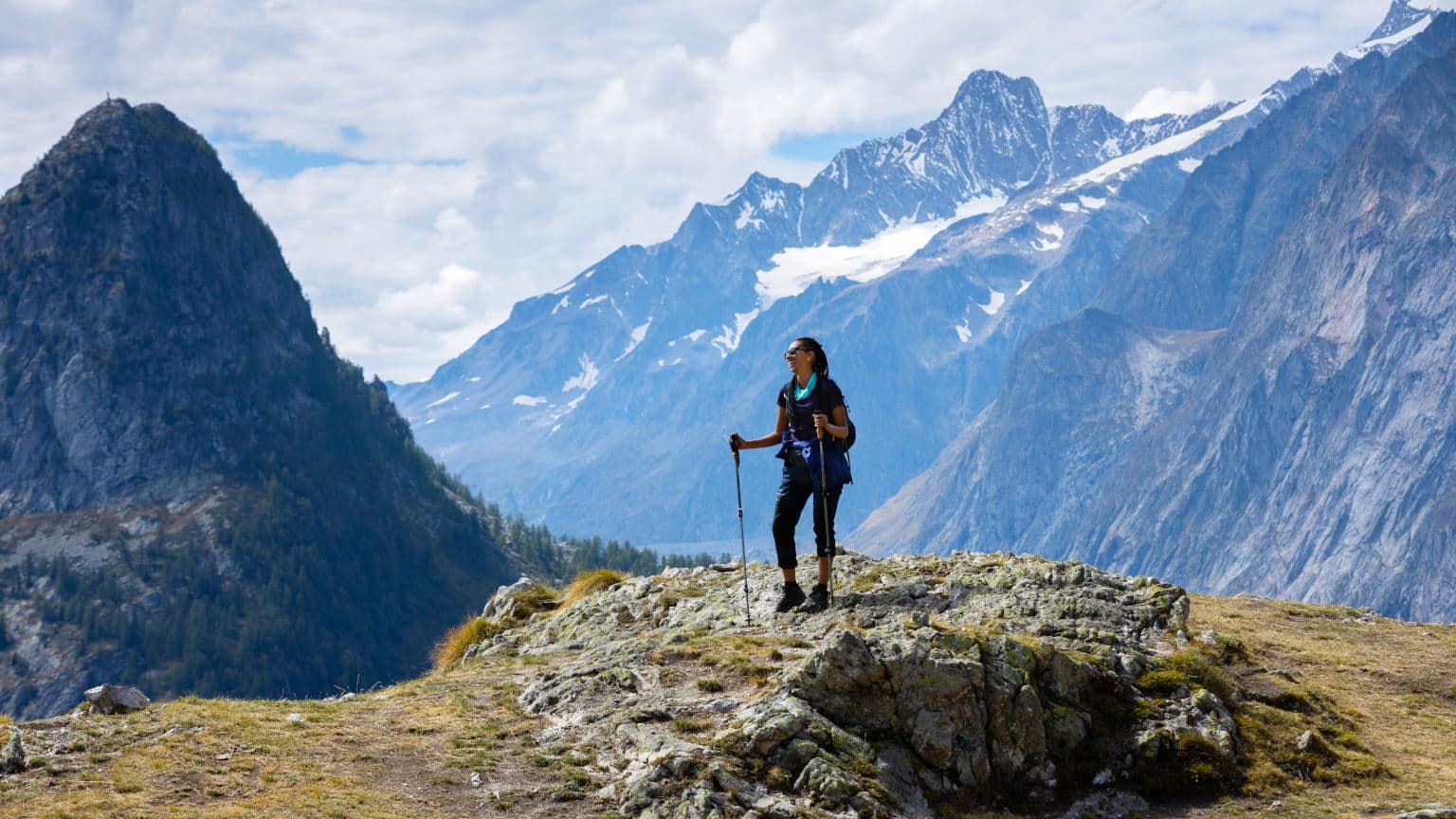
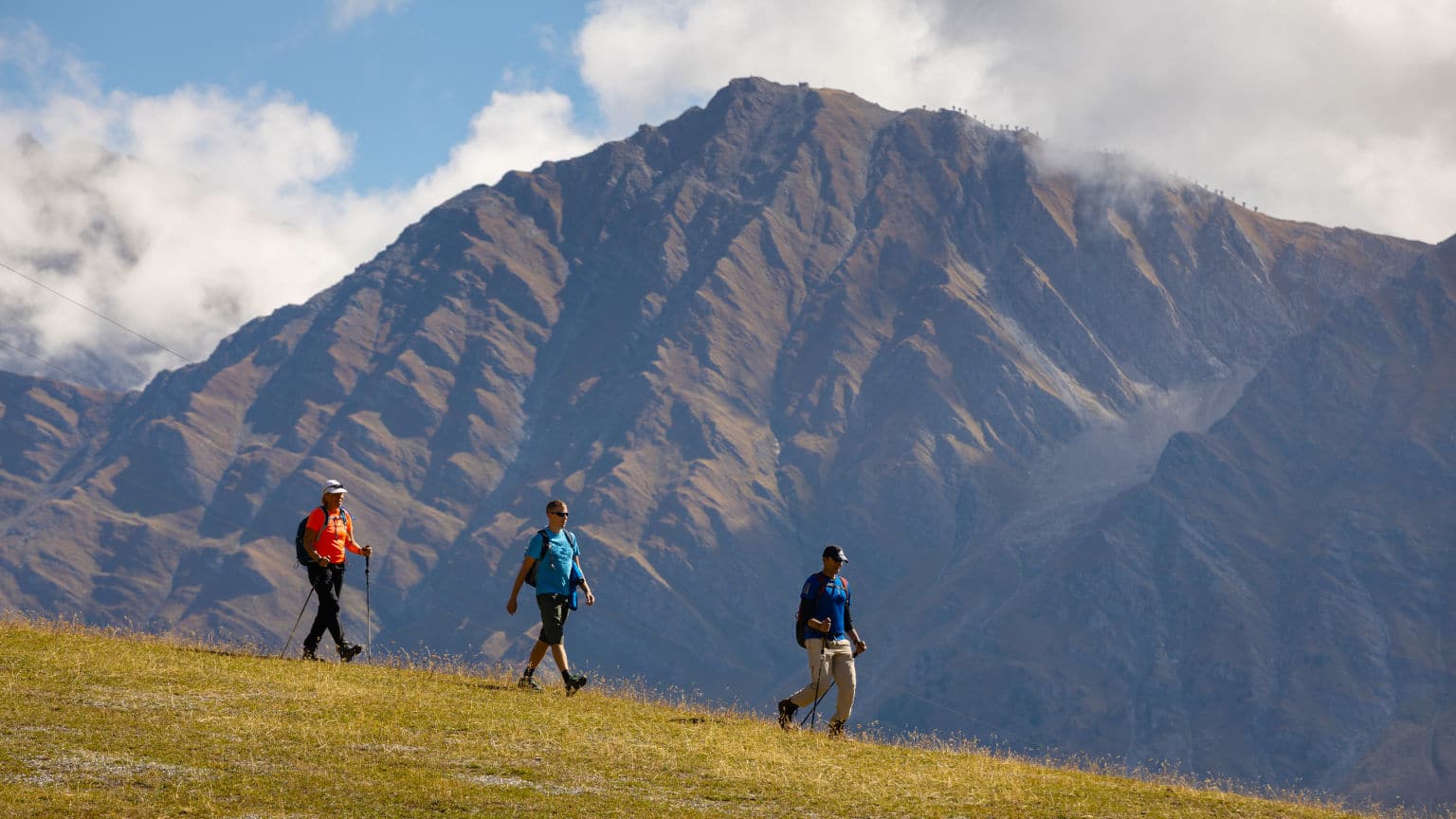
This is an active hiking trip that requires a good level of physical fitness. You will be hiking daily in an alpine environment, so prior experience with mountain hiking will help you get the most out of this trip.
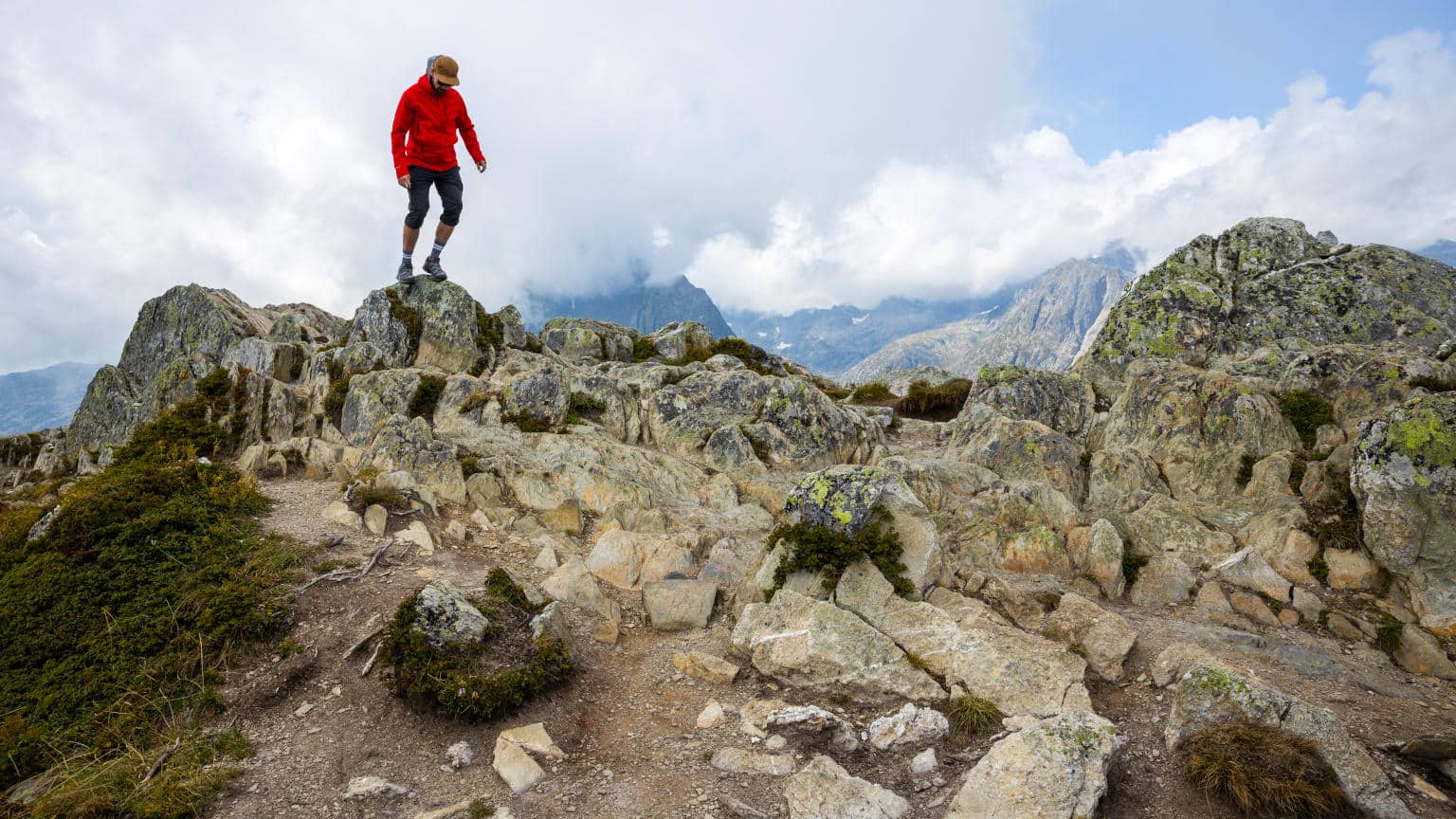
Our hikes are full-day excursions, and you will carry a small daypack. Expect to hike for 5-7 hours per day, with daily distances ranging from 5-10 miles (8-16 km). The walks involve ascents and descents of up to 900m (3,000 ft) over rough and steep terrain. None of the trails require mountaineering or technical climbing.
FLEXIBILITY
Your tour leader may sometimes choose slightly different routes than listed, or adjust the routes based on the hiking level of the participants. Please be flexible and understanding.
WEATHER
The route outlined in this itinerary is weather dependent, and you will need to be prepared for unpredictable mountain weather. In the case of poor weather conditions, your tour leader will re-route your path while maintaining an effort to keep as close to the planned itinerary as possible.
PACKING
Your main luggage stays at the base hotel in Chamonix. You’ll carry a small daypack during hikes with your essentials (layers, snacks, water, etc.).
Gear + Clothing Tips: You will need well-broken-in hiking boots. For clothing, layering is key—it helps regulate your temperature as you ascend or descend. Wool or synthetic fabrics (not cotton) are best because they dry quickly and retain heat. You’ll likely hike in a t-shirt and shorts most days, but be sure to pack a fleece or long sleeve layer for cooler stretches. A windproof and waterproof jacket is essential, and while not required, waterproof and/or fast-drying pants can be helpful in rainy weather.
Hiking Poles + Rentals: Trekking poles are strongly recommended, especially for June and early season departures. Gear rentals are not available in Chamonix, but you can purchase items like poles or rain gear locally if needed.
Check both gear lists in the "Packing List" section. The “Essentials” list covers general packing needs, while the “Mont Blanc Trekking” list outlines what’s specific to this hike.
GROUP LEADER
All GEEO/G Adventures trips are led by a Chief Experience Officer (CEO), whose role is to take the hassle out of travel and help you get the most from your trip. They’ll share information about the places you visit, suggest activities and restaurants, and introduce you to our local friends. While not traditional guides, CEOs have broad knowledge of the region’s history, culture, and daily life. On some excursions, local guides are used for deeper insight—giving you the best of both worlds.
The tour leader for this trip is a Qualified IML (International Mountain Leader).
PROGRAM DETAILS
Single Travelers
Traveling solo? You’re in good company—about half of our participants do the same.
Shared room by default. The program fee covers one person in a twin room. We’ll pair you with a roommate of the same gender if you don’t have a travel companion.
Want a private room? Most trips offer a
“My Own Room” (single-supplement) upgrade. Check the price in the
Extra Services section, then email travel@geeo.org to reserve it. You pay the single-supplement only if you request it.
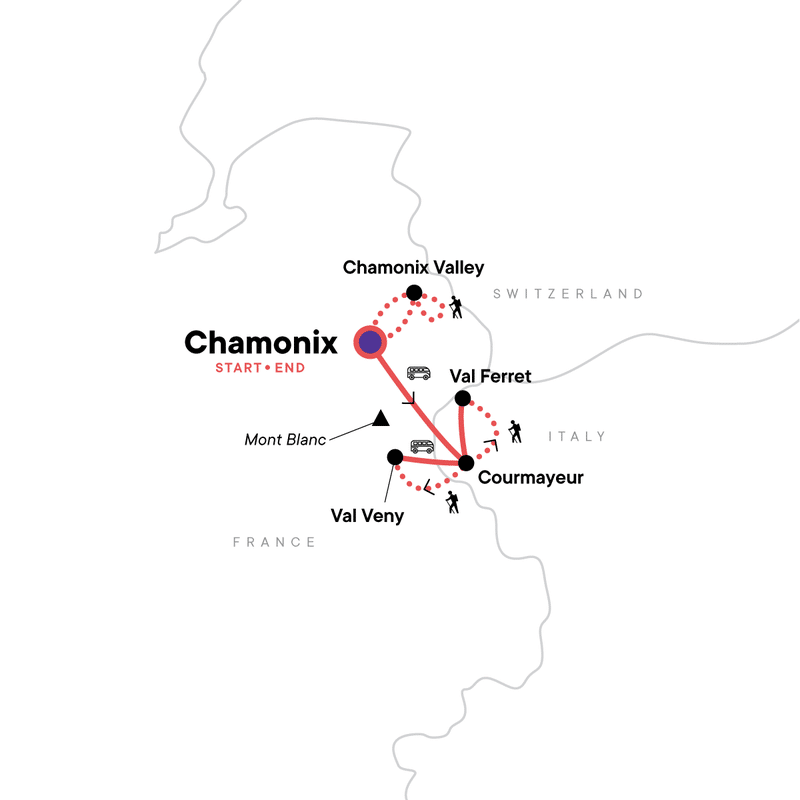
My Own Room Exception: Receive private accommodation every night except nights 4-6 (Courmayeur).
Emergency Contacts
If you need urgent help during your trip,
call the local G Adventures office first. If no one answers, leave a detailed message with your name and contact information so they can return your call as soon as possible.
EMERGENCY CONTACT NUMBERS:
G Adventures London office: +441858378000
If you are unable for any reason to contact the local office, please call the numbers listed below, which will connect you directly with the 24-hour Sales team, who will happily assist you.
Toll-free, North America only: 1 888 800 4100
Calls from UK: 0344 272 0000
Calls from Germany: 0800 365 1000
Calls from Australia: 1300 796 618
Calls from New Zealand: 0800 333 307
Outside North America, Australia, New Zealand, Germany and the UK: +1 416 260 0999
Packing List
See our blog post of
staff recommended gear to help you pack for your upcoming travels.
As you prepare your packing list, we recommend checking average weather conditions for your destination on a site like
Weather Spark for the time of year you will be traveling.
Mont Blanc TrekkingEssentialsOptionalDocuments
- Day pack (required) — Max 40 liters capacity. It's essential to pack light as you will be carrying your own gear.
- Sturdy hiking boots/shoes (required) — Ideally water-resistant or waterproof and compatible with crampons.
- Quick-dry socks (required) — Trekking socks (woolen or synthetic, not cotton). We recommend packing 2-3 pairs.
- Rain gear (required) — We recommend using a jacket with a hood made of Gortex or similar fabric, and advise against bringing ponchos. You can also bring rain pants if you wish.
- Clothing — We recommend bringing 1 outfit to wear during the evenings and days off, preferably lightweight top and bottoms.
- Fleece jacket or warm layer — In the summer the only place you will use this is if you take a cable car to the top for sightseeing. Multiple layers would make a fine substitution for an actual jacket.
- Gloves — Light hiking gloves in case of cold and wet weather.
- Hat — For cool weather, a warm beanie is most appropriate. For sunny weather, a wide-brimmed hat or cap. We recommend preparing for both weather conditions.
- Hiking pants — Convertible/Zip-off and quick dry recommended. We recommend 1 pair of pants, and 2 pairs of shorts.
- Lightweight wicking t-shirts — Synthetic or ultra-light wool. Two or three should be fine. You can wash them in your sink.
- Wicking underwear
- Thermal base layer — Woolen or synthetic, not cotton.
- Backpack rain cover — Most bags have an internal of cover, or sell an add on cover.
- Crampons — We recommend checking current conditions on sites like La Chamoniarde or Mountain-Forecast before your trip. If snow is reported at higher elevations and you already own crampons (aka hiking spikes), consider bringing them. If not, you can purchase a pair locally in Chamonix for approximately €35–45.
- Snacks — Protein bars, chocolate, dried fruits, candies, energy sweets. You will be able to purchase these along the way.)
- Personal clothing for hot to cool weather – we recommend packing 5-6 days of outfits so you don’t have to do laundry
- Sturdy walking shoes for non-hiking days
- Sunblock
- Sunglasses
- Water bottle or bladder (like a Camelback) (You will be able to fill it up while you are hiking. No filter is needed.)
- Watch or alarm clock (or use your phone)
- Toiletries
- Camera (or use your phone)
- First-aid kit, including lip salve, aspirin, bandaids, anti-histamine, Dramamine, Imodium or similar tablets for mild cases of diarrhea, electrolyte powder, insect repellent, extra prescription drugs you may be taking
- Hiking poles
- Travel pillow
- Light weight silk sleep sheet
- Money belt
- Phone/tablet for internet – most hotels have WiFi
- Chargers for electronics as well as converters/adapters, if needed
- AirTags or Tile trackers
- Packing cubes
- Earplugs
- Snacks – packing a few granola bars is a good idea; you can also buy snacks when you get there too, so don’t go crazy here
- Ziplock bags
- Reading/writing material
- Hand sanitizer/baby wipes
- Light fleece top
- Passport (with photocopies)
- Any entry visas or vaccination certificates required
- Travel insurance ID card
- Flight itinerary/boarding pass(es)
- USD/EUR cash
- Credit/debit card
- G Adventures vouchers
- GEEO Classroom action plans for your group – this is sent a few days before departure
*Laundry: Laundry facilities are offered by some of our hotels for a charge. You can also use a local laundromat, if necessary. We recommend packing enough clothes so you don't have to do laundry.
Passports and Visas
Travelers are responsible for securing all required travel documents and meeting the entry requirements for every country on their itinerary, including applicable transit/layover countries.
PASSPORT
All travelers must have a passport valid for
at least 6 months beyond your trip dates with enough blank pages for stamps.
Need to apply or renew? Start here.
ENTRY/VISA REQUIREMENTS
Visa rules change frequently—always verify the latest requirements on the
U.S. State Department Country Information Pages. Non-U.S. passport holders should verify requirements with your country's official government resources. Use the tool below to see entry requirements for your specific itinerary.
Entry information below is provided by Sherpa, a third-party service and trusted G Adventures partner. You must search each of your destination countries separately; “Add connection” solely searches transit visa requirements. Additional fees apply if you choose to purchase any services through Sherpa.
Money Exchange
Currency: France and Italy are part of the Eurozone and use the common currency, the
euro (EUR). For current exchange rates, visit
www.xe.com.
Credit/Debit Cards: Credit cards (especially Visa and Mastercard) are accepted at many hotels, shops, and restaurants, but not everywhere. Some vendors may also charge an international transaction fee, so check with your bank before you travel.
Cash: For small purchases, tipping, or places that don’t take cards, we recommend using ATMs to withdraw local currency while traveling. If you bring U.S. dollars to exchange, the bills must be new, unmarked, and in excellent condition—damaged or older notes are often rejected.
Emergency Funds: Bring
at least $200 USD (or the equivalent in local currency) in cash for emergencies in case of ATM or card issues. Always carry more rather than less to avoid feeling short of funds while traveling.
See the Estimated Trip Costs section at the bottom of this page for budgeting guidance.
For more advice, see our post,
Smart Travel Finances: Your Guide to Money, ATMs, Fees, and Safety Abroad
Tipping
Tipping is optional but appreciated and goes a long way for the people who look after you on the trip. If you are happy with the service, use these ballpark amounts and adjust as you see fit:
- Service providers/Waiters:
€1-2 EUR for snacks or
10% of the bill.
- Local guides and drivers:
€3-5 EUR per person per day.
- G Adventures tour leader (CEO):
€30-40 EUR per person per week.
(We suggest pooling contributions in an envelope and presenting it as a group)
Tipping Kitty: On some trips, your CEO may suggest a
“tipping kitty” where everyone contributes at the start of the tour, and the CEO uses that pooled amount to tip service providers for the group as a whole (not including your CEO). If your CEO doesn’t mention it and you’d like to use a kitty, we recommend asking about it early in the trip. Your CEO will advise the suggested amount and preferred currency for the kitty.
Flights
Wait for official trip confirmation via email from GEEO before booking your flights. Prices tend to be lowest 90–120 days out, but that window varies by route and year. Neither GEEO nor G Adventures bear responsibility for any flights purchased before the trip is confirmed.
This program begins and ends in Chamonix. The closest international airport is
Geneva, which is a little over an hour away by private vehicle. Please double-check our itinerary for the date by which you must arrive in Chamonix. You may want to arrive in Europe one or more days early in case you have flight disruptions. You can arrive at any time you choose, but try to make it in time for our 6:00 p.m. Welcome Meeting on Day 1. You can depart from Chamonix any time on the final day of the program, or stay later to see more of the city.
Plugs and Converters
France and Italy use
Type C plugs and the voltage is
220-240V. To use your electronics safely, you’ll need to consider:
1.
Adapter (plug shape)
Adapts your U.S. plug to fit another type of socket. See our recommended
all-in-one travel adapter in our Gear Recommendations post.
2.
Converter / transformer (voltage)
Steps the outlet voltage down to 120V for U.S. appliances that can’t handle higher voltage.
How to know which you need: Look at the fine print on the plug or power brick. An
“Input 100-240 V” means the device is dual-voltage and works worldwide with only an adapter—phones, laptops, and most camera chargers fall into this category. If the label shows
“Input 120 V” (hair dryers, curling irons, some shavers), it could be damaged on high voltage. Pack both an adapter and a travel voltage converter. Converters are inexpensive and sold online or in the travel aisle of many stores.
Weather
If you like to hike during the warmest time of year, then July is the month for you. Average temperatures are between 55-79º F, and the average rainfall is only around 2.4 inches for the entire month. July is one of the peak months for hikers on the Tour du Mont Blanc. It is also during the summer school break for all three countries on the route (France, Italy, and Switzerland), so you can expect the trail to be buzzing with people enjoying the warmer weather on the famous trekking route.
Advice From Past Participants
If your hiking poles do not fit in your bag, consider getting a set in Chamonix - some can be purchased for 20-30 Euro. And you can leave them at the Hotel for another hiker.