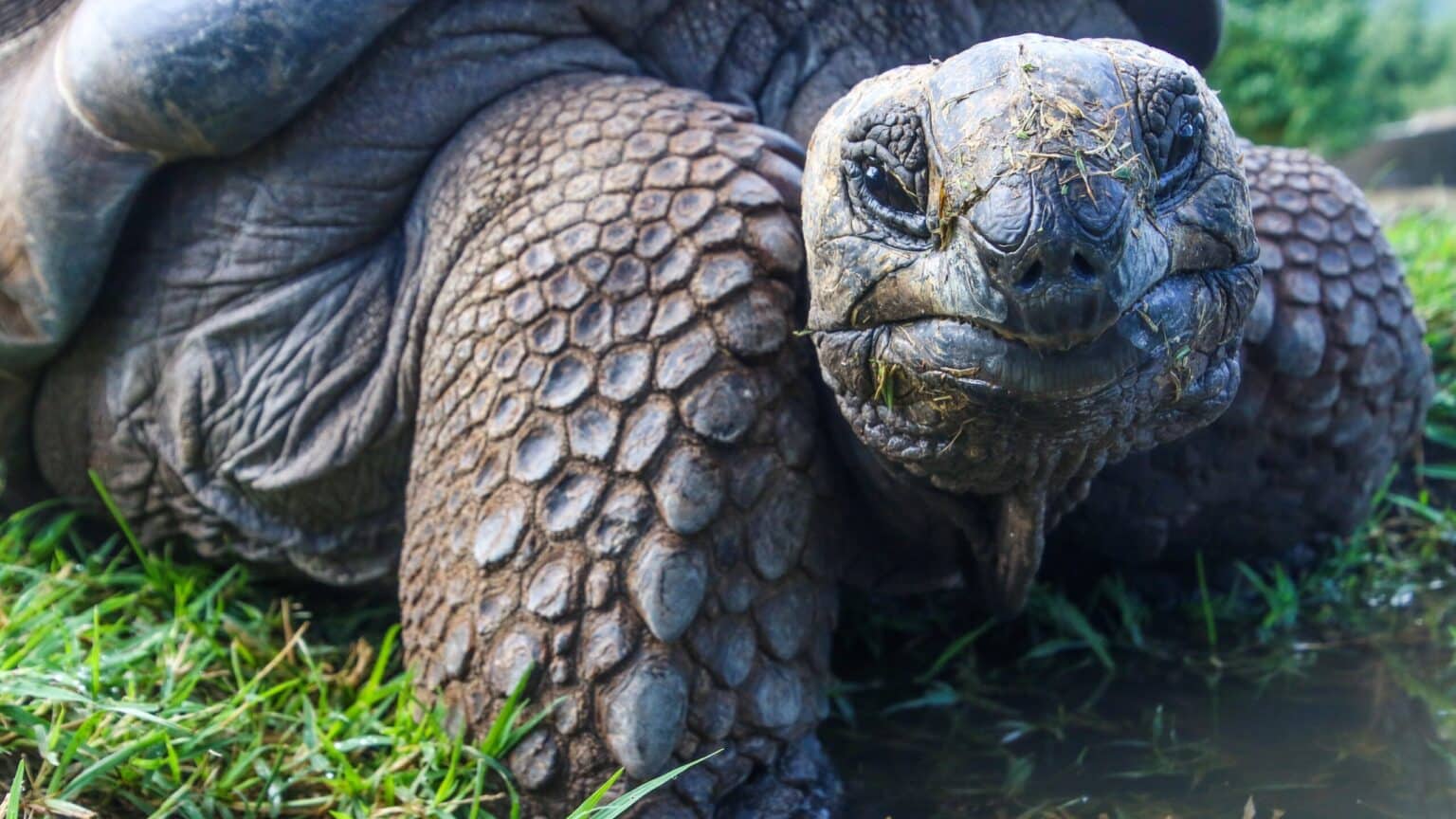
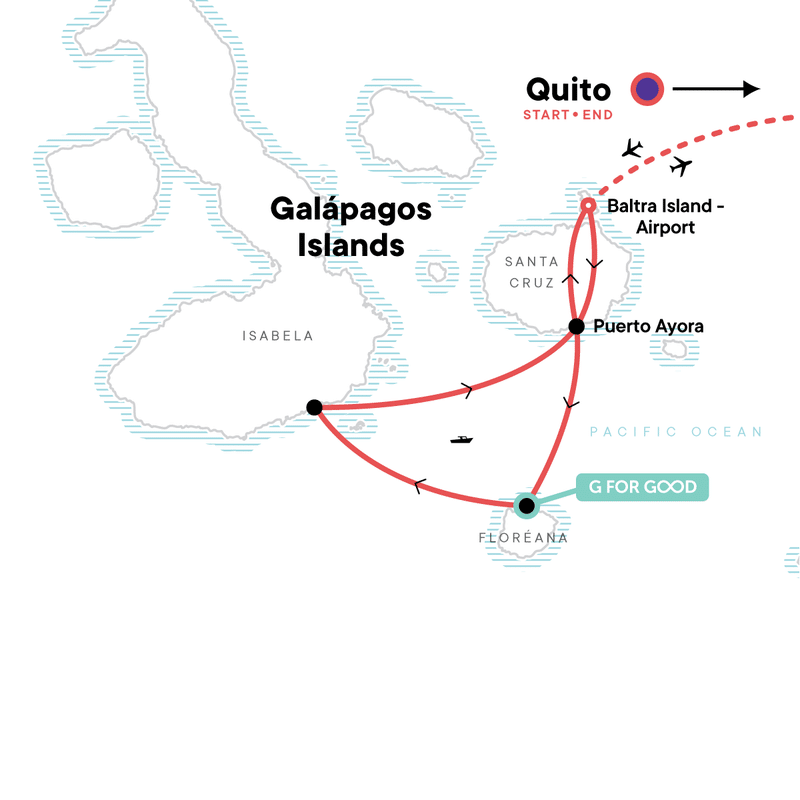
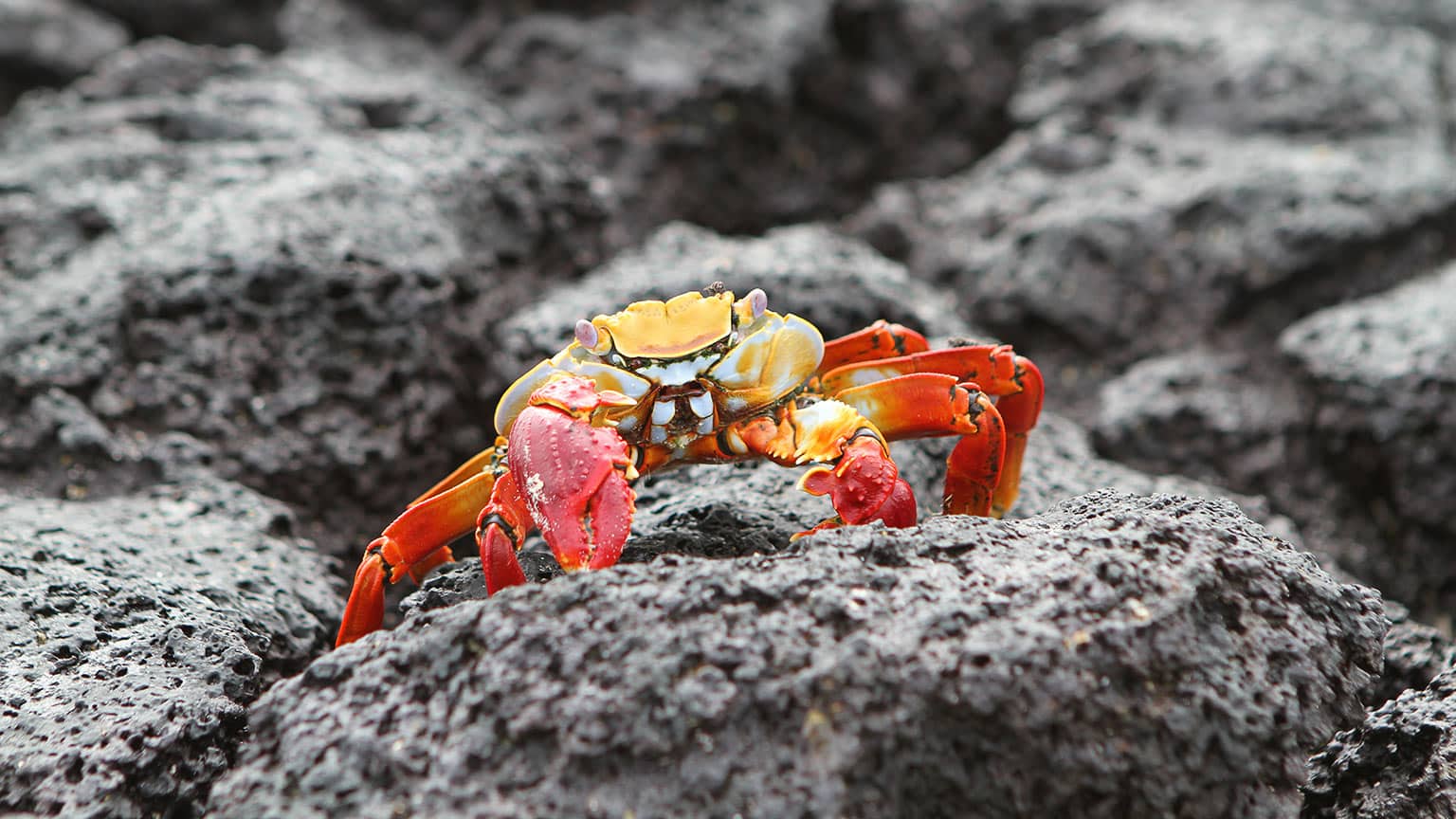
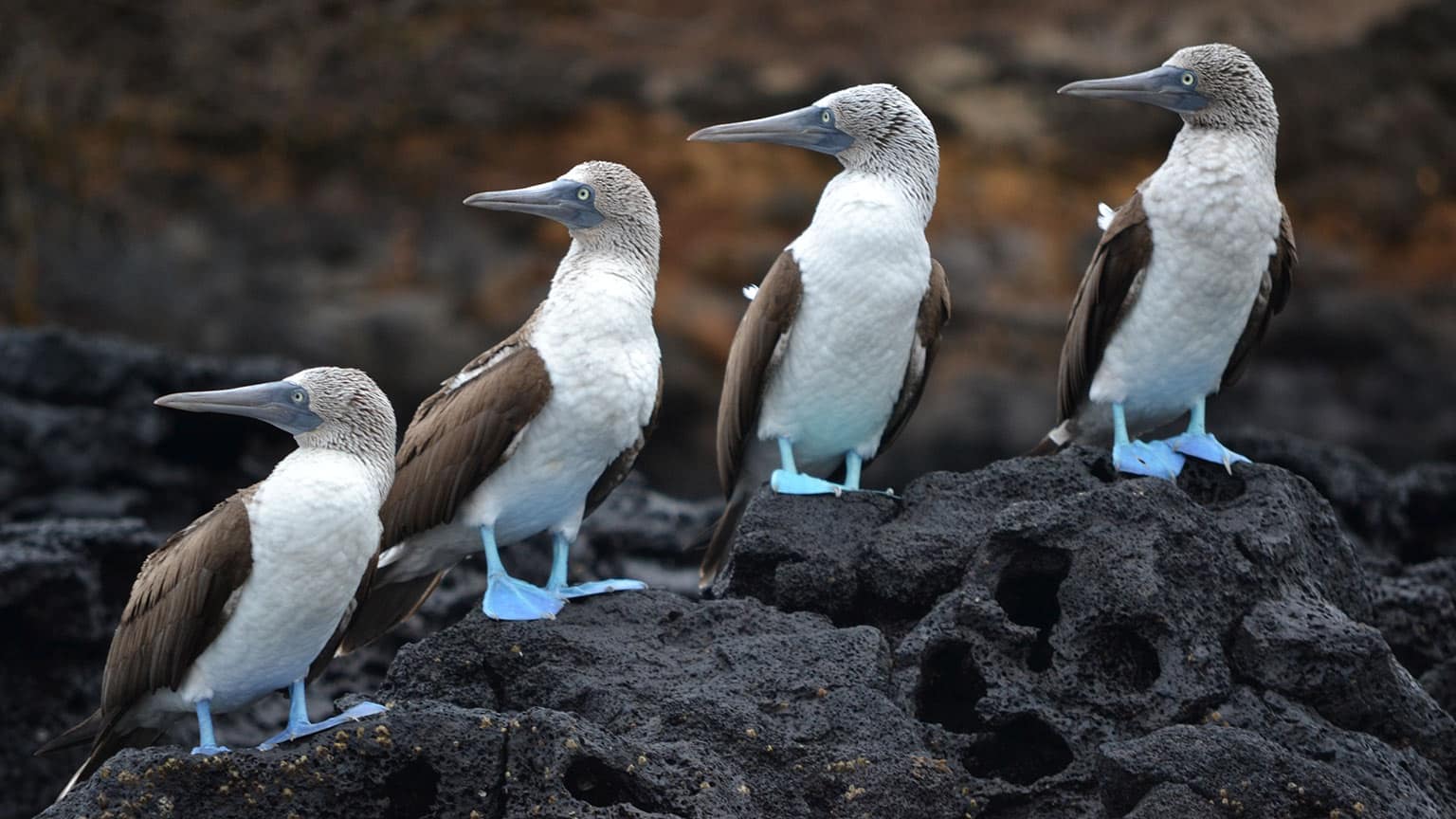
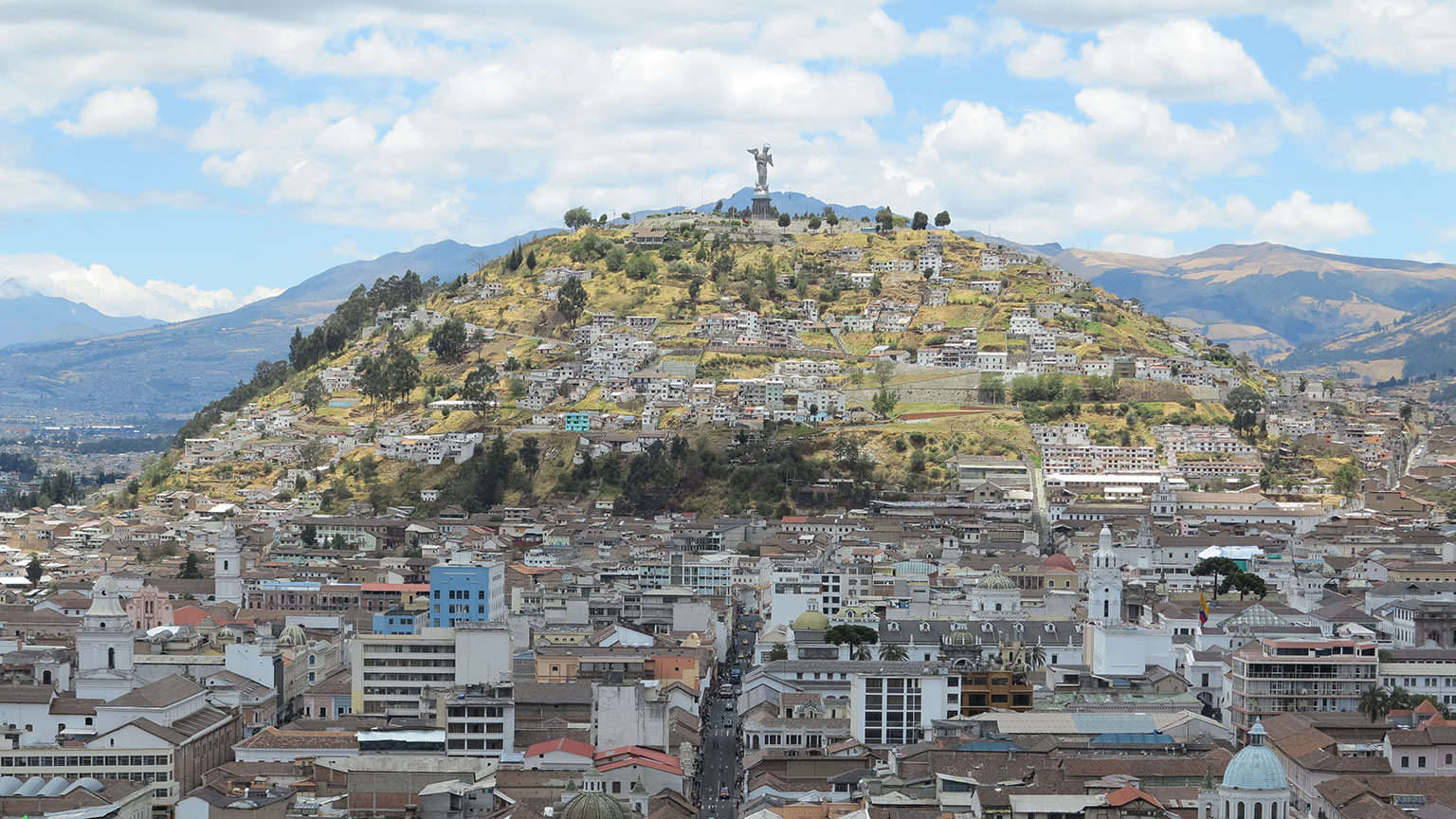
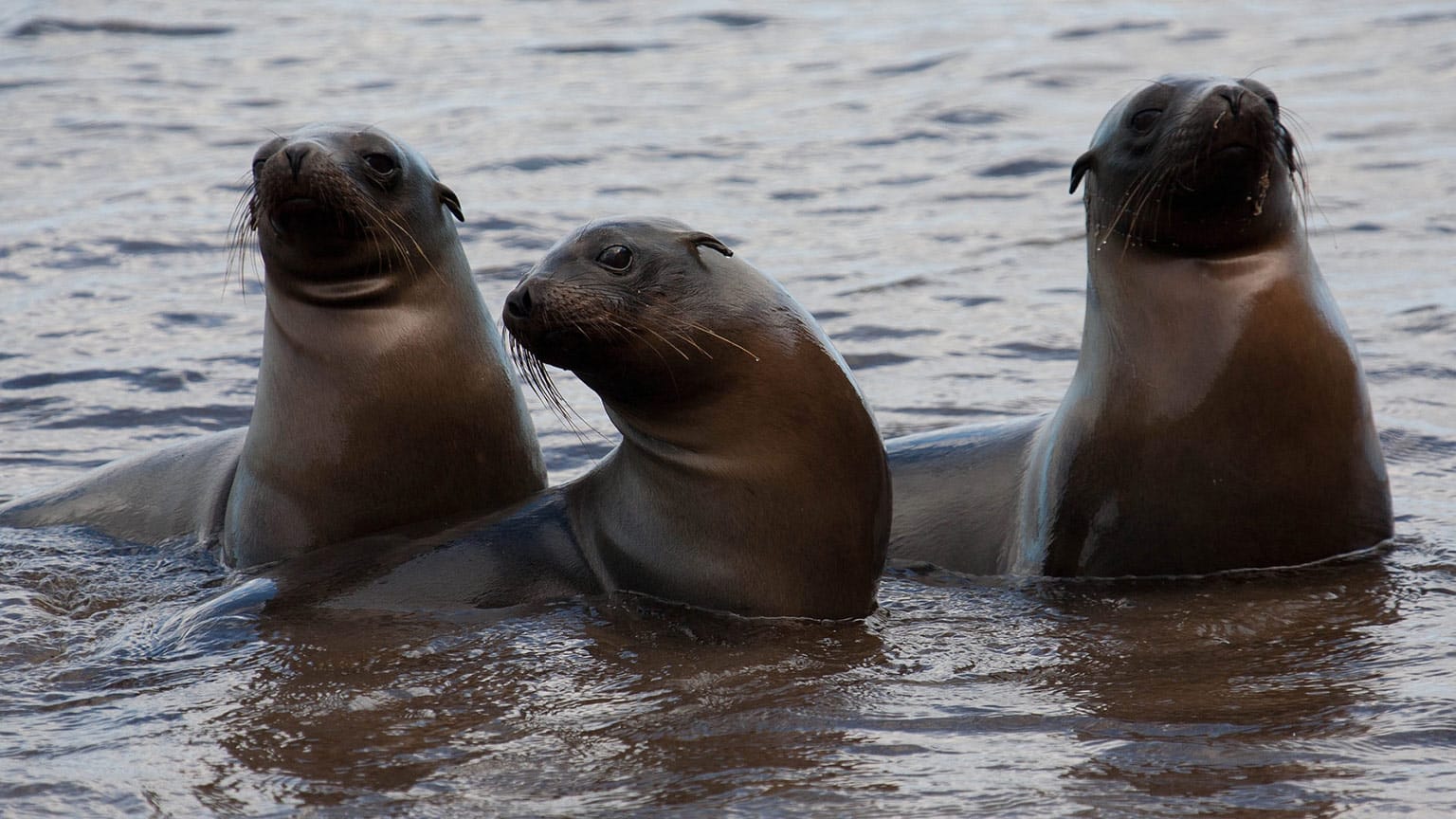
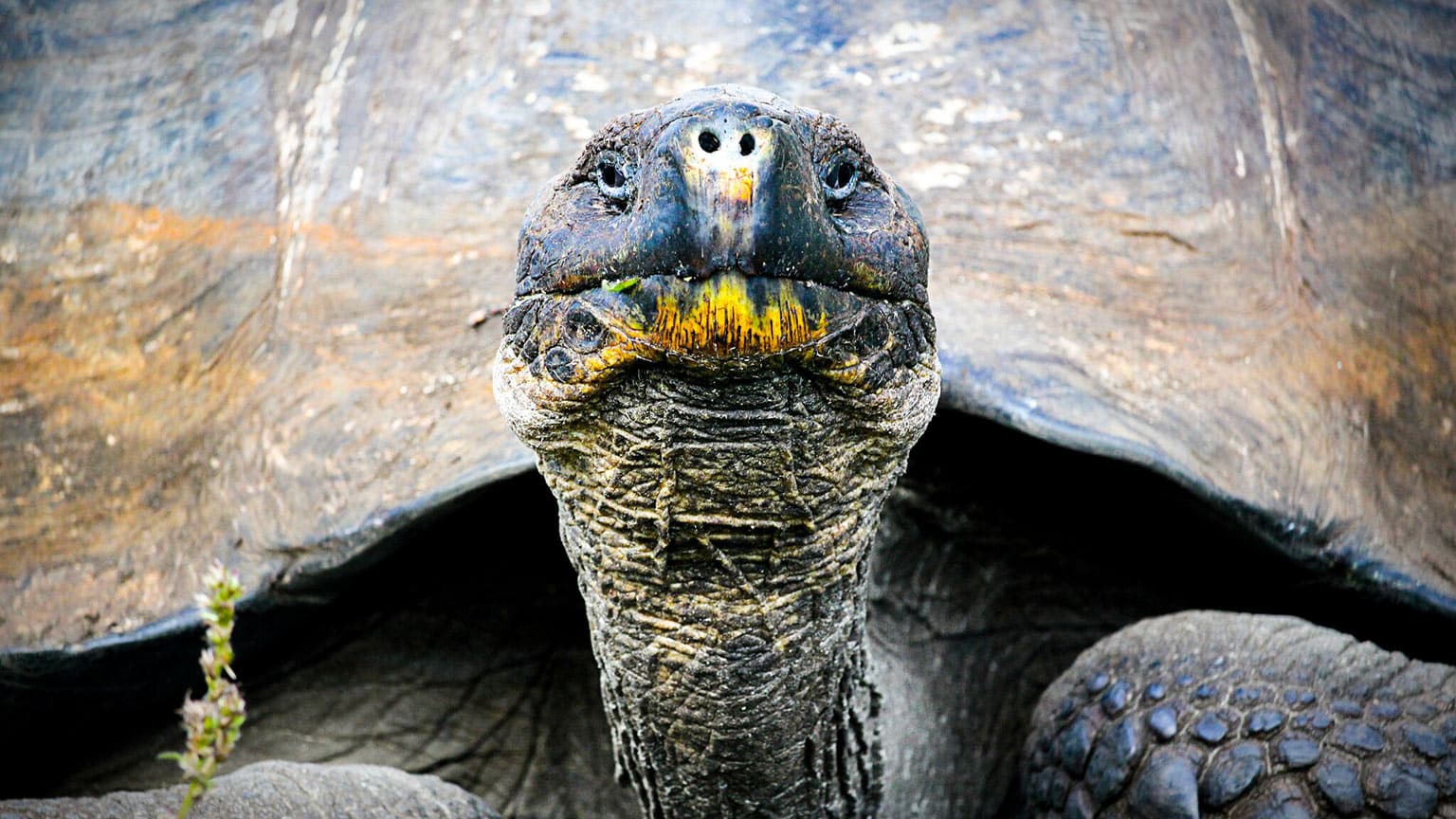
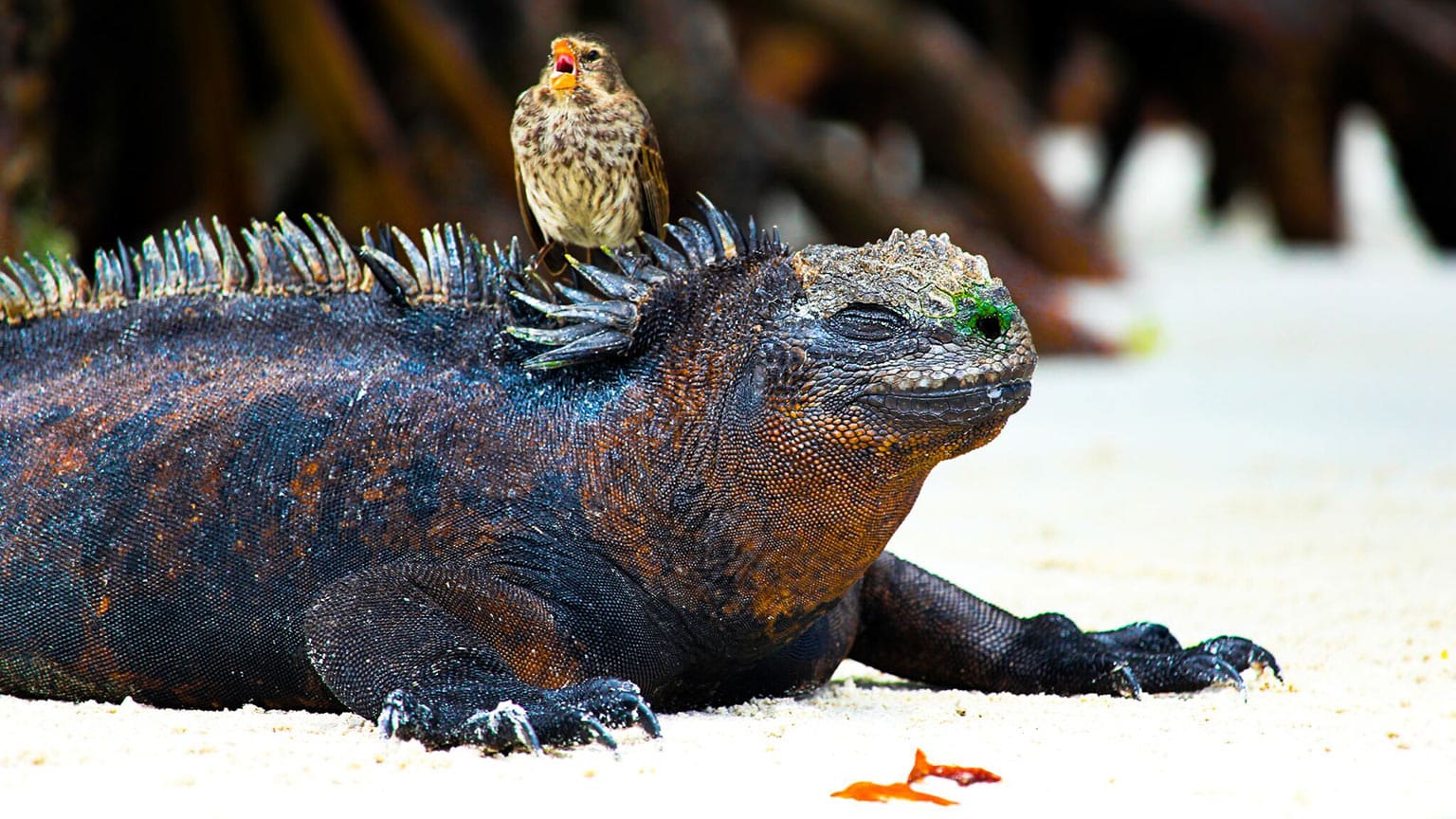
This 9-day adventure is perfect for those who want to experience the incredible wildlife and scenery of the Galápagos Islands but prefer to sleep on shore – so your time on the water is limited to commuting between islands. We'll take care of your flight bookings in and out of Quito — with the cheapest flight cost possible. That way you’ll be secure in knowing you've saved money, giving you plenty of time to explore the islands of Floreana, Isabela, and Santa Cruz as you spend your days with playful sea lions, giant manta rays, and the Galápagos giant tortoise. Visit the Galápagos with us, all while earning professional development credit with other educators.
What's Included:
Charles Darwin Research Center visit (Santa Cruz)
Visit to Las Grietas
Snorkeling at Loberia (Floreana Island)
Flamingo Lagoon visit (Isabela Island)
Sierra Negra volcano hike (Isabela Island)
Giant Tortoise Breeding Center visit (Isabela Island)
Tortuga Bay hike (Santa Cruz Island)
Isabela Municipal Tax
Quito to Galápagos return flights
Local Naturalist Guide while in the Galápagos Islands (certified by the Galápagos National Park)
G Adventures representative in Quito
8 breakfasts, 1 lunch, 2 dinners – allow $185-$240 USD for meals not included
All transport between destinations and to/from included activities by local flight, speed boat, van, pickup truck, local buses, panga boats
Hotels (6 nts), G Adventures-supported community guesthouse (2 nts)
Arrive at any time. There are no planned activities until the Welcome Meeting in the evening. This tour begins and ends in Quito, and the nearest airport is Mariscal Sucre International Airport (UIO).
We highly recommend that you plan to arrive in Quito at least a day in advance. If you experience flight issues and do not arrive before your group departs for the Galápagos Islands on Day 2, it can be very difficult and likely impossible for you to catch up with the group during the island hopping. We can book extra hotel nights for you in Quito before and/or after the trip, as well as optional day tours and excursions in and around Quito.
Hotel Check-in and Welcome Meeting
Hotel check-in is normally between 2–3 p.m. Check with reception for the exact time and location of the group welcome meeting, typically between 6–7 p.m. Please make every effort to attend this meeting. If you're running late, send a message in the group WhatsApp or call the emergency number on your trip voucher so that your tour leader can let you know where and when to meet the group.
After the meeting, you might choose to get dinner at a nearby restaurant with your traveling companions and your tour leader to further get to know one another.
What to do in Quito: Located 2,850 m (9,348 ft) above sea level, the Ecuadorian capital of Quito enjoys a wonderful spring-like climate even though it is only a few miles south of the Equator. The old city is full of historic buildings and churches. We recommend spending an extra day or two in Quito. See our optional activities information below for a better idea of what there is to see and do.
Joining Instructions
Taxi from Airport: ($30 USD | ~1hr) Book at the official taxi stand immediately after customs/immigration. This is the easiest option and uses set rates. Avoid taxis outside the terminal—they're not part of the Taxi Airport Union and may charge more.
Shuttle + Taxi: ($13 USD total | ~1.5hrs) Take an Aeroservicios bus ($8 USD) from the new airport to the old airport, then a taxi ($5 USD) to your hotel. Buses are comfortable and often include WiFi.
Pre-Paid Arrival Transfer: If you purchased a transfer with us, a G Adventures representative will meet you in front of the arrivals section with a sign displaying your name and the G Adventures Logo. There are often many people holding signs, so take time to locate yours. If you're not met or cannot make contact, visit the H.A.T.S. counter (Hotel and Airline Transportation Services) directly in front of the international arrivals area next to the taxi stand, call the emergency number on your trip voucher, or take a taxi to the hotel.
Note: The airport is ~1 hour from the city center. Routes may seem long and indirect depending on time of day and traffic.
We begin our trip with an early morning transfer to the airport in Quito and a flight to Santa Cruz Island, Galápagos, where we meet our friendly staff and check into the hotel in the town of Puerto Ayora, with a quick welcome meeting afterward.
The Galápagos Islands are located about 1,000 km (620 miles) off the Pacific coast of South America. Covering nearly 5,000 square km (3,100 square miles), the Galapagos Islands are now a National Park. The archipelago is comprised of 13 major islands and scores of islets that served as a living laboratory for Charles Darwin, the renowned evolution theorist.
We visit the Charles Darwin Research Station, a science organization initiated in 1964, which works to preserve the Galápagos’ ecosystem through the conservation efforts of scientists, researchers, and volunteers. While the offices themselves are not open to visitors, the research station provides a study location for international scientists and environmental education for the local community. We will observe many species of tortoises at the station's Fausto Llerena Breeding Center. Brought back from the brink of extinction, see the famous Galápagos tortoise up close – a corral houses adult tortoises, and a nursery cares for the young until around age three when their shells have hardened.
Approximate travel time: 3 hrs by plane Meals included: Breakfast
In the morning of our first full day on the Islands, we walk through a cactus forest looking for Darwin finches and lava lizards on the way to Las Grietas, a local swimming hole, where the cool, bright turquoise water separates two volcanic cliffs. Fed by the ocean from one end and a river from the other, this unique, brackish pool is perfect for swimming.
In the afternoon, we hop on a speedboat to nearby Floreana Island. The history of Floreana Island (also called "Charles") has gradually evolved to reach near mythic proportions. The story begins when a baroness and her two lovers, a German doctor and his mistress, and a German couple and their young son all came to settle on this land. Their dalliances and disasters, shrouded in mystery, were chronicled in John Treherne’s book The Galapagos Affair. Descendants of the German family, the Wittmers, still live on the island in the small community of Puerto Velasco Ibarra. Mrs. Margaret Wittmer has also written a book entitled Floreana, which can be purchased at the airport in Baltra or at a local bookstore.
Floreana Island is a small, isolated island. Many of its residents have been living there for the past three generations since the islands were first colonized. Its 150 residents have tried to benefit from the tourism boom, but since most tourism is marine-based and the boats don't stop in the village, they have struggled to find any opportunities. Our partner tour operator G Adventures is investing in community training and infrastructure to develop the first ecological, community tourism program in the Galápagos Islands that sees both the island's small entrepreneurs and its unique wildlife as the primary beneficiaries of this project.
To further benefit the community on Floreana Island, G Adventures has provided training to residents for all aspects of tourism, including food preparation and service. The community will provide your meals while staying on this small island. The meals are rotated between different community members in order to spread out the benefits of tourism. While eating at the community restaurants you will be contributing to the self-sufficiency of the first community tourism operator in the Galápagos.
Approximate travel time: 2 hrs by speed boat Please note: Seas can be rough during this voyage, so please bring sea sickness medication to use as necessary. Meals included: Breakfast | Dinner
Today, we start by walking along a black-sand beach to Loberia, where we enjoy snorkeling immediately off the beach and get up close to the diverse wildlife in the waters around the Galápagos. Please be aware: the water here can be rough and the currents strong, making swimming difficult (but not impossible!) for even the strongest swimmers.
We then head up to the seldom-visited highlands of Floreana, where we will hear tales about the pirates, whalers, seal hunters, and buccaneers who once lived in this isolated and unique landscape. We will also learn about the birds, plants, and animals found on this small island.
After a tranquil night, we bid farewell to the mysterious Floreana Island and set off by speed boat to Isabela Island, where we check into our hotel.
Shaped like a seahorse, Isabela is the largest island in the Galápagos archipelago and stretches over 100 km, though it is also extremely narrow. It is also a very active island, with six active volcanoes found on Isabella - Alcedo, Cerro Azul, Darwin, Ecuador, Sierra Negra, and Wolf. All of these volcanoes, except Ecuador, are still active, and two of them are over 1,700 meters high - Wolf and Cerro Azul.
In the afternoon, we lace up our hiking boots in order to explore the Sierra Negra Volcano. As we reach the summit, we will circle the rim of the volcano, looking down into the largest basaltic caldera in the Galápagos. We will see smoking fumaroles and the "sulfur volcano" (large amounts of sulfur deposited around the fumaroles) along the way. This hike can be muddy and difficult, so if you aren't in good shape, ask your tour leader whether they think you should go on the hike.
Approximate travel time: 2-2.5 hrs by speed boat Please note: Seas can be rough during this voyage, so please bring sea sickness medication to use as necessary. Meals included: Breakfast
This morning, you can spend free time as you wish, with the option (for $45-50 USD) to take a wildlife boat excursion to "Islote Tintoreras," a large crevice with clear, calm waters where marine iguanas swim and white-tip reef sharks (tintoreras) take their daily rest on the bottom. Spot pelicans, frigate birds, and diving blue-footed boobies, and keep an eye out for manta rays and rare Galápagos penguins, of which only 800 pairs of these lovable birds exist. You can even take the opportunity to snorkel to see Isabela's underwater world up close.
Later, we walk through the town’s wetlands to visit the Giant Tortoise Breeding Center. We will pass basking iguanas and flamingos and head into the forest to see the gentle giants in their natural habitat. As the giant tortoise faced extinction, this program was established in the late 1950s to protect these noble creatures.
You can further explore the surroundings with a short walk to observe pink flamingos in the wetlands and catch a stunning Isabela sunset on the beach. Along the way, stop at a lookout point, and visit natural pools, beaches, and mangrove swamps. In the evening, relax at the bar or on the beach and, if you want, enjoy a drink at sunset.
This morning, we travel by speedboat back to Puerto Ayora on Santa Cruz Island.
Once there, we enjoy the Tortuga Bay Hike along a lava stone pathway to the beautiful white beach of Tortuga Bay. You can relax on the beach, walk along the mangroves looking for marine iguanas and birdlife, or rent a kayak and explore this marine wonderland. Keep an eye out for Tintoreras sharks, sea turtles, and manta rays in the water's shallow areas.
You will also have free time to explore Puerto Ayora. Head to the lively fish market where sea lions, pelicans, and other birds drop by to see the daily catch.
You also have the option ($15 USD extra) to grab a life jacket and go for a kayak adventure in the mangroves of Tortuga Bay. If you choose to do so, you might catch a glimpse of some of the wide variety of marine life that calls the Islands home, including colorful reef fish, rays, and sea turtles. Relax afterward on the beautiful white sand beach and soak up some sun – you may even spot some iguanas also trying to catch some rays next to you on the shore.
In the evening, you have free time to sample some of the local restaurants and bars or do a little last-minute shopping.
Approximate travel time: 2-3 hrs by speed boat Please note: Seas can be rough during this voyage, so please bring sea sickness medication to use as necessary. Meals included: Breakfast
This morning, we take a private van to the ferry terminal on Santa Cruz Island, before taking a short ferry to Baltra. Upon arrival in Quito, transfer to the hotel for a final night in town. The G Adventures representative in Quito will be able to arrange many of the available day tours in and around Quito if you have time to spare.
Approximate travel time: 3 hrs by plane Meals included: Breakfast
There are no planned activities today, so you may depart Quito at any time. If you wish to extend your stay in Quito, consider booking post-tour accommodation with us.
Please note that check-out time from the hotel is usually mid-morning, but luggage storage services are available at the reception desk.
Meals included: Breakfast
Want more adventure? Book two or more GEEO programs in the same school year and receive 10% off the lesser value program(s), up to 3 programs per year.
Interested in extending your time abroad? We can help you find a trip from our tour partner G Adventures' larger catalog. Their tours are open to the general public and not designed specifically for educators, but by booking through GEEO we can offer you a discounted educator price, and you will be helping our non-profit.
The hotels listed below reflect the properties expected to be used for this program. Final accommodations are subject to change based on group size, availability, or seasonality. The confirmed start and end hotels are listed on your trip voucher:
Day 1 Quito (Jun 28): Hotel Eugenia
Day 2 Puerto Ayora (Jun 29): Hotel Dejavu
Day 3 Floreana Island (Jun 30): G-Supported Floreana Community Guesthouse
Day 4 Floreana Island (Jul 1): G-Supported Floreana Community Guesthouse
Day 5 Puerto Villamil (Jul 2): Hotel Iguana
Day 6 Puerto Villamil (Jul 3): Hotel Iguana
Day 7 Puerto Ayora (Jul 4): Hotel Dejavu
Day 8 Quito (Jul 5): Hotel Eugenia
*Itinerary Disclaimer: While it is our intention to adhere to the routes described on our website, there is a certain amount of flexibility built into the itinerary and on occasion it may be necessary, or desirable, to make alterations. The itinerary is brief, as we never know exactly where our journey will take us. Due to our style of travel and the regions we visit, travel can be unpredictable. The information on our website is a general guide to the tour and region, and any mention of specific destinations or wildlife is by no means a guarantee that they will be visited or encountered. Additionally, any travel times listed are approximations only and subject to vary due to local circumstances.
Details
Important
Before you decide to travel with GEEO, it is important that you read all of the program information on this page. Our programs are quite adventurous, and we find that travelers who review the full trip details are happier with their experiences.
Terms and Conditions: Review GEEO's full Terms and Conditions before signing up for a GEEO program, especially information related to deposits, our cancellation policy, mandatory travel insurance, etc.
Our program fees are based on double-occupancy accommodation (see "Single Travelers" below if you do not have a travel companion and would be interested in a private room). Our accommodations are chosen to provide a safe, conveniently located place to sleep. While you may be pleasantly surprised, please don't expect luxury, as we prioritize keeping our programs affordable.
TRANSPORTATION
We use a mix of transportation that gets our guests from location to location safely. Sometimes you will have full days and/or nights of transportation as our trips tend to cover a lot of ground. Transportation will often be an adventure in itself.
LUGGAGE
The maximum baggage allowance for domestic flights between Quito and the Galapagos Islands is one piece of luggage per person weighing a maximum of 23 kilograms (50 pounds), plus one carry-on piece weighing a maximum of 10 kilograms (22 pounds). You must be able to easily carry or roll your luggage, so do not over-pack. The carrying of your luggage remains your responsibility at all times.
ITINERARY CHANGES
The itinerary is subject to further changes, dependent upon new regulations made by the Galápagos National Park or seasonal points of interest. The Galápagos National Park Service dictates the itinerary to G Adventures and GEEO, therefore the details of this itinerary could change a bit when you arrive. The content will be pretty much the same, but the order of the activities may change.
TRANSIT CONTROL CARDS AND TAX
The Consejo de Gobierno (local government council) has implemented a system of Transit Control Cards at a fee of $20 USD per person . This card is to be purchased in CASH at a counter in the Quito airport before boarding the flight to the Galápagos. Please retain this card along with your passport as you will be required to present this upon arrival to the Galápagos Islands. Please note that this applies to all tourists entering the Galápagos Islands and is a supplement to the existing entry fee to the National Park and is not controlled by tour operators or travel agencies. It is the first of a number of initiatives to track, control, and maintain the sustainable tourism targets set out by the Galápagos National Park and the Ecuadorian government in an attempt to preserve the fragile environment of the archipelago. There will also be a municipal tax of $5 USD per person charged locally upon departure from Isabela Island.
GALÁPAGOS ISLAND PARK ENTRY FEE
The Ecuadorian government currently levies a Galápagos Islands Park entry fee of $200 USD per person . This is payable at the airport upon arrival in the park. It is not included in the cost of the tour and must be paid in CASH. This fee funds Park maintenance and supervision in Galápagos, as well as ecological study, conservation, and infrastructure development in Ecuador’s other National Parks. Entry fees, and the funds they generate for the National Park System, are among measures taken by the Ecuadorian government to protect its natural heritage.
SEA SICKNESS
The water is unpredictable (sometimes choppy, sometimes not), so definitely bring motion sickness pills for the boat rides between islands.
INTERNATIONAL TICKET NUMBERS
Foreign travelers are exempt from paying a tax on domestic flights in Ecuador. To prove that you are indeed a foreign traveler, you must enter your international ticket number (ITN) into the Good To Go check-in system. Travelers who do not submit ITNs at least 30 days prior to Day 1 of their tour will be required to pay the domestic tax on all included flights.
ALTITUDE
Quito is at a high altitude and can be chilly in the evenings. Make sure you check the weather and have appropriate clothing. Also, you may have a headache and nausea when you arrive, which might be caused by mild altitude sickness. The best thing to do is to take it easy and try not to be too active. See a doctor in the rare circumstance that your symptoms are severe.
SAFETY IN QUITO
Please take care when wandering about the city on your own, as pickpockets and purse-snatchers are common, particularly in the Old Town. Be safe and leave your passport, credit cards, and cash you don’t need in the hotel’s safety deposit box. Most Quiteños are honest and genuinely helpful and friendly, but be safe and enjoy the city!
ACTIVITY LEVEL & PACE
This trip includes plenty of walking and some light hiking, and requires at least an average level of fitness. On the more active days, expect to walk quite a bit. Some of the optional excursions on this trip require participants to be in good shape, capable of hiking up to five hours. You are of course welcome to skip these optional excursions if you do not feel up for it. Those who choose to snorkel must be cautious that they can handle the water conditions, as some parts of the waters around the Galápagos have strong currents. We recommend always carrying snacks with you. Meals can sometimes be far apart.
GROUP LEADER
All GEEO programs are led by a G Adventures Chief Experience Officer (CEO), whose role is to take the hassle out of travel and help you get the most from your trip. They’ll share information about the places you visit, suggest activities and restaurants, and introduce you to our local friends. While not traditional guides, CEOs have broad knowledge of the region’s history, culture, and daily life. On some excursions, local guides are used for deeper insight.
PROGRAM DETAILS
Single Travelers
Traveling solo? You’re in good company—about half of our participants do the same.
Shared room by default. The program fee covers one person in a twin room. We’ll pair you with a roommate of the same gender if you don’t have a travel companion.
Want a private room? Most trips offer a “My Own Room” (single-supplement) upgrade. Check the price in the Extra Services section, then email travel@geeo.org to reserve it. You pay the single-supplement only if you request it.
Emergency Contacts
Should you need to contact G Adventures during a situation of dire need, it is best to first call their local G Adventures office. If for any reason you do not receive an immediate answer, please leave a detailed message and contact information so they may return your call and assist you as soon as possible.
EMERGENCY CONTACT NUMBERS:
G Adventures Office - Lima, Peru
During office hours (weekdays, 9am-6pm local time): +51 1 241 1650
After hours emergency number: +51 99 758 2712 (WhatsApp Available)
If for any reason you are unable to reach the G Adventures local office, please call the numbers listed below to connect with their Sales team, who will happily assist you.
Toll-free, North America only: 1 888 800 4100
Calls from UK: 0344 272 0000
Calls from Germany: 0800 365 1000
Calls from Australia: 1 300 796 618
Calls from New Zealand: 0800 333 307
Outside North America, Australia, New Zealand, Germany and the UK: +1 416 260 0999
Packing List
See our blog post of staff-recommended gear to help you pack for your upcoming travels. You must be able to carry your own luggage—up stairs, on and off of transport, and during 15 to 20 minute walks. Space is limited on transportation, so oversized bags cannot travel.
Baggage Allowance for Galápagos Flights: Luggage limits are strict for domestic flights between Quito to the Galápagos Islands. You may have 1 checked bag (up to 23 kg | 50 lbs) and 1 carry-on (up to 10 kg | 22 lbs). Extra bags or overweight luggage may result in additional charges, which are the traveler’s responsibility.
Galápagos Luggage Inspections: Because the Galápagos Islands are a protected National Park, your luggage will be inspected both before arrival and departure. Do not bring any fresh food, seeds, or organic materials—these can harm the delicate ecosystem. Processed foods (like protein bars, packaged nuts, granola, etc.) are allowed.
As you prepare your packing list, we recommend checking average weather conditions for your destination.
SUGGESTEDOPTIONALDOCUMENTS
Windproof/waterproof rain jacket (very important)
Personal clothing for cool to hot weather – we recommend packing 7 or 8 days of outfits so you only have to do laundry once
Fleece top – it can fall into the 40s Fahrenheit!
Light hiking boots or sturdy walking shoes
Sport sandals or flip-flops
Two bathing suits and a small quick-dry towel
Daypack
Sunblock
Sunglasses
Sun hat
Water bottle
Watch or alarm clock (or use your phone)
Toiletries – important: some hotels do not give you soap and shampoo
Camera (or use your phone)
Motion sickness pills – Dramamine, bring both less-drowsy and regular formulas
First-aid kit, including contain lip salve, aspirin, bandaids, anti-histamine, Imodium or similar tablets for mild cases of diarrhea, electrolyte powder, insect repellent, extra prescription drugs you may be taking
Snorkeling mask (there will be times where you can go snorkeling, but there might not always be a mask rental available)
Wetsuit (the water can be chilly, and some have said in the past they wish they had brought their wetsuit)
Rubber boots – optional: the hikes can be really muddy
Binoculars
Travel pillow
Light-weight silk sleep sheet
Money belt
Phone/tablet for internet – most hotels have WiFi
Chargers for electronic, as well as converters/adapters, if needed
AirTags or Tile trackers
Packing cubes
Earplugs
Snacks – packing a few granola bars is a good idea; you can buy snacks when you get there too, so don’t go crazy
Ziplock bags
Reading/writing material
Hand sanitizer/baby wipes
Passport (with photocopies)
Any entry visas or vaccination certificates required
Travel insurance ID card
Flight itinerary/boarding pass(es)
USD/EUR cash
Credit/debit card
G Adventures vouchers
GEEO Classroom action plans for your group – this is sent a few days before departure
*Laundry: Laundry facilities are offered by some of our hotels for a charge. You can also use a local laundromat, if necessary. We recommend packing enough clothes so you don't have to do laundry.
Passports and Visas
Travelers are responsible for securing all required travel documents and meeting the entry requirements for every country on their itinerary, including applicable transit/layover countries.
PASSPORT
All travelers must have a passport valid for at least 6 months beyond your trip dates with enough blank pages for stamps. Need to apply or renew? Start here.
ENTRY/VISA REQUIREMENTS
Visa rules change frequently—always verify the latest requirements on the U.S. State Department Country Information Pages. Non-U.S. passport holders should verify requirements with your country's official government resources. Use the tool below to see entry requirements for your specific itinerary.
Entry information below is provided by Sherpa, a third-party service and trusted G Adventures partner. You must search each of your destination countries separately; “Add connection” solely searches transit visa requirements. Additional fees apply if you choose to purchase any services through Sherpa.
Money Exchange
The local currency in Ecuador is the U.S. dollar.
Credit/Debit Cards: Credit cards are rarely accepted on the islands.
Cash: Make sure you bring plenty of cash to the islands—we recommend at least $700–800 USD as ATMs can be hard to find or out of service, especially on Floreana. Small bills are better, so bring plenty of $5s and $1s.
Emergency Funds: Bring at least $200 USD (or the equivalent in local currency) in cash for emergencies in case of ATM or card issues. Always carry more rather than less to avoid feeling short of funds while traveling.
See the Estimated Trip Costs section at the bottom of this page for budgeting guidance.
Tipping
Tipping is optional but appreciated and goes a long way for the people who look after you on the trip. If you are happy with the service, use these ballpark amounts and adjust as you see fit:
- Service providers/Waiters: $1-2 USD for snacks or 10% of the bill.
- Local guides and drivers: $5-10 USD per person per day.
- G Adventures tour leader (CEO): $5-10 USD per person per day. (We suggest pooling contributions in an envelope and presenting it as a group)Tipping Kitty: On some trips, your CEO may suggest a “tipping kitty” where everyone contributes at the start of the tour, and the CEO uses that pooled amount to tip service providers for the group as a whole (not including your CEO). If your CEO doesn’t mention it and you’d like to use a kitty, we recommend asking about it early in the trip. Your CEO will advise the suggested amount and preferred currency for the kitty.
Vaccinations
GEEO cannot provide any medical advice, so it is very important to consult your doctor or a travel clinic about which vaccinations you will need for your trip. We recommend contacting Passport Health, which has travel clinics located throughout the United States. You can also check the CDC's recommended vaccinations for your destination. Please take this seriously!
According to the CDC, the risk of yellow fever is considered very low or absent in the parts of Ecuador that you will visit. It is compulsory to show a valid Yellow Fever vaccination certificate if you are traveling in from a Yellow Fever endemic country. If required, Yellow Fever inoculations need to be administered at least 10 days prior to your entry into the country.
Flights
Wait for official trip confirmation via email from GEEO before booking your flights. Prices tend to be lowest 90–120 days out, but that window varies by route and year. Neither GEEO nor G Adventures bears responsibility for any flights purchased before the trip is confirmed.
This program begins and ends in Quito. Check the itinerary for the required arrival date. Aim to arrive no later than mid-afternoon for the 6 p.m. Day-1 welcome meeting, and consider arriving a day or two early to buffer flight delays and see more of Quito. You can depart any time on the final day of the program.
Plugs and Converters
Ecuador uses the same plug design and voltage found in the United States—a type-A plug and 120 Volts—so there is no need for electrical adapters or converters.
Weather
Quito, although close to the equator, is at a high altitude. Therefore, the temperature during the day tends to be in 60s F, and at night it can get into the 40s F. Please make sure you have the proper clothing packed! The climate of the Galápagos Islands is tempered by the Humboldt Current, so you will not experience the extreme heat found elsewhere at this latitude.
Historical Monthly Weather Averages
Quito
Loading...
Unable to load weather data.
Puerto Ayora
Loading...
Unable to load weather data.
Floreana
Loading...
Unable to load weather data.
Isabela
Loading...
Unable to load weather data.
Average High
Average Low
Rainfall
Advice From Past Participants
The Galápagos offers incredible wildlife and landscapes, but comes with some logistical surprises. Here are the key things past travelers wish they had known:
1. Bring $700–1,000 in small USD bills—Ecuador and the Galápagos are cash-only
2. Pack electrolyte powder, altitude sickness medication, and seasickness medication
3. Water is cold—consider bringing or renting a wetsuit for snorkeling comfort
4. Expect hot, humid islands but cool Quito
5. Add 1–2 extra days in Quito—it's a remarkable UNESCO city worth exploring
6. Bring waterproof bags, hiking stick helpful, no hiking boots needed
Expand each section below to read more.
Expand for Advice from GEEO Travelers
Money and Spending
It is important to have a lot – maybe $700 to $800 – of cash on you. A lot of us ran out of cash, and it was hard to get to an ATM.”
“Ecuador and Galapagos are essentially a cash-only destination. Very few places accepted credit cards, and extra activities all had to be paid in cash. I think I spent at least $1,000 in cash during my time in Ecuador/Galápagos. It is very important to emphasize the need to have bills in small denominations.”
“Food in the islands is much more expensive than in Quito. “
Activities
“Quito is a remarkable city and touring it and the surrounding area should not be missed. Visitors should be encouraged to plan to add a day or two to see it.”
“There are not many alternative activities. If you choose not to do something, you have to sit around and wait for the other people (because tourism in the Galapagos is strictly regulated).”
If you want to go diving, there are dive shops on the islands and your tour leader can help put you in touch with one of them.
Packing
“It was much hotter than I thought it would be! I packed more warm things.” BUT “It gets cold at night on most of the islands!”
“A collapsible walking stick might help with hiking but no need for boots. Bring lots of sunscreen. Also, altitude sickness medicine really helped in Quito. I had a much better time there than other group members because I took it. Also, seasickness medicine is a must for the island boat transfers.”
“Be prepared for the hike to the volcano! It was long, and I got soaked by the end, which got cold! Dress in layers.
“We did a lot of snorkeling, and I think I would have bought a wetsuit top, if I knew the water was going to be a bit chilly.”
"Wetsuits are rentable in the Galapagos."
Snorkeling and Diving GearFrom the GEEO Team
You can bring your own snorkeling gear and wetsuit, or rent gear in the Galápagos. G Adventures provides the snorkeling gear for free and then you would need to rent a wetsuit for $5-$10 a day. They sometimes don’t have wetsuits for larger people or petite sizes. The water can be cold in the Galápagos, but one participant told me that she did not rent the wetsuit and was just fine without it.
While our itinerary does not list much snorkeling, I have been told by our group that there were lots of opportunities for snorkeling on the trip and that they snorkeled on four separate occasions. Some of the locations have a strong current and are too deep to stand, other locations are much calmer and easier to handle. You must use your judgment and tour leader’s advice to determine whether it is safe for you to go into the water.
Expand for Advice from GEEO’s Executive Director Jesse Weisz
“Quito is a nice city to visit and having at least one day to explore is advised. Quito’s old town is a UNESCO world heritage site and can be explored on foot during the day. You should not miss the Basilica of the National Vow (Spanish: Basílica del Voto Nacional). The building is noted for its grotesques in the form of native Ecuadorian animals, such as armadillos, iguana, and Galápagos Tortoises instead of the typical Gargoyles you find on a Neo-Gothic cathedral. If don’t have a fear of heights, you should climb to the top of the back tower for a great view of the city.
Another way to get a great view of the city is by taking a taxi to the top of Panecillo, a hill south of the old town. Please do not attempt to climb this hill, as there are muggings on a regular basis reported in that area. A taxi ride to the top and return to your hotel typically costs about $20.
Lastly, if you want to see Quito from above, you can take a cable car (teleférico) to the top of a mountain overlooking Quito. It costs $8.50 and the 10-minute ride takes you up to an altitude of 13,290 feet. If you want a physical challenge you can then hike to the top of Vulcan Pichincha. The hike takes an estimated 2-2.5 hours each way, so this is an activity that could fill a whole afternoon. It is windy and can be cold, so make sure you have the appropriate clothing.
The actual Equator is only a 30-45 minute drive north of Quito. At the Equator, you will find a large monument that has an admission fee. This is where the French thought the equator was, but they were wrong and the actual equator is about 240 meters from the Equator Monument. Feel free to visit the nearby Intiñan Solar Museum, which claims to have the real equator running through their property. Just keep in mind that the science experiments they show you there are mostly inaccurate and downright silly. If you are a science teacher, this is a can’t miss attraction for a good laugh.
While I did not have time to go, there are three-day trips that have been recommended to me, which we list in the Optional Activities section of this webpage. Saquisili Market and Cotopaxi National Park make for a full day of hiking and shopping. I would make sure you have a few days to acclimatize to the elevation before signing up for that one. Bellavista Cloud Forest is at a lower altitude and seems like a wonderful way to see the nature of the area. Another option is Otavalo where you will be able to see one of the largest markets in all of South America.
You should be able to book all of these activities at the front desk of our hotel in Quito.
Lastly, if you are traveling around the city by taxi, make sure it is an official taxi. Your hotel can hail one for you which can be trusted.”
Extra Services & Costs
EXTRA SERVICES TO PRE-BOOK
Send us an email if you would like to pre-book any of the extra services listed below for your program. Space and availability are limited, and pricing is not guaranteed until booked.
*Extra services are non-refundable within 30 days of your program's start date.
*Airport transfers require Day 1 arrival/final day departure or pre/post hotel nights booked through GEEO.
*Costs will be added to your final balance.We can request a maximum of two pre-trip hotel nights and two post-trip hotel nights for this program.
If you add pre- or post-trip nights in Quito (or depending on your flight times at the beginning or end of the tour), you can book any of these activities in advance:
Quito City Tour & Equator Line:
$56 per person
Day 1 (June 28) or Day 9 (July 6)
Enjoy a city tour of Quito. Visit the Old Town, a UNESCO World Heritage Site, with stops at the Basilica del Voto Nacional, La Compañia Church, San Francisco Square, Plaza Grande and the Panecillo, a towering statue of the virgin of Quito who looks out over a stunning view of the city. Drive 25km (16 mi) north of Quito to the Middle of the World, latitude 0º. Stand with one foot in each hemisphere.
Please note that this tour starts at 8 a.m. and ends around 5 p.m.
Quito Day Tour: Cotopaxi (full day):
$37.24 per person
Pre-trip, Day 1, or Post-trip
Explore Cotopaxi National Park with a full-day excursion. Admire the Cotopaxi volcano and the stunning plateau on which it sits — you might even see wild horses grazing! Experienced cyclists can opt to bike. See additional details.
Quito Day Tour: Otavalo Market (full day):
$74.10 per person
Pre-trip, Day 1, or Post-trip
This full-day excursion is the perfect way to experience the charm of Ecuador's Otavalo Market and surrounding areas. Explore Otavalo, a vibrant city surrounded by picturesque mountains, to wander the market and admire all of its beautiful handicrafts. Continue to the nearby town of Cotacachi to browse the leather shops before a visit to Peguche Waterfall or Cuicocha Lake on the way back to Quito. Explore Cotopaxi National Park with a full-day excursion. Admire the Cotopaxi volcano and the stunning plateau on which it sits — you might even see wild horses grazing! Experienced cyclists can opt to bike. See additional details.
Optional On-Site Activities
The following optional activities are booked and paid for locally. Prices shown are the most recent figures from participants and G Adventures. Use them as budgeting estimates only—actual costs may vary. If you arrive early or extend your stay, check out our curated list of Viator tours for additional activity ideas.
Teleférico:9 USD
Enjoy spectacular views of Quito from this sky tram up Volcán Pichincha. Choose to go for a hike at the top, or just come along for the ride.
Surfing Lesson:120 USD
Grab your swimsuit and get ready to hang ten! Learn how to find and ride the waves with surfing lessons from local experts. Enjoy the fresh sea air, and try to spot local marine life while enjoying the waters.
Tortuga Bay Kayaking:15 USD
Grab a life jacket and go for a kayak adventure in the mangroves of Tortuga Bay. Keep an eye out for a wide variety of marine life, including colorful reef fish, rays, and sea turtles, as you paddle the blue waters. Relax after on a beautiful fine white sand beach, and soak up some sun – you may spot some iguanas also trying to catch some rays on the shore.
Loberia Snorkelling Excursion:5 USD
Snorkel straight off the beach at Loberia, and get up close to the diverse wildlife in the waters around the Galápagos. Please be sure you are a strong swimmer; the water here can be rough and the currents are strong.
Swimming:
Enjoy a refreshing dip, and be sure to keep an eye out for local marine life.
Islote Tintoreras Snorkelling:45-50 USD
Go snorkelling at the islet Las Tintoreras, located south of Puerto Villamil – it's the perfect place to glide along watching the magic unfold under the water’s surface. Enjoy a small calm turquoise bay to look for the whitetip reef shark, which are fairly common in the archipelago. (The sharks are called Tintorera in Spanish, which is where the site gets its name.) Keep an eye out for sea lions, sea turtles, marine iguanas, and rays as well as the sharks.
Wall of Tears Bike Visit:20 USD
Cycle to the 'Wall of Tears' and tour this sombre historical site that pays homage to the prisoners of an on-island penal colony, who were forced to build a wall out of huge blocks of lava. Many prisoners died during the wall's construction between 1946 and 1959.
Los Tuneles Snorkelling:140-150 USD
Grab your swimsuit, a snorkel, and head out to explore the waters to see what’s living under the sea. Head to Los Tuneles about a 40 minute boat ride away from Puerto Villamil. The lava formations and mangroves make this an ideal place for snorkeling. Keep an eye out for eagle rays, sea turtles and large schools of colourful fish.
Concha de Perla snorkelling:5 USD
Visit the calm bay of Concha de Perla for a snorkelling experience. Snorkel alongside up to 20 different species of bird as well as tropical fish, sea lions, and maybe even penguins.
Estimated Trip Costs
Free-time activities aren’t included in the program fee. Use the prices below as ballpark figures to decide which options fit your budget.
GEEO Program Fee: See our price in the top right corner.The Ecuadorian government currently levies a Galápagos Islands Park entry fee of $200 USD per person. This is not included in the price of our trip. The Galápagos National Park authorities have implemented a system of Transit Control Cards at a fee of $20 USD per person.
Optional Activities: $100-300 USD
International Airfare from the United States: Roughly $600-1,200 USD
If you require assistance searching for international flights, we would be happy to help you.
Airport Transfers: $50-150
Insurance: $30-200 USD
Please note: It is mandatory for all of our travelers to have Emergency Medical insurance that covers both emergency evacuation and repatriation to the sum of $200,000 USD. We also strongly recommend purchasing cancellation insurance as an add-on.
Tipping: We recommend $40-60 USD for your local naturalist guide. Budget another $20-30 USD to tip local guides and drivers.
Meals not listed in the itinerary: $184-240 USD
Laundry, Drinks, Mobile Data, etc.: Make sure you budget for these types of expenses
Souvenirs: Variable—at your personal discretion
Vaccines: Variable—please consult with your primary care provider
Non-Educator Donation: $100 USD (suggested donation)
This is only for non-educator guests traveling with an educator on a GEEO trip. Educators and retired educators should not make this donation.
Photos
Book Any G Adventures Trip Through GEEO
Book any G Adventures program through GEEO, or transfer your existing booking over to us and receive:
5% educator discount or deepest available savings
Expert support 7 days a week (9 AM–9 PM ET)
Nonprofit insurance from $30 (vs. $150-200 elsewhere)
Comprehensive pre-trip guidance
Educator resources and professional development opportunities
Non-educators welcome! Your booking supports our 501(c)(3) mission.
GEEO is a 501(c)(3) nonprofit, and our mission is to help teachers travel by offering private educator-focused group trips—but we also partner with G Adventures to offer trips worldwide for anyone, not just educators.