05
Feb

5 Egypt Travel Tips Before You Go

Egypt is one of the most rewarding places on Earth to visit, and for educators, it can be genuinely transformative. Imagine standing at the base of the pyramids at Giza, drifting down the Nile at sunset, or walking through ancient temples covered in hieroglyphs you’ve spent years teaching about. The Sahara stretches endlessly in the distance while millennia of history are still being uncovered at archaeological sites. Seeing these places in person is equal parts history lesson, adventure, and culture shock in the best way. If you’ve never been to Egypt, it’s natural to have questions—and a few worries—before you go, and a little preparation goes a long way.

Are you figuring out Egypt visa requirements, trying to budget your Egypt vacation, or wondering, “Is Egypt safe?” Whether you’re heading to Egypt with GEEO or planning your own adventure, we hope this information will help you feel confident and prepared.

If you’re a teacher interested in exploring this incredible country, check out GEEO’s discounted program for the trip of a lifetime. We can also book travelers (both educators and non-educators) on any trip with our partner, G Adventures. Booking through GEEO supports our 501(c)(3) mission.

Photo Credit: Julia W.

1. Visas: What You Need to Enter Egypt

You definitely need a visa for Egypt. The good news is that getting one is straightforward for U.S. citizens. You don’t need to visit an embassy, and you can either obtain an e-visa in advance or a visa on arrival. One thing to keep in mind: your passport needs to be valid for at least six months beyond your planned arrival date, and you’ll need at least one blank page for entry stamps.

Visa Advice for GEEO Travelers

If you’re traveling to Egypt with GEEO, you don’t need to do anything in advance. When you land in Cairo, one of our representatives will meet you at the airport before you reach the immigration checkpoint. They’ll walk you through the visa-on-arrival process, help you get everything sorted, and then hand you off to your driver, who will take you to your hotel. The representatives have done this hundreds of times, so you can just relax and follow their lead.

Visas for Other Travelers

If you’re traveling independently, we recommend obtaining an eVisa online before your trip rather than waiting to get one at the airport. Egypt’s eVisa system is available to U.S. citizens, and most eVisas are processed within about four business days. You’ll just need to fill out an online form, upload a digital copy of your passport information page, enter your travel details, and pay the fee with a credit or debit card.

The eVisa allows you to stay for up to 30 days, which is plenty of time for most trips. If you go the eVisa route, we’d also strongly suggest pre-arranging an airport transfer, especially if it’s your first time in Cairo.

Review GEEO’s Egypt entry guidance for more details.

Photo Credit: Julia W.

2. Safety: Is Egypt Safe to Visit?

This is probably the question we get most often, and the short answer is yes, especially in popular destinations like Cairo, Luxor, Aswan, and the Red Sea. These areas are heavily visited, well-patrolled, and supported by dedicated tourist police

Tourism is essential to Egypt’s economy, and the country invests accordingly to keep its major sites and cities secure. Groups of tourists, including GEEO groups, are accompanied by armed security escorts in certain areas, as required by the Egyptian government. Egypt has also boosted security at tourist sites, and if you’re traveling with GEEO, you’ll have the added peace of mind of an experienced local team guiding you the whole way.

That said, being informed is always better than being caught off guard. Violent crime is uncommon, but the thing most travelers actually run into isn’t crime at all. It’s scams. They’re a nuisance, not a danger, and once you know what to watch for, they’re easy to navigate.

Common Scams to Watch Out For

At popular tourist sites, like the Pyramids of Giza, unofficial “guides” often linger near temples and museums, offering unsolicited tours or facts, then asking for a tip. They may be friendly, and some are genuinely knowledgeable, but if you haven’t hired them, you’re not obligated to pay. Politely decline and stick with your official tour or guide.

You may also encounter unsolicited “free” gifts that later demand payment. Someone hands you a scarf or a small trinket, and then asks for money. Similarly, be cautious of anyone insisting on taking you to a “special” shop or gallery. These are often commission-driven and can lead to pressure sales.

Bargaining is expected in markets and with vendors, so don’t feel awkward negotiating. But if you’re uncomfortable or want to disengage with a pushy vendor, just smile, say “La shukran” (no, thank you), and walk away.

A Few Other Things to Keep in Mind

It is illegal to photograph police stations, military barracks, and certain other sensitive public buildings. When in doubt, put the camera away. Dressing modestly is also a good idea, both as a sign of respect and as a way to blend in a little more. And as with any trip abroad, carry copies of your passport and visa, and keep a cellphone with service so you can stay connected (we highly recommend Airalo).

If you’re traveling with GEEO, our guides will help you navigate all of this. But whether you’re with us or on your own, Egypt rewards travelers who come prepared and stay aware. The vast majority of visitors have a safe and memorable trip.

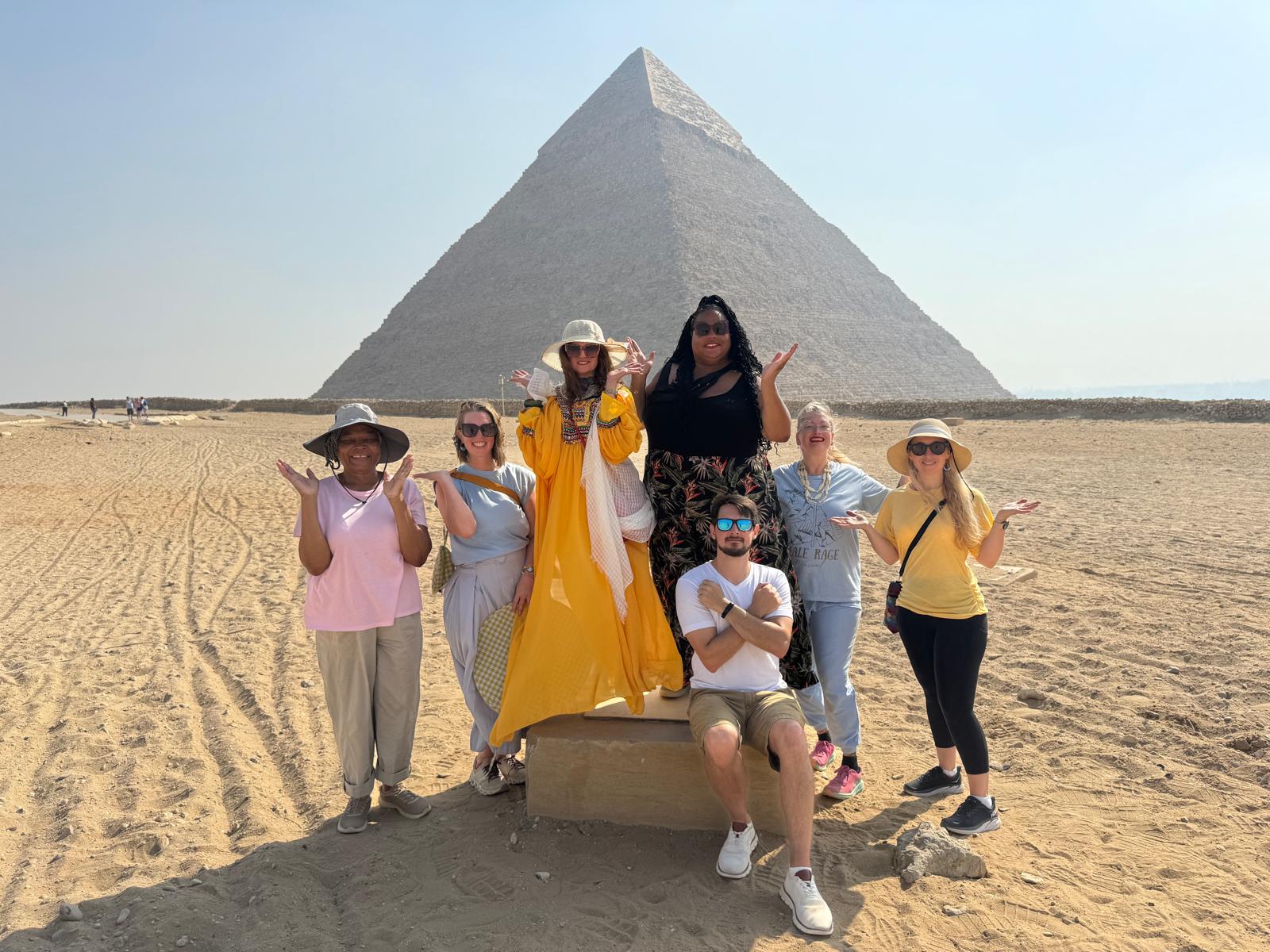
GEEO teachers visit the pyramids in Egypt. Photo Credit: Josh B.

3. Best Places to Visit in Egypt (First-Timer Favorites)

Egypt has an overwhelming number of historic sites, but most travelers hit a core loop on their first visit.

Here are the places we’d put at the top of any first-time visitor’s list:

  • Cairo & Giza – The pyramids and the Sphinx are every bit as awe-inspiring in person as they are in photos, and the new Grand Egyptian Museum is home to treasures like the golden mask of Tutankhamun.
  • Luxor – If Cairo is Egypt’s famous face, Luxor is its ancient heart. The Valley of the Kings, where pharaohs were buried in elaborate tombs hidden deep in the cliffs, is extraordinary. And the Temple of Karnak, one of the largest religious complexes ever built, is genuinely hard to take in all at once.
  • Aswan – A quieter, more relaxed stop on most itineraries, Aswan sits along a gorgeous stretch of the Nile. The Philae Temple, set on an island in the river, is stunning, especially at sunset.
  • Abu Simbel – The two massive temples carved directly into a cliff face by Ramses II are a bit off the beaten path (near the Sudanese border), but it’s absolutely worth the trip.
  • Alexandria – On the Mediterranean coast, Alexandria has a completely different energy from the rest of Egypt. It’s where ancient Greek and Egyptian cultures collided, and the history runs deep, from the legendary Library of Alexandria to the modern Bibliotheca Alexandrina, which was built to revive that tradition. The waterfront is beautiful, and the city has a laid-back, cosmopolitan feel that’s a nice contrast to the intensity of the desert sites.
  • Red Sea – Not everything in Egypt has to be ancient. The Red Sea offers some of the best snorkeling and diving in the world, and after days of temples and tombs, a little beach time feels well earned.

How Long Should You Stay?

Ten to twelve days is the sweet spot for most first-time visitors to Egypt, providing enough time to move through the major sites without feeling rushed, but not so long that it’s hard to fit into a typical vacation schedule. GEEO’s Egypt program (12 days/11 nights) takes you through Cairo, Giza, Aswan, Abu Simbel, Luxor, and Alexandria—and also includes a multi-day Nile cruise. It’s a lot of ground to cover, but the pace is designed to feel immersive rather than exhausting.

If you have more time, extending your trip to include the Red Sea is a great way to round things out, giving you a mix of history and relaxation. If your schedule is tighter, even a week can cover Egypt’s highlights comfortably if you focus on Cairo and a Nile cruise between Aswan and Luxor.

Photo Credit: Yaqueline C.

4. When Is the Best Time to Visit Egypt?

If you have flexibility in when you travel, the sweet spot is between October and April, when daytime temperatures are comfortable and nights are cool.

During the winter, daytime temperatures in northern Egypt typically range from the high 50s to low 70s° F, while southern sites like Luxor and Aswan hover around 75° F. It’s lovely weather for spending long days at the pyramids or cruising the Nile. The trade-off? This is Egypt’s traditional peak season for tourism, running from late November through late February, which means bigger crowds and higher prices.

If you’re a teacher, you probably don’t have much flexibility when choosing your travel dates. Summer break is often the only window during which many educators can travel. So let’s talk about what traveling to Egypt in the summer is actually like, because it’s more manageable than you might think.

Yes, It’s Hot. Here’s How to Deal With It.

Summer temperatures in Cairo can reach around 100° F, and southern Egypt, between Luxor and Aswan, can see consistent daily highs north of 100º F. Egypt is a desert climate, which means the heat is dry, with very low humidity, and dry heat is significantly more bearable than the sticky, muggy kind you might be used to back home. It’s also worth noting that far fewer visitors travel to Egypt during the summer months, which means you can avoid the crowds at most tourist sites and enjoy some of those iconic spots with a lot more breathing room.

If you’re traveling with GEEO, we’ve built the summer heat into how we plan our days. Most sightseeing starts very early in the morning, before the midday sun hits its peak. We seek out shady spots and indoor spaces when the heat is at its worst, and we build in plenty of downtime. Here are a few practical tips to keep in mind no matter how you travel:

  • Pack smart. Sunscreen, a wide-brimmed hat, and cooling accessories like a handheld fan or a cooling towel make a real difference. Lightweight, breathable clothing is a must.
  • Stay hydrated. You will drink a lot of water in Egypt. Bottled water is very affordable; on GEEO trips, you can buy three bottles for about $1 USD on the bus.
  • Take advantage of the pools. Most hotels in Egypt have great pools, and after a long day in the sun, they feel incredible. On GEEO trips in particular, the pools at our Luxor hotel and on the Nile cruise are highlights for many travelers. For women, any swimwear is fine at hotel pools.

The bottom line: summer in Egypt is hot, but it’s not the ordeal it might sound like on paper. With the right preparation and a positive attitude, it can actually be a fantastic time to go, especially if fewer crowds and lower prices appeal to you.

Photo Credit: Linda L.

5. Costs: How Much Does It Cost to Visit Egypt?

One of Egypt’s biggest surprises? It’s affordable.

Is Egypt Expensive?

Egypt remains one of the most affordable destinations in the Middle East and North Africa and offers incredible value for every type of traveler.

Compared to Western Europe or the U.S., your money goes a long way, especially when it comes to food, accommodations, and entrance fees. That said, costs do vary depending on the choices you make, so it helps to know what to expect.

Getting There

Round-trip economy flights from the U.S. to Egypt typically range from $600 to $1,200, depending on the airline and time of year. Booking at least three months in advance and being flexible with your dates can help you find better deals. Flying during the off-peak summer months tends to be cheaper than the busy October-to-April window.

Day-to-Day Costs

Many guided tours cover daily expenses like accommodation, transportation, some meals, and basic activities. If you’re traveling with GEEO, many of these costs are already baked into your program, and you will stay at upgraded (4-star) hotels.

Food is one of the best bargains in Egypt. Eating at mid-range restaurants frequented by tourists will cost about $20 to $30 a day, and if you venture into local spots, you can eat well for even less. Public transportation costs next to nothing, and a taxi or Uber ride across a city typically runs $5 to $15.

A Note on Tipping

Tipping is a bigger part of the culture in Egypt than it is in the U.S. Small tips are expected in many situations—for hotel staff, restaurant servers, guides, and even at some public restrooms. It doesn’t have to be a lot: a dollar or two in most cases is appreciated. If you’re traveling with GEEO, your guide will likely start a “tipping kitty” at the beginning of the program to handle these tips for the group.

What to Shop For

Egypt’s markets are one of the highlights of any trip. Here are some of the best things to bring home:

  • Papyrus art: Hand-painted papyrus scrolls, often depicting hieroglyphs or mythological scenes, are beautiful and lightweight souvenirs. Just make sure you’re buying the real thing: authentic papyrus is flexible and has a crosshatched fiber texture. Some vendors sell imitations made from banana leaves or regular paper.
  • Alabaster carvings: Alabaster sculptures, vases, and lanterns are stunning and deeply connected to Egyptian craftsmanship. Luxor is the place to buy these. A quick authenticity check: hold the piece up to the light—real alabaster has a slightly translucent quality.
  • Spices and teas: Aromatic blends like cumin, saffron, and hibiscus are essential in Egyptian cuisine and make wonderful, packable gifts. Hibiscus tea (karkadeh) is especially popular—you’ll likely have it during your trip and want to bring some home.
  • Perfume oils: Egypt has a long tradition of perfumery, and perfume shops often sell pure oils in ornate glass bottles. They’re a unique and fragrant souvenir, and many shops will let you sample and even blend your own.
  • Textiles and jewelry: From Egyptian cotton scarves to handmade jewelry featuring the Eye of Horus or scarab motifs, these items are affordable, easy to pack, and authentically Egyptian. Aswan’s markets are especially known for vibrant Nubian textiles.
  • Cartouche jewelry: A cartouche is a pendant featuring your name rendered in hieroglyphs, a popular and meaningful keepsake. You can have one made in gold or silver while you wait.

Bargaining Tips

Bargaining is expected in bazaars and markets. Start at about half the asking price and negotiate from there; it’s part of the fun. Be friendly, take your time, and don’t be afraid to walk away; sellers will often call you back with a better price if you show hesitation. One thing to avoid: never buy anything sold as an actual ancient artifact or antique. These items are protected by Egyptian law and illegal to export. Replicas and reproductions are everywhere and perfectly fine to purchase.

Final Thoughts on Visiting Egypt

Egypt isn’t a “show up and wing it” kind of destination, but it’s not as intimidating as it might seem, either. A little planning goes a long way. Beyond the logistics, though, what makes Egypt special is harder to put into words. It’s the way the place quietly rewires how you think about history, not as something distant and frozen in a textbook, but as something alive, layered, and still being discovered. If you come with a sense of curiosity and an openness to the unexpected, Egypt will reward you for it. The world is older, bigger, and more fascinating than we often remember, and few places make that feel as undeniable as Egypt.

If you’re interested in exploring this incredible destination, check out GEEO’s itinerary!

Book Any G Adventures Trip Through GEEO

Book any G Adventures program through GEEO, or transfer your existing booking over to us and receive:

Non-educators welcome! Your booking supports our 501(c)(3) mission.

Contact us: travel@geeo.org | 1-877-600-0105

Anyone can travel with GEEO!

GEEO is a 501(c)(3) nonprofit, and our mission is to help teachers travel by offering private educator-focused group trips—but we also partner with G Adventures to offer trips worldwide for anyone, not just educators.

When you book through GEEO, you receive:

Your booking supports our mission!

To get started, contact us:
travel@geeo.org | 1-877-600-0105